


Key Takeaways
- Academic burnout is exhaustion built over months of school pressure that persists through breaks, so dealing with it means reducing demand rather than studying harder.
- Recovery works in order: reduce demand and repair sleep first, then sort the workload, and address perfectionist thinking last.
- The six recovery techniques are a weeks-long rest window, sleep repair, a triaged task list, movement and offline time, Cognitive Behavioral Therapy (CBT) for perfectionism, and school and family support.
- Burnout that lasts months or brings hopelessness and school refusal needs a clinical assessment instead of another home plan.
- At Mission Prep, we treat teens aged 12 to 17 whose burnout persists, with outpatient and residential programs that keep schoolwork progressing during care.
Why Does Academic Burnout Happen?
Academic burnout happens when school demands stay high for months without enough recovery time, so the energy a teen spends each week outpaces what rest can restore. That gap keeps widening through weekends and breaks until exhaustion becomes the baseline.
Heavy course loads and packed schedules drive most cases, though much of the pressure often comes from the teen’s own thinking. Perfectionist beliefs, such as treating one bad grade as a threat to their future or feeling that rest must be earned, keep them pushing past empty. Chronic sleep loss then erodes focus and memory, which makes schoolwork feel harder and feeds the cycle.
What Is Academic Burnout?
Burnout differs from ordinary stress in duration and direction. Stress spikes before a test and settles after it. Burnout builds over months and persists through breaks.
The pattern has three components: exhaustion that sleep doesn’t resolve, detachment from schoolwork the teen once cared about, and reduced confidence in their own ability. A teen can attend class and submit work while experiencing all three, which is why burnout often goes undetected until grades drop.
6 Recovery Techniques for Academic Burnout
1. Take a Real Rest Window
Recovery requires a defined period of reduced demand, typically weeks rather than days. This means fewer commitments, a pause on optional extracurriculars, and permission to submit work at a lower standard than usual.
Short breaks fail because a weekend does not offset months of depletion. A teen who spends the break catching up has rested physically but not mentally. The window works best when you renegotiate missed work with teachers before it starts.

2. Repair Sleep Early
Sleep debt produces most of the cognitive symptoms teens describe as burnout: poor focus, slow reading, and forgetting material studied the previous night. According to the American Academy of Sleep Medicine, teens aged 13 to 18 need 8 to 10 hours of sleep, and 12-year-olds need 9 to 12 hours. Burnout often appears alongside chronically insufficient sleep.
Rebuilding sleep takes consistent timing sustained over several weeks. Consistent wake and bedtime times together matter more than any single habit. Screens out of the bedroom remove a major source of delay, and late-afternoon caffeine has to go before either change holds.
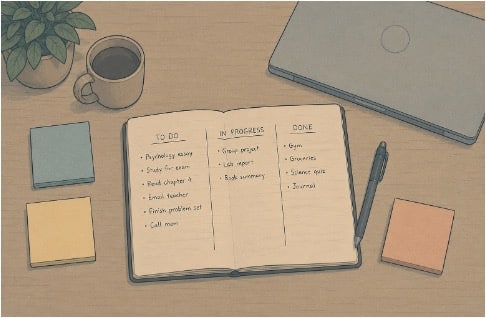
3. Cut the Workload Down to a Triage List
Teens in burnout often treat every task as equally urgent, which makes starting anything difficult. A triage list breaks the paralysis by sorting work into three groups:
- Work that is graded and due this week
- Work that is graded and due later
- Work that is ungraded, optional, or self-imposed
The third group gets dropped for the duration of recovery. In many cases, it accounts for a large share of the total load, consisting of rewritten notes, supplementary reading, and standards the teen set independently. Revisit the list once a week as new assignments come in.
4. Add Movement & Offline Time
Physical activity lowers the baseline tension burnout runs on. Consistent moderate activity most days is easier to sustain during recovery than occasional intense workouts, which matters when motivation is low and a missed session can break the habit.
Time away from screens operates on the same principle. Scrolling registers as rest and delivers little of it, so replacing an hour of it with physical, social, or creative activity creates a real recovery period.
5. Work on the Thinking Behind the Pressure
Burnout is held in place by beliefs teens have stopped questioning. Common examples include assuming one bad grade closes off their future, or that rest must be earned through suffering.
Cognitive Behavioral Therapy (CBT) addresses this by teaching teens to identify a thought, test it against evidence, and replace it with an accurate one. Dialectical Behavior Therapy (DBT) adds distress tolerance and emotion regulation, which apply during periods when the workload cannot be reduced further.
Both work without medication, and both operate by changing the standard the teen measures themselves against.

6. Bring School & Family Into the Plan
Recovery is harder when a teen manages it alone. School counselors can arrange extended deadlines, reduced course loads, or a temporary drop from an advanced class, and many schools can set this up through a counselor or a formal accommodation plan once a parent asks.
At home, the change usually involves lowering the frequency of grade conversations and raising the frequency of every other kind. Teens often find recovery easier in households where their standing does not depend on their transcript, and saying that out loud can help reduce withdrawal.
When Academic Burnout Needs Clinical Support
Handling burnout at home preserves the teen’s routine and avoids disrupting a program. It works for burnout caused by one heavy semester or a temporary pile-up.
The limits appear when burnout has lasted months, includes hopelessness or self-criticism that doesn’t lift during breaks, or when the teen has stopped attending school. At that point, unmanaged burnout can raise the risk of depression or anxiety, and repeated failed attempts at self-management can add shame that makes the next attempt harder.
Outpatient care fits this middle ground. A teen continues living at home and attending school while receiving structured therapy several times a week, which treats the burnout without removing the routine supporting recovery. Residential care applies when exhaustion has reached the point that daily functioning has broken down.
Academic Burnout Recovery Techniques: Summary Table
| Technique | What It Addresses | What Recovery Involves |
| Real rest window | Accumulated depletion | A reduced-demand period measured in weeks |
| Sleep repair | Focus, memory, mood | Consistent nightly timing held over several weeks |
| Workload triage | Task paralysis and overload | A single sorting session, revisited weekly |
| Movement and offline time | Baseline tension | Regular moderate activity most days |
| CBT and DBT thought work | Perfectionism and self-criticism | A structured course of therapy sessions |
| School and family support | Ongoing pressure at the source | A counselor conversation and changes at home |
Help Your Teen Recover From Academic Burnout With Mission Prep
Academic burnout eases when demand drops and sleep returns, and it resists every fix applied before those two changes. Working through the six techniques in order resolves most cases at home, as long as the pressure behind the burnout changes too. That can mean a lighter course load or fewer conversations about grades.
Burnout that has lasted months, or that has brought hopelessness and school refusal, needs a clinical assessment. At Mission Prep, we treat teens aged 12 to 17 through outpatient and residential care, with built-in academic support and weekly family therapy. Call us at 866-901-4047 or contact the admissions team to discuss which level of care fits your teen.
Frequently Asked Questions (FAQs)
Can academic burnout affect middle school students?
Yes. Burnout can occur at any age with sustained academic demand, including sixth through eighth grade. Younger teens are less likely to name the exhaustion accurately and more likely to present it as stomach aches, irritability, or resistance to leaving the house in the morning.
Does summer break fix academic burnout?
Summer break rarely fixes academic burnout on its own. Long breaks reduce symptoms because demand disappears, but the exhaustion typically returns within the first few weeks of the new school year if the workload and expectations remain unchanged. A relapse each September is a common indicator that the burnout was never resolved.
How is academic burnout different from depression in teens?
Burnout centers on school and eases when academic demand drops. Depression affects mood, sleep, appetite, and interest across every area of life, including activities the teen enjoys. Burnout left untreated can develop into depression, so a clinical assessment is warranted once symptoms extend beyond schoolwork.
What should parents do if a teen refuses to discuss school?
Stop asking about school specifically. Refusal usually signals that the topic has become the primary source of conflict, and pressing it further reduces contact. Conversations about anything else rebuild the connection first, which makes the eventual conversation about workload and support far more productive.
How does Mission Prep involve families in a teen’s treatment?
Families participate throughout care at Mission Prep, with weekly family therapy, regular clinical communication, and structured transition planning before a teen returns home. Academic pressure often originates in household expectations, so addressing it directly with parents is a major part of preventing burnout after discharge.