

Teen mental health across the country is increasingly becoming a concern. In California, a recent survey shows that, in an average month, 94% of young people 14 to 25 years old report mental health concerns, particularly stress and anxiety.[1] According to UCLA, 14% of California teens report suicidal thoughts, and three in ten report serious psychological distress.[2]
If your teen is finding it hard to cope with their mental health, it could be helpful to know what services are available. A Short-Term Residential Therapeutic Program, or STRTP, in California is one of them.
To help you better understand this service, this guide will explain:
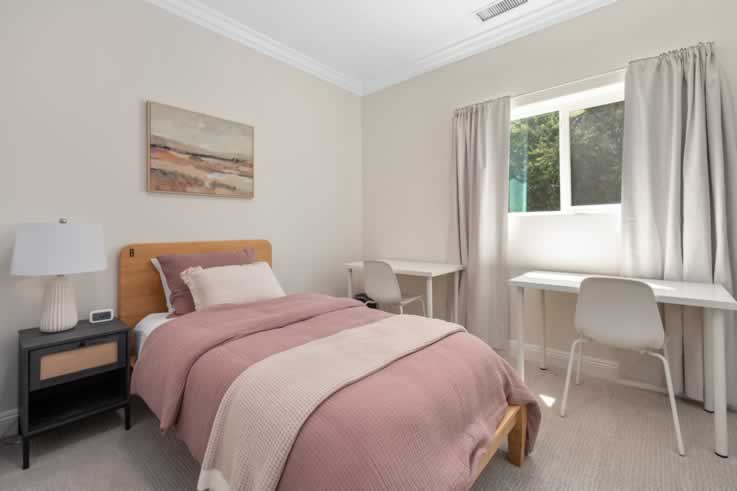
“STRTP” stands for Short-Term Residential Therapeutic Program. Previously referred to as a “group home,” an STRTP is a licensed residential facility that provides children with short-term, specialized, and intensive therapeutic services alongside 24-hour care and supervision.[3]
In other words, an STRTP is more than a place for a young person to temporarily live. Treatment and therapeutic support are built into the residential environment and may include:
A California STRTP is licensed by the California Department of Social Services. STRTP mental health programs may also require approval through the California Department of Health Care Services or an authorized county mental health plan.[4]
Many teenagers experiencing anxiety, depression, trauma, behavioral concerns, or other mental health challenges can receive appropriate care while living at home. Therapy, intensive outpatient treatment, family support, and other community services may be enough for their needs.
Sometimes, however, a teen’s needs become more difficult to manage safely in a home or family setting. An STRTP for teens is a California mental health resource that may be considered when a teen is finding it hard to cope with behavioral, emotional, or mental concerns and a less restrictive setting can’t provide effective support.
A more intensive, structured environment might be more effective if your teen is dealing with:
Having a diagnosis or difficulty coping won’t automatically mean STRTP in California is appropriate. Admission criteria usually focus on whether your teen actually requires the level of services an STRTP provides.[5]
The goal of an STRTP mental health program is to give a young person enough structure and therapeutic support to stabilize and eventually move into a less restrictive setting.
To determine STRTP eligibility in California, a qualified clinician must first assess a child and determine that they need the level of care provided by a Short-Term Residential Therapeutic Program.
From there, a child must meet STRTP requirements, which include all of the following criteria one and at least one of criteria two.[5]
Criteria one:
Criteria two:
These eligibility requirements mean that STRTP for teens is based on their unique circumstances rather than simply having a specific diagnosis.

Mission Prep is here to help you or your loved one take the next steps towards an improved mental well-being.
Distinguishing STRTP vs. residential treatment mostly comes down to how the terms are used. Residential treatment broadly describes mental health treatment provided in a setting where your teen will live while receiving care.
A Short-Term Residential Therapeutic Program is technically residential treatment, but it refers more to a particular California licensing category.[6] For instance, a California STRTP:
So while an STRTP is residential treatment, it’s considered short-term and licensed through California’s Department of Social Services. In contrast, non-STRTP residential treatment may be provided under other program structures or licensing arrangements.
This means a California teen residential treatment center is not automatically an STRTP simply because teenagers stay overnight at the facility.
Hearing that your child may need residential treatment might leave you with more questions than answers. However, you don’t have to understand California’s entire mental health care system before speaking with a provider. For instance, you could consider asking:
Writing down questions before a meeting can make it easier to remember what you want to discuss, especially when you’re already worried about your child.
Take a tour of our teen residential mental health facilities located in California. Our locations offer peace & comfort within a residential environment where teenagers, aged 12-17, can relax and focus on themselves.
Our well-appointed facilities are located in Bonsall, Fallbrook, Rancho Palos Verdes
and Rolling Hills Estates.
Additionally, we offer both in-person and virtual outpatient services in California for full support after leaving residential.
Understanding STRTP in California can help you make sense of one part of California’s mental health system. But an STRTP is not the only option for teens who need more support than weekly therapy.
At Mission Prep Teen Treatment, we have several adolescent residential mental health treatment programs in California. We also provide a full continuum of care for teens who don’t need residential care or are stepping down from residential care, including outpatient and aftercare support.
Our programs approach treatment through a personalized, whole-person lens. Rather than trying to fit your teen into a one-size-fits-all approach, we’ll work to understand their unique needs, concerns, strengths, and goals.
Then, using a combination of evidence-based therapies, like cognitive behavioral therapy (CBT), acceptance and commitment therapy (ACT), and Internal Family Systems (IFS), alongside methods like art therapy and mindfulness, we support your teen in understanding their thoughts, feelings, and behaviors while building the confidence to tackle everyday challenges.
We also recognize that parents and families play an important role in treatment. Helping you better understand what your teen is going through can make it easier to provide support both during treatment and once your teen returns home.
Mission Prep Teen Treatment accepts insurance and is in-network with most major providers. We are happy to help you check your insurance coverage for mental health care.
Start the admissions process online or call 866-901-4047 to speak with a caring member of our team who can answer any questions you might have. Reach out for a free, no-obligation conversation.
"*" indicates required fields
🔒 100% Confidential
No Commitment
✓ Instant Results
California’s youth mental health system includes several programs with similar-sounding names, which can be confusing for many parents when they’re trying to get care for their child. Below, we answer some common questions families often have about STRTPs and residential treatment.
STRTP stands for Short-Term Residential Therapeutic Program. An STRTP in California is a licensing category for programs that provide short-term, specialized, intensive therapeutic services and 24-hour residential care and supervision to children.[6]
STRTPs have a strong connection to California’s foster care and child welfare system, which is why STRTP foster care information appears frequently when families research these programs. But the California Department of Health Care Services doesn’t specify being in foster care as a criterion for going to an STRTP.[7].” publication=”California Legislative Information.” url=”https://leginfo.legislature.ca.gov/faces/codes_displaySection.xhtml?lawCode=WIC§ionNum=11462.01.”]
Whether an STRTP in California is an option and how placement occurs depends on your teen’s specific situation, assessments, and applicable program requirements.
No, your family does not necessarily need Medi-Cal to receive STRTP for teens. The STRTP facility needs to be Medi-Cal-certified, but the children receiving these services do not need to be Medi-Cal beneficiaries.[8]
The length of time a teen stays in an STRTP in California can vary depending on each teen’s needs. But the emphasis is on short-term care. While “short-term” doesn’t necessarily imply a teen will leave within a few days, they also shouldn’t remain in a residential facility simply to meet a certain length of time.
The law for STRTP mental health programs in California states that for teens 13 years and older, placement should not exceed 120 days unless they’ve met placement extension conditions.[9]
At Mission Prep Teen Treatment, we provide personalized mental health treatment for teens at different levels of care. Our approach to treatment is based on your teen’s needs rather than on trying to fit them into a single type of treatment.
We’ll support your teen by working with them and their family on finding an approach that works best. Our goal is to help teens better understand what they’re experiencing, develop healthier ways of coping, and build the confidence and tools they can use long after treatment.
Are You Covered for Mental Health Treatment?
We’re in-network with many providers. Call us at 866-901-4047 to verify your benefits and find out how much your plan will cover









Find out if Mission Prep is right for you by reaching out to us and speaking with one of our admissions representatives.