When borderline personality disorder (BPD) gets talked about, it’s usually the obvious version that gets described, the one that comes with visible emotional dysregulation and outbursts.
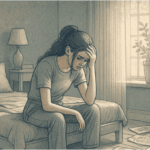
But there’s another side to BPD that can look almost nothing like that and is very easy to miss. Quiet BPD is when all of the emotional turmoil gets turned inward and hides behind a calm and capable surface. A teen with quiet BPD could be in real distress while looking, to everyone around them, like they’re doing just fine.
This is exactly what makes quiet BPD in teens so difficult to spot, even for the most attentive and caring parents. To help, this page will explore:
BPD stands for borderline personality disorder, and it’s a mental health condition in which a person finds it hard to manage their emotions. Their feelings might present more intensely than other people’s, and these emotions can rise quickly and then take a long time to settle down.[1]
This difficulty is known as emotional dysregulation, and it is at the core of BPD. Alongside emotional dysregulation, other features include:[1]
This can be an exhausting way to live for anyone, especially teens, for whom even the smallest setbacks can feel devastating.
BPD was misunderstood for a long time, but nowadays, it’s far better recognized and understood. It’s worth noting that the disorder doesn’t present the same for everyone. Psychologist Theodore Millon described four ways BPD can present:[2]
These aren’t official categories that clinicians diagnose from, but a model for understanding why the same condition can present differently from person to person.
Discouraged BPD is also known as quiet BPD or internalized BPD and, as the name suggests, it is where emotions are turned inward. This is the opposite of standard BPD, where the emotional dysregulation is visible for others to see.
The same painful emotions are still there, but rather than being aimed at other people, those with quiet borderline personality disorder aim those emotions at themselves.
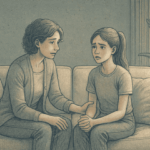
This is exactly why quiet BPD is so often missed, as someone with it can appear calm and capable on the surface, but inside, they are struggling intensely. For a parent, this can be the hardest part. There is often nothing to point to or any one incident to discuss, just a sense that something is wrong behind a child who may insist they’re fine.
It’s worth reiterating the point that quiet BPD isn’t a separate diagnosis and, like all of Millon’s four, it only describes how the condition presents.
While quiet BPD is tough to spot, borderline personality disorder in teens is not impossible to detect. There isn’t a single sign that confirms it, but rather a cluster of behaviors.
Quiet BPD signs in teens include:
What often stands out is the difference between how a teen appears and how they later describe feeling. A young person can get through a family dinner without anyone noticing a thing, then spend the rest of the evening alone and inconsolable about something said at the table hours earlier.
Some teens with quiet BPD also self-harm, and because the whole presentation is private, this is usually kept hidden too.[1] If you ever notice signs of self-harm, or your teen expresses suicidal thoughts or inclinations, it needs to be treated seriously with professional help as soon as possible.
There is no single cause of BPD, quiet or otherwise. The leading theories suggest that BPD is a mixture of both genetics and environmental factors. Because quiet BPD is a presentation of BPD rather than a separate condition, its causes are the same as those behind the disorder generally.[3]
One study found that the likelihood of both relatives having BPD increased with genetic relatedness. Concordance was highest among identical twins, followed by non-identical twins, full siblings and half-siblings.[4]
These findings suggest that genetics plays an important role in BPD, but twin studies are not perfect. Identical twins often grow up with more similar experiences than non-identical twins. They usually live in the same house like other twins, but being identical means they may be treated the same by teachers, parents, friends, and peers. This can make it difficult to separate the effects of genetics from the effects of their shared environment.[5]
This next point matters if you have been researching quiet BPD yourself. Researchers once thought certain genes linked to serotonin might be behind the disorder. But larger reviews have not supported this, and no specific gene has been tied to the condition.[6] If you come across older material online making that claim, it has since been overtaken by better evidence.
A child’s environment plays a huge role in how BPD develops, with early trauma being at the center of this. Experiences of abuse, neglect, or bullying in childhood all raise a child’s risk. Research shows that much of this trauma comes from troubled family environments, and its effects are stronger when that same setting interacts with a child’s natural temperament.[7]
What this means is that a child can carry the risk factors for BPD, made worse by experiencing a difficult upbringing.[7] But it also means that two children in the same house, with the same experiences and difficulties, can have very different outcomes. This is important for you to understand as a parent if you’ve been searching for something you did wrong.
Adolescence is already a time of significant emotional ups and downs, and many adolescent BPD symptoms also fit the pattern for expected teen behavior.
This can leave parents in a difficult position. You can clearly see that your child is struggling with their emotions internally, but you’re unsure whether what you’re seeing can be classed as “normal” or not.
For a long time, it wasn’t only parents who were uncertain about this, but clinicians too. In the past, doctors were hesitant to diagnose a teenager with any form of BPD, including quiet borderline personality disorder. They were worried that symptoms like mood swings, internalized emotional dysregulation, self-criticism, or risk-taking might be mistaken for something more serious, like BPD.[8]
Since BPD is a long-term condition, many preferred to wait rather than give a young person a label they feared might stick unfairly.
But that thinking has changed, and this is positive news for families who want answers sooner rather than later. Evidence suggests that BPD can be diagnosed just as reliably in teens as in adults. The same criteria apply, and the diagnosis holds up when clinicians look at the main areas BPD affects.[8]
Even the DSM (Diagnostic and Statistical Manual of Mental Disorders), one of the main diagnostic manuals, states that a personality disorder can be identified before age 18 as long as the traits have been present for at least a year.
Mission Prep is here to help you or your loved one take the next steps towards an improved mental well-being.
BPD treatment for adults is well established, and over the years, certain treatments have been adapted for adolescents.
The leading treatment for BPD is dialectical behavior therapy (DBT), developed by psychologist Marsha Linehan. While DBT is now used for treating various conditions, Linehan originally developed it for borderline personality disorder specifically. In adults, DBT may include weekly individual sessions, skills training group sessions, phone consultations with a therapist, and team consultation meetings.
For teens with BPD, this largely stays the same, but the length of treatment decreases from 12 months to 16 weeks to increase commitment levels. This form of DBT is known as DBT-A, also developed by Linehan, initially for suicidal adolescents.[9]
The skills themselves are practical rather than abstract. A teen learns what to do at the moment an emotion becomes unbearable, and how to communicate their needs to their families and treatment team.
Clinical research suggests that DBT may be effective for teens with quiet BPD features, as it has been associated with reductions in suicidal and non-suicidal self-injury and psychiatric hospitalizations.[8]
Mentalization-based treatment (MBT) is another option that helps a teen make better sense of their own feelings and the people around them. This is often where things start to break down in BPD. Studies with adolescents have shown that MBT helps to reduce both self-harm and depression more effectively than standard care.[8]
There is no medication that treats BPD itself, and it’s worth knowing that upfront to keep expectations realistic. What medication can sometimes do is ease certain borderline symptoms. This may be achieved with certain types of antidepressants. Medications may also be prescribed to help with mood swings or anger, whether internalized or not.[8]
When medication is used, it works best as a support alongside therapy rather than as a treatment on its own.
This is a question that families often ask themselves when they notice things that worry them. General BPD is, in theory at least, easier to notice and seek help for. But with quiet BPD, it can feel as if the disorder is doing its best to go undetected. Working out whether it’s time for professional support can be really difficult.
Even so, there are a few markers you can go by that may suggest support is needed. For example, if your teen’s emotional distress is causing them to pull away from the things they used to enjoy, or to struggle at school, it’s a sign to act.
The same holds true if the effort of masking their discomfort is leaving them exhausted, and that exhaustion isn’t coming from anywhere obvious, like extra sports sessions.
Some situations, though, are urgent and need support straight away. If your teen shows any signs of self-harm or expresses thoughts of not wanting to be here, treat it as an emergency. In the U.S., you can contact emergency services or reach the 988 Suicide and Crisis Lifeline by call or text at any time.
If you’re ever unsure, that uncertainty is reason enough to reach out. A conversation with your teen’s doctor or a mental health professional can help you make sense of what you’re seeing, and there’s no need to be certain before you ask.

Mission Prep provides treatment for teens experiencing various mental health conditions. Mental Health support is a phone call away – call 866-901-4047 to learn about your treatment options.
See our residences in Southern California’s Los Angeles & San Diego areas.
View our facilities in Loudoun County, VA within the DC metro area.
If the signs on this page feel familiar, the most important thing you can do for your teen’s mental health is reach out for support.
At Mission Prep Teen Treatment, we offer a variety of treatment programs and therapy services to help teenagers facing the intense emotions that come with quiet BPD. Our clinical approach draws on DBT in a structured program that has been specifically designed for adolescents. The focus is on:
This is so they can find ways to cope with what they’re feeling without turning it inward or acting on it in harmful ways.
For some teens, the distress runs deep enough that stepping away from daily life for a while is what helps most. When symptoms are severe or when a teen is having thoughts of suicide, our residential treatment option gives them a safe space to stabilize and focus fully on getting better.
In addition to residential care at our locations in California or Virginia, we also offer flexible outpatient mental health programs and virtual telehealth. Mission Prep Teen Treatment accepts insurance and is in-network with most major providers. We are happy to help you check your insurance coverage for mental health care.
Contact us online or call 866-901-4047 to speak with a caring member of our team who can answer any questions you might have. We’re available 24/7 to answer your questions and provide guidance with no obligation.
"*" indicates required fields
100% Confidential
No Commitment
Instant Results
Are You Covered for Mental Health Treatment?
We’re in-network with many providers. Call us at 866-901-4047 to verify your benefits and find out how much your plan will cover
Find out if Mission Prep is right for you by reaching out to us and speaking with one of our admissions representatives.