Fight, Flight, Freeze & Fawn: Trauma Responses in Teens

It can happen fast. Someone raises their voice, a text to a friend goes unanswered too long, or you walk into a room, and the mood feels off. Suddenly, your heart is pounding, your mind goes blank, or you’re apologizing for something that isn’t even your fault.

It just happened, like your body took over before you had a say.

That’s what happens when your nervous system is in fight, flight, freeze, or fawn mode. It’s part of your body’s automatic stress response, and understanding how it works can help you make sense of reactions that might have confused you for a long time.

In this article, you’ll learn about:

  • Fight, flight, freeze, and fawn responses.
  • Your nervous system and survival instincts.
  • Why these things happen even after danger passes.
  • PTSD, attachment, and effective coping skills.
  • How to get professional support.
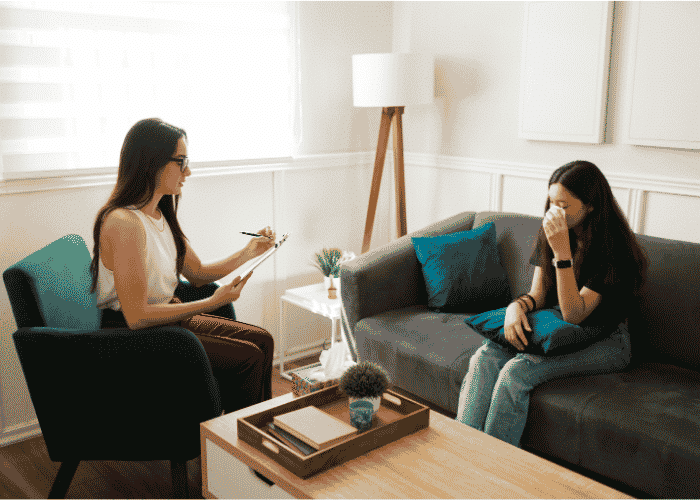
Teenage girl in therapy room talking about her identity after trauma
Table of Contents

Understanding the Fight, Flight, Freeze, and Fawn Response

Your body has its own alarm system that scans for danger constantly, without asking your brain for permission. It was first called fight or flight in the 1920s, and many people still call it that. But in the years since, researchers have expanded the idea to include freeze and fawn because not every threat can be fought or outrun.[1][2]

Each of these trauma responses is there because it can help you survive:

  • Fight confronts the threat head-on with a raised voice, clenched fists, and an urge to push back.
  • Flight creates an urge to escape by running, leaving, or constantly staying busy.
  • Freeze means becoming still or numb when neither fighting nor fleeing is possible.
  • Fawn can make you agree, apologize, or try extra hard to calm someone else because doing so feels safer.

They activate the moment your brain senses danger, whether that danger is a car swerving toward you, a caregiver’s anger, or something in between.[2] 

Because these reactions are automatic, they’re never something to be ashamed of. Which one shows up isn’t something you choose. Your body weighs the situation in a split second and often goes with whichever response has kept you safest before.

It also helps to know that these stress responses aren’t random. Your brain compares what’s happening right now to everything it’s experienced before. If you’ve experienced real danger, your body’s alarm system may become quicker to notice possible threats and respond more strongly. That’s true even in situations that look completely ordinary from the outside.[3]

The Freeze Response and Your Nervous System

The freeze response often gets the least attention, maybe because from the outside, it looks like nothing is happening. But underneath, your body is still working hard to protect you.

Your autonomic nervous system (the one responsible for things like breathing and heart rate) changes with how safe or threatened you feel. When a threat feels overwhelming, your body may slow down and disconnect you from being fully aware of what’s going on.[4]

This doesn’t just happen in response to really big, dramatic events. Ongoing experiences can make your autonomic nervous system more sensitive to certain triggers. For example, repeated criticism from your parents or guardian may make you highly alert to changes in their tone of voice.[3] 

In other words, your nervous system responses can change with experience. So, freezing isn’t a weakness. It’s your body deciding that being still and “unplugged” is the safest option. 

The Fawn Response and Survival

The fawn response can be difficult to recognize because your distress may not be obvious to others. From the outside, it may appear as helpfulness, agreeableness, or an effort to avoid conflict.

Research suggests that some people, especially women and girls who’ve been taught to put others first, often respond to stress not by fighting or fleeing, but by tending to others and seeking connection. It’s a pattern typically referred to as tend-and-befriend.[5] When fighting or fleeing feels unsafe, keeping the other person happy may feel like the best way to protect yourself.

But freely choosing to be kind is different from trying to keep someone calm because you don’t feel safe. If you’ve noticed yourself going along with people despite having a different opinion, apologizing for things that weren’t your fault, or feeling anxious the moment someone seems even slightly upset with you, that might be a fawn response rather than a choice you’re making.[5]

Fawning often gets praised, which can make it even harder to spot. Adults may see a polite, easygoing teen, but only you know how much effort that calm is really costing you. Fawning isn’t simply being nice. It’s a survival strategy your body learned to keep you safe.

Why These Patterns Show Up Long After the Danger Has Passed

Some teens feel confused, frustrated, or ashamed when these responses continue after the danger has passed. If fight, flight, freeze, and fawn are meant to protect you from danger, why do they keep happening in situations that aren’t actually dangerous? For example, a distant friend or an uncomfortable conversation may be enough to activate the response.

During your teen years, your brain is developing fast, especially the parts that help manage emotions and decide whether something is dangerous.[3] Your developing brain can get trained to expect danger in ordinary situations if you experience:

  • Abuse.
  • Neglect.
  • Constant conflict.
  • Other unpredictable experiences. 

The nervous system may then react to everyday stress as though it poses a serious threat.[3]

This fits in with another important concept. Adverse childhood experiences (ACEs) include things like abuse, neglect, and conflict at home. Studies link a greater number of ACEs with increased stress, depression, and anxiety.[6] 

None of this is a coincidence. It’s the stress-response system doing what it’s supposed to do.

smiling young men | Mission Prep Healthcare

Are You or a Loved One Struggling with Trauma?

Mission Prep is here to help you or your loved one take the next steps towards an improved mental well-being.

PTSD Symptoms and Attachment Trauma

For some teens, these trauma responses happen a lot. When they start interfering with school, relationships, and daily functioning, that can be a sign of post-traumatic stress disorder (PTSD) symptoms. In that case, the following can be common:[1][7]

  • Intrusive thoughts
  • Avoiding reminders of trauma
  • Mood changes
  • A nervous system that’s on high alert

PTSD in adolescents can look different than it does in adults. It sometimes shows up as irritability, trouble concentrating, or taking risks without fully thinking through the consequences.[7] Studies comparing adolescents with PTSD and without it show a big difference in how trauma memories are processed and how emotions are regulated. This may help explain why people recover from similar triggers at different speeds.[8]

Attachment trauma, which is the disruption or fear in a person’s earliest relationships with caregivers, is closely tied to these patterns. When a caregiver is a source of both comfort and fear, your brain faces a really hard situation. The person you need for safety is also the person triggering your brain’s alarm system.[9]

This kind of conflict can contribute to a relationship pattern known as disorganized attachment, making it harder to manage emotions or stay connected to what’s happening around you (such as feeling like you’re watching yourself from outside your body) later in life.[10][9][11]

None of this means something is permanently wrong, though. It just means your nervous system adapted to a really difficult situation, and it can keep adapting now that things are different.

Coping Skills That Really Help

The goal isn’t to eliminate fight, flight, freeze, or fawn responses altogether. They’re part of being human, and they still serve a purpose in dangerous moments. The goal is to help your nervous system learn that it has more options than it used to, and that not every stressful moment requires a full survival response.

A few practical skills can help calm your body and make stressful moments easier to manage. It helps when you practice them in calm moments, so you know automatically what to do when your body goes into alarm mode:

  • Grounding and body-based skills. Because trauma responses live in the body as much as the mind, grounding techniques like paced breathing and progressive muscle relaxation help tell your nervous system that you’re safe.
  • Trauma-focused therapy. Approaches like trauma-focused cognitive behavioral therapy are designed to help you process difficult experiences and build coping skills.[12]
  • Short-term stabilization programs. These programs can offer extra support when weekly therapy alone doesn’t feel like enough. Structured short-term programs that use mindfulness and stress-regulation skills usually last just a few weeks.[13]
  • Naming the response. Simply recognizing “this is my freeze response” or “I’m in flight mode” in the moment can help you pause, understand what’s happening, and consider what support or next step could help.

The thing about trauma recovery is that it isn’t a straight line. It’s about widening the gap between the trigger and your reaction, one skill at a time, until your nervous system starts trusting that the danger has passed. That shift takes practice and support, though.


Every teen deserves to thrive

We’re here to help them learn the skills to manage Trauma & find their way back to themselves. There is no commitment required. Just an honest, confidential conversation about the support your family needs. Let’s take the first step together.

"*" indicates required fields

This field is hidden when viewing the form

Find Support for Teens Navigating Trauma Responses

If you feel like you’re consistently in fight, flight, freeze, or fawn, you’ve taken a good first step by recognizing what might be going on. The fact that these responses happen sometimes when you’re not in immediate danger doesn’t mean your nervous system is broken. It just means it’s still making adjustments.

At Mission Prep Teen Treatment, we work with teens to understand these patterns. Every teen has a different story, so mental health treatment here isn’t one-size-fits-all. It starts with understanding what actually happened to you or your adolescent and what your body and mind need to feel safe again.

Whether that looks like individual therapy, family therapy, or a more structured level of care, our team is here to help you build a relationship with yourself that feels less like survival and more like steadiness. We offer tailored treatment programs at various levels, including residential and outpatient mental health programs.

Mission Prep Teen Treatment accepts insurance and is in-network with most major providers. We are happy to help you check your insurance coverage for mental health care. If you have questions about trauma responses or would like information about treatment options, call us at 866-901-4047. Our compassionate team is available 24/7 to answer your questions and provide guidance with no obligation.

If you feel more comfortable, you can also reach out to us by sending us a message. You don’t have to figure this out on your own.

Father and son smiling outdoors with jackets on