

Key Takeaways
- Art therapy helps teens with trauma express difficult emotions and experiences through creative activities when talking about them feels overwhelming or unsafe.
- Art therapy is effective for many traumatized teens because it supports emotional regulation, reduces symptoms of anxiety and PTSD, and complements evidence-based treatments such as CBT and EMDR.
- Common art therapy activities for teen trauma include safe space collages, emotion wheel paintings, self-portraits, and container projects that build coping skills and self-awareness.
- Art therapy worksheets provide structured ways for teens to identify emotions, map physical sensations, create safety plans, and process experiences at a pace that feels manageable.
- Mission Prep Healthcare integrates art therapy into residential and outpatient programs for teens aged 12 to 17, shaping each plan around the teen’s history, pace, and interests with academic and family support built in.
Can Art Therapy Help Teens with Trauma?
Art therapy helps traumatized teens by using drawing, painting, sculpting, and guided worksheets to externalize emotions that a teen cannot yet speak.
Unlike talk therapy, it engages sensory and creative brain pathways, so progress often begins within the first few sessions rather than after weeks of verbal disclosure. This matters because the teenage brain processes trauma differently than the adult brain, and pressure to “talk it out” can shut a teen down.
At Mission Prep Healthcare, art therapy is incorporated into comprehensive trauma treatment plans for teens ages 12–17. Our residential and outpatient programs combine art therapies with proven approaches such as CBT, DBT, EMDR, and TMS to address the unique needs of adolescents.
The sections below cover how art therapy works, the activities therapists use, and how Mission Prep Healthcare helps.
What is Art Therapy for Trauma?
Art therapy is a form of psychotherapy that uses creative expression as the primary mode of communication and healing. When applied to trauma treatment, art therapy provides teens with a structured way to process difficult memories and emotions without having to verbalize them immediately.
A licensed art therapist guides the teen through specific activities designed to help them explore their feelings, develop insight into their experiences, and practice new coping skills.
The therapeutic relationship remains central to the process. The art itself becomes a bridge between the teen and therapist, creating a safe distance from overwhelming emotions while still allowing for meaningful expression.
Unlike recreational art classes, art therapy sessions are intentionally designed to address specific therapeutic goals related to trauma recovery, emotional regulation, and psychological healing.
How Effective is Art Therapy for Teens with Trauma?
Art therapy gives teens a way to process trauma without having to put it into words. Creative activities like drawing, painting, and sculpting reach different parts of the brain than talk therapy, which makes them especially useful for teens who feel disconnected from their emotions or struggle to describe what happened.
When combined with evidence-based treatments like Cognitive Behavioral Therapy (CBT) or Eye Movement Desensitization and Reprocessing (EMDR), art therapy can lower symptoms of PTSD, anxiety, and depression in adolescents. The creative process helps reorganize traumatic memories so they feel less overwhelming, while giving teens a sense of control that trauma often takes away.
Structured worksheets and activities also give teens concrete tools to identify feelings, regulate emotions, and build resilience as they recover. Hands-on creation lowers defenses, eases shame around verbal disclosure, and helps teens feel grounded in the present, which can reduce dissociation and hypervigilance.
Most teens notice some emotional relief within the first few sessions, though meaningful recovery usually takes several months of consistent participation.
Art Therapy Activities for Teens with Trauma
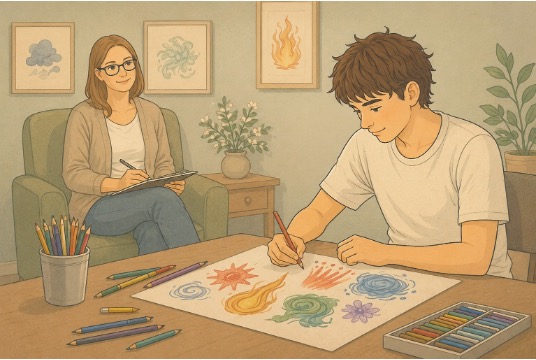
Creating a Safe Space Collage
For this activity, teens create a visual representation of what safety means to them using magazine cutouts, photographs, drawings, or mixed media. By identifying and assembling images that represent security, calm, and protection, teens begin to internalize what safety feels and looks like. This becomes a resource they can return to when feeling triggered or overwhelmed.
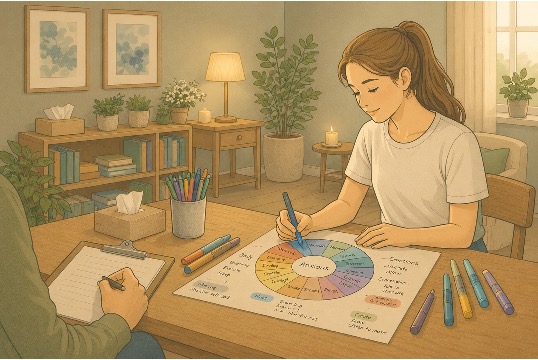
Emotion Wheel Painting
Teens create a color-coded wheel that assigns different colors to various emotions they experience. They can then paint or draw their emotional states throughout the week, helping them develop greater emotional awareness and vocabulary. This activity makes abstract feelings more concrete and trackable, supporting emotional regulation skills.
Before & After Self-Portraits
Drawing or painting two self-portraits (one representing how they felt before trauma and one showing how they feel now) helps teens acknowledge the impact of their experiences while also visualizing their recovery journey. This activity can be revisited periodically to mark progress and growth.
Container Creation
Teens decorate a box or container and fill it with representations of coping strategies, positive memories, or supportive relationships. This tangible “toolkit” gives them something to turn to during difficult moments and reinforces the idea that they have resources available to manage distressing emotions.
Art Therapy Worksheets & Exercises
Structured worksheets complement hands-on art activities by providing guided frameworks for expression.
- Feeling faces worksheets help teens identify and name the emotions they’re experiencing by matching feelings to facial expressions and then creating their own artistic representations.
- Body mapping worksheets guide teens through drawing an outline of their body and marking where they feel different emotions or trauma-related sensations, increasing mind-body awareness.
- Narrative comic strips allow teens to tell their story through sequential images and minimal text, giving them control over pacing and what details to include.
- Gratitude journals with space for both writing and drawing help shift focus toward positive experiences without minimizing trauma.
- Safety plan worksheets incorporate visual elements where teens can draw or collage their support network, coping strategies, and warning signs to watch for.
Mission Prep’s Art Therapy for Teen Trauma

Art therapy gives traumatized teens a way to process what words cannot reach, and the research backs it up when paired with evidence-based care. Drawing, painting, and structured worksheets help reorganize traumatic memories, ease symptoms of PTSD, anxiety, and depression, and rebuild the sense of control that trauma takes away.
At Mission Prep Healthcare, we treat adolescents aged 12 to 17 in residential and outpatient programs that blend art therapies with CBT, Dialectical Behavior Therapy (DBT), EMDR, and Transcranial Magnetic Stimulation (TMS). We shape each plan around the teen’s history, pace, and interests, with academic support and family involvement built in throughout recovery. Reach out to us to learn more about our art therapy.
Frequently Asked Questions (FAQs)
Can art therapy work for teens who say they’re “not creative”?
Art therapy focuses on expression and healing rather than artistic skill or talent. Teens don’t need to be “good at art” to benefit from creative therapeutic activities. The process matters far more than the product, and therapists adapt activities to each teen’s comfort level and interests.
How long does art therapy take to be effective?
Most teens begin noticing some emotional relief within the first few sessions, though meaningful trauma recovery typically requires consistent participation over several months. The timeline varies based on trauma severity, the teen’s support system, and whether art therapy is combined with other therapeutic approaches.
Is art therapy good for trauma?
Art therapy works best as part of a full treatment plan that may include other evidence-based therapies and family involvement. While creative approaches provide unique benefits, integrating them with therapies like CBT or EMDR tends to produce the strongest outcomes for traumatized teens.
What makes Mission Prep Healthcare’s approach to teen trauma different?
At Mission Prep Healthcare, we specialize exclusively in treating adolescents aged 12–17, so every aspect of care is developmentally appropriate and fit for teen needs. We integrate art therapies with evidence-based treatments in structured, supportive environments, while involving families throughout the recovery process and providing academic support so teens don’t fall behind in school during treatment.