


Key Takeaways
- Cognitive Behavioral Therapy (CBT) effectively addresses conduct disorder in teens by targeting the connection between thoughts, feelings, and behaviors.
- Specialized CBT worksheets provide concrete tools for teens to identify triggers, challenge distorted thinking, and develop healthier coping strategies.
- Treatment typically shows improvement within 12–16 weeks when teens actively engage with structured worksheets and therapeutic exercises.
- The most effective CBT worksheets focus on cognitive restructuring, problem-solving training, and social skills development explicitly tailored to conduct disorder patterns.
- Mission Prep Healthcare integrates evidence-based CBT techniques into comprehensive adolescent treatment programs, helping teens develop healthier coping strategies while supporting families through the entire therapeutic process.
What Exactly is Conduct Disorder in Adolescents?
Conduct disorder manifests as a persistent pattern of behavior that violates others’ rights or major age-appropriate social norms. Unlike temporary rebelliousness, teens with conduct disorder show a pervasive disregard for rules, often engaging in aggression toward people or animals, property destruction, deceitfulness, and serious rule violations.
These behaviors typically emerge before age 16 and cause significant impairment across school, home, and social environments. The disorder affects approximately 2%–10% of children and adolescents, with higher rates among males than females.
What makes conduct disorder particularly challenging is its association with adverse long-term outcomes, including academic failure and adult antisocial personality disorder if left untreated.
Many teens with conduct disorder struggle with misinterpreting social cues, believing others have hostile intentions when they don’t, and lacking empathy for those they hurt. Understanding conduct disorder as more than “bad behavior” is crucial, as it forms the foundation for effective CBT interventions.
Why Traditional Approaches Often Fall Short
Traditional disciplinary approaches to conduct disorder frequently fail because they address only the visible behaviors, while ignoring the underlying cognitive and emotional processes that drive them.
Punishment-based strategies may temporarily suppress unwanted behaviors but typically intensify oppositional attitudes, creating a cycle of escalation rather than resolution. These approaches miss the critical thinking errors that perpetuate problematic behaviors.
Many conventional interventions also overlook the importance of skills development. Teens with conduct disorder often lack fundamental problem-solving abilities, emotion regulation strategies, and social skills necessary for navigating challenging situations. Without addressing these skill deficits, behavioral improvements remain temporary at best.
The CBT Difference: Targeting Thoughts, Behavior & Emotions
CBT’s effectiveness stems from its comprehensive approach targeting the interconnected triad of thoughts, emotions, and behaviors. Rather than treating symptoms in isolation, CBT addresses the underlying cognitive distortions that fuel problematic behaviors.
For teens with conduct disorder, these distortions often include hostile attribution bias (assuming others have harmful intentions), minimization of harm, and beliefs that aggression is justified. The structured nature of CBT provides clear frameworks for understanding and changing behavior—something particularly beneficial for teens with conduct disorder who often struggle with ambiguity and inconsistency.
Through systematic examination of thought patterns and their consequences, teens learn to recognize how their interpretations of events directly influence their emotional responses and subsequent actions. This insight breaks the cycle of automatic reactions that perpetuate destructive behavior.
The effectiveness of CBT for conduct disorder isn’t just anecdotal. It’s backed by robust research showing significant improvement in aggression, rule-breaking, and oppositional behaviors when compared to other therapeutic approaches. Let’s explore why this approach works and exactly which worksheets deliver the strongest results.
5 Evidence-Based CBT Techniques That Work for Conduct Disorder
1. Cognitive Restructuring: Rewiring Destructive Thought Patterns
Cognitive restructuring forms the cornerstone of effective CBT for conduct disorder, targeting the distorted thinking patterns that drive aggressive and rule-breaking behaviors.
Teens with conduct disorder often exhibit automatic thoughts like “Everyone is against me,” “I have to show I’m tough,” or “Nobody cares what happens to me anyway.” These cognitive distortions create a worldview that justifies harmful actions and maintains the cycle of problematic behavior.
Practical training for cognitive restructuring guides teens through identifying these thoughts, evaluating their accuracy, and developing more balanced alternatives. The process begins with thought records, in which teens document triggering situations, the resulting emotions, and the automatic thoughts that occur.
Through guided questions, teens learn to recognize thinking errors such as catastrophizing, black-and-white thinking, and mind-reading that contribute to their behavioral responses.
2. Problem-Solving Training: Building Decision-Making Skills
Problem-solving training addresses the impulsive decision-making common among teens with conduct disorder. These adolescents often react to situations without considering consequences or alternative actions.
Structured problem-solving training guides teens through a systematic approach to challenges, breaking down decision-making into manageable steps that can be practiced repeatedly until they become automatic.
3. Anger Management: Controlling Emotional Responses
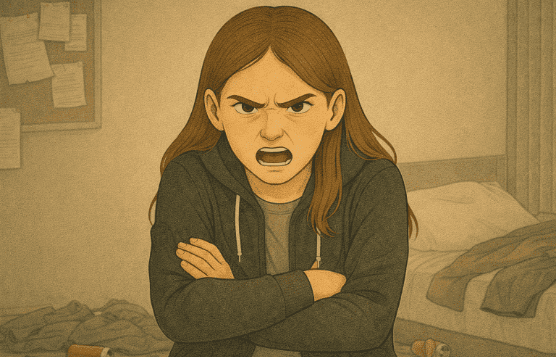
Anger management techniques are essential for teens with conduct disorder who often experience intense emotional reactions with limited control mechanisms.
CBT techniques focusing on anger management help teens identify their personal anger triggers, recognize early physical warning signs, and implement strategies to de-escalate before reaching the point of aggressive behavior.
These tools create awareness of the anger cycle and provide intervention points throughout the escalation process.
4. Social Skills Development: Creating Healthier Interactions
Social skills deficits significantly contribute to conduct problems, as many teens with conduct disorder misinterpret social cues or lack appropriate interaction strategies.
Comprehensive social skills development addresses these gaps by breaking down complex social exchanges into concrete, learnable components. These tools help teens recognize nonverbal cues, understand perspective-taking, and develop appropriate assertiveness instead of aggression or manipulation.
5. Behavioral Contracts: Setting Clear Expectations
Behavioral contracts provide structure and clarity for teens who struggle with boundaries and expectations. These formalized agreements among teens, parents, therapists, and, sometimes, school personnel establish clear behavior targets, specific rewards for meeting goals, and consistent consequences for violations.
Unlike punitive approaches, well-designed behavioral contract worksheets focus on positive reinforcement while maintaining accountability. The most effective behavioral contracts involve collaborative development with the teen’s input, ensuring they feel a sense of ownership rather than feeling controlled.
Practical CBT Worksheets for Teens with Conduct Disorder

The right worksheets serve as bridges between therapy sessions and real-world application, reinforcing skills and creating accountability.
Thought Record Worksheets: Catching Distorted Thinking
Thought record worksheets form the foundation of cognitive restructuring for conduct disorder, creating a structured format for examining the thoughts that drive problematic behaviors.
The most effective versions include columns for documenting the situation, emotional response (rated by intensity), automatic thoughts, evidence supporting and contradicting those thoughts, alternative perspectives, and revised emotional ratings after cognitive reframing.
This comprehensive format helps teens recognize the direct connection between their interpretations and their behavioral responses.
Trigger Analysis Charts: Identifying Behavioral Patterns
Trigger analysis charts help teens map the specific circumstances that precede problematic behaviors, creating awareness of patterns that might otherwise remain invisible.
These worksheets typically include columns for recording the situation, who was present, what happened immediately before the incident, physical sensations experienced, thoughts and emotions that occurred, and the resulting behavior. By documenting multiple incidents over time, clear patterns emerge that highlight specific triggers requiring intervention.
This worksheet guides teens to rate the intensity of their reactions and identify early warning signs that appeared before full behavioral escalation. This detailed mapping identifies multiple potential intervention points, allowing teens to recognize and interrupt the sequence before it escalates into problematic behavior.
Emotion Regulation Worksheets: Managing Intense Feelings
Emotion regulation worksheets address the intense emotional reactivity typical in teens with conduct disorder, particularly anger and frustration. Practical worksheets begin with emotional literacy development, helping teens accurately identify and label their feelings beyond simplified categories of “good” or “bad.”
The most useful emotion regulation worksheets include physiological monitoring components in which teens document the physical sensations associated with different emotional states, such as a racing heart, muscle tension, and temperature changes, creating early detection systems for emotional escalation.
These worksheets then guide teens through developing personalized coping strategies for each emotional state, categorized as physical strategies (deep breathing, progressive muscle relaxation), cognitive strategies (thought stopping, reframing), and behavioral strategies (temporary removal from situations, engagement in alternative activities).
Transform Your Behavior With CBT at Mission Prep

Mission Prep Healthcare provides evidence-based CBT approaches within our structured, conducive environment to help teens achieve lasting recovery.
At Mission Prep Healthcare, we understand that conduct disorder affects the entire family system.
Our evidence-based CBT programs don’t just address behaviors—they equip teens with lifelong coping strategies while providing families the tools to maintain progress at home. Through structured techniques like cognitive restructuring, anger management training, and behavioral contracts, we help teens break destructive cycles and build healthier futures.
Our residential, outpatient, and telehealth programs offer flexible treatment options tailored to each teen’s unique needs. With collaborative care that gives adolescents a voice in their treatment, we create responsibility and self-efficacy that translates into lasting change.
Don’t let conduct disorder define your future. Contact Mission Prep today to learn how our specialized CBT approaches can help your family find the fresh start you deserve.
Frequently Asked Questions (FAQs)
How long does CBT treatment typically take for teens with conduct disorder?
Most structured CBT programs span 12–16 weekly sessions, though more severe cases may require 20–24 sessions. Initial improvements typically appear within 4–6 weeks, with cognitive shifts emerging around weeks 6–8. The most effective treatment includes regular sessions for 3–4 months followed by tapering booster sessions over 6–12 months.
Can CBT work if my teen refuses to participate or acknowledge their behavior?
Initial resistance is common and doesn’t predict treatment failure. Research shows that many initially resistant teens engage meaningfully by the fourth session when therapists balance validation with gentle persistence—starting with goals the teen values rather than adult-imposed expectations, using engaging worksheet formats, and modeling participation at home—to support gradual engagement.
Is medication necessary alongside CBT for conduct disorder?
Medication isn’t typically first-line treatment for uncomplicated conduct disorder as CBT shows more substantial evidence for long-term effectiveness. However, medication may be appropriate when co-occurring conditions are present, such as ADHD, depression, anxiety, or severe aggression that prevents therapy engagement. A comprehensive assessment determines the best approach.
Will insurance cover CBT treatment for conduct disorder?
Most insurance plans cover CBT for conduct disorder as an evidence-based treatment for a recognized diagnosis. Coverage typically includes weekly therapy sessions, though session limits vary by plan. The structured, measurable nature of CBT makes it well-suited to insurance documentation requirements, often strengthening cases for extended treatment when clinically indicated.
Does Mission Prep offer CBT-based treatment for teens with conduct disorder?
Yes, Mission Prep Healthcare provides evidence-based CBT approaches within our comprehensive adolescent mental health programs. Our residential, outpatient, and telehealth options integrate CBT techniques, including cognitive restructuring, behavioral activation, and social skills training, delivered by licensed professionals who specialize in teen mental health challenges.