


Key Takeaways
- A 5250 hold in California allows for up to 14 additional days of involuntary psychiatric treatment for minors who continue to meet criteria after an initial 72-hour hold.
- To qualify for a 5250 hold, a minor must be determined to pose a danger to themselves, a danger to others, or be gravely disabled due to a mental health condition.
- Minors placed on a 5250 hold are entitled to a certification review hearing within four days, where they can challenge the hold with assistance from a patient’s rights advocate.
- Parents retain important rights throughout the process, including notification, involvement in treatment planning, and participation in discharge decisions.
- Mission Prep Healthcare provides comprehensive support for teens and families managing psychiatric crises, offering evidence-based treatment and family-centered care to promote lasting recovery.
Understanding the 5250 Hold in California
When a teenager experiences a severe mental health crisis, parents often face unfamiliar legal steps. If your child has been placed on an initial 72-hour psychiatric hold (known as a 5585 for minors) and mental health professionals determine that additional treatment is necessary, the next step may involve a 5250 hold.
A 5250 hold, governed by California’s Lanterman-Petris-Short (LPS) Act, allows psychiatric facilities to extend involuntary treatment for up to 14 days beyond the initial evaluation period. This extension isn’t automatic; it requires clinical documentation showing that the minor continues to meet specific criteria despite receiving initial assessment and stabilization.
The LPS Act was designed to balance two important priorities: ensuring that individuals in psychiatric crises receive necessary care while protecting their civil liberties. For families, understanding this process can help reduce anxiety and help you advocate effectively for your teen during a challenging time.
Duration of a 5250 Hold for Minors
A 5250 hold allows a psychiatric facility to continue treating a minor involuntarily for up to 14 days. This period begins when the treating psychiatrist certifies that extended treatment is necessary, typically as the initial 72-hour hold nears its end.
It’s important to understand that 14 days is the maximum duration, not a mandatory length of stay. If the treating team determines that your teen has stabilized and no longer meets the criteria for involuntary detention, they can be released before the full 14 days have passed.
Alternatively, if your teen shows improvement and is willing to continue treatment, the facility may offer the option to transition to voluntary status. This gives families more flexibility and involvement in treatment decisions moving forward.
In some cases, if a minor continues to meet criteria at the end of the 5250 hold, further extensions may be considered. These can include a 5260 hold (an additional 14 days for danger to self), a 5270 hold (up to 30 days), or, in severe situations, a referral for conservatorship. Each extension requires additional legal review and documentation.
Requirements & Criteria for a 5250 Hold
For a minor to be placed on a 5250 hold, mental health professionals must document that the teen meets at least one of three criteria as a result of a mental health condition.
The first criterion is danger to self. This means the minor has threatened or attempted self-harm or demonstrates behaviors indicating a significant risk of harming themselves if released.
The second criterion is danger to others. This applies when a minor has made threats or actual attempts to harm other people, suggesting they pose a risk to public safety.
The third criterion is grave disability. For minors, this means the teen is unable to use the elements of life essential to health, safety, and development, including food, clothing, and shelter, even though provided to the minor by others. This determination considers the minor’s developmental stage and mental health condition.
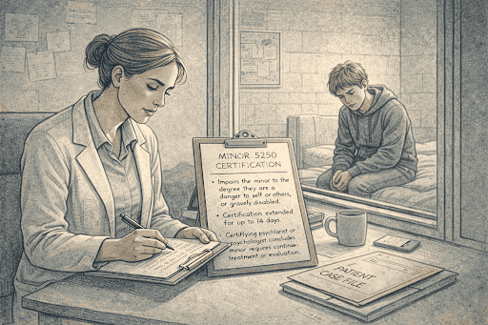
The transition from a 5585 hold to a 5250 hold requires formal certification. The treating psychiatrist must complete documentation explaining why continued involuntary treatment is necessary. Unlike the initial 72-hour hold, which can be initiated without court involvement, a 5250 hold triggers specific legal protections, including the right to a certification review hearing.
The Certification Review Hearing
One of the most important protections for minors placed on a 5250 hold is the right to a certification review hearing. This hearing must occur within four days of the certification unless the minor or their representative requests a postponement.
A certification review hearing is an informal legal proceeding held at the psychiatric facility, not in a traditional courtroom. The purpose is to determine whether there is sufficient evidence, known as probable cause, to justify continued involuntary detention.
During the hearing, a neutral hearing officer appointed by the court reviews the case. The facility must present evidence supporting the certification, and the minor has the opportunity to challenge this evidence.
Minors have several important rights during this process. They are entitled to assistance from a patient’s rights advocate who can help them understand the proceedings and present their case. They can also present evidence on their own behalf, question facility staff who support the certification, and request that specific people attend the hearing.
If the hearing officer determines that probable cause does not exist, the minor can no longer be held involuntarily. However, if probable cause is found, the 5250 hold continues. Minors who disagree with this outcome can file a writ of habeas corpus to request a formal court review before a judge.
Rights of Minors & Parents During a 5250 Hold
California law provides specific protections for minors in psychiatric facilities, and importantly, these rights cannot be waived by parents or guardians.
Minors retain the right to dignity, privacy, and humane care throughout their stay. They have the right to communicate with family members, receive visitors, make phone calls, and access writing materials unless specific safety concerns require temporary restrictions. Any denial of rights must be documented and explained.
For parents, the facility is required to make reasonable efforts to notify you as soon as possible when your child is placed on any involuntary hold. You have the right to be informed about your teen’s status, participate in treatment planning discussions, and be involved in discharge decisions.
Parents can also challenge a hold they believe was inappropriately applied. While this typically requires assistance from a mental health attorney, knowing this option exists can provide peace of mind during an overwhelming situation.
It’s worth noting that a 5250 hold is a medical intervention, not a criminal proceeding. The hold becomes part of your teen’s confidential medical record, protected under state and federal privacy laws. It does not appear on educational transcripts or create a public record.
What Happens After a 5250 Hold Ends?
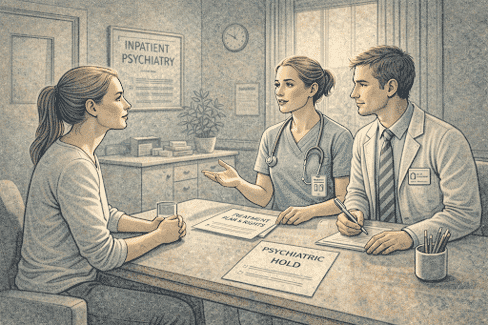
As the 14-day period approaches its end, the treatment team will evaluate your teen’s progress and determine the appropriate next steps. Several outcomes are possible.
If your teen has stabilized and no longer meets criteria for involuntary detention, they will be released. Before discharge, the facility is required to provide a written aftercare plan that includes follow-up appointments with mental health professionals, referrals to community resources, and crisis intervention contacts.
Some teens may choose to continue treatment on a voluntary basis. This option allows for a smoother transition and gives families more involvement in ongoing care decisions. Voluntary treatment can take place in residential, outpatient, or community-based settings, depending on your teen’s needs.
In situations where a minor continues to meet criteria despite 14 days of intensive treatment, additional holds may be considered. These extensions require further legal review and clinical documentation.
Regardless of the outcome, the period following a psychiatric hold is critical. The hold itself is designed to stabilize and assess, not to provide comprehensive long-term treatment. Continuing with appropriate mental health support after discharge significantly improves outcomes and helps prevent future crises.
Supporting Your Teen Through a Psychiatric Hold
Having your child placed on an involuntary psychiatric hold is one of the most difficult experiences a parent can face. While the situation feels overwhelming, there are meaningful ways you can support your teen through this process.
Stay informed and involved by maintaining regular communication with the treatment team. Ask questions about your teen’s progress, the treatment being provided, and what you can do to support their recovery. Request copies of evaluations and discharge summaries so you understand the clinical picture.
When you visit or speak with your teen, focus on listening without judgment. Acknowledge that this experience is difficult for them. Avoid minimizing their feelings or rushing to fix everything. Your calm, steady presence communicates safety and unconditional support.
Begin thinking about next steps before discharge. Work with the treatment team to understand what level of care your teen will need moving forward. Whether that involves residential treatment, intensive outpatient services, or regular therapy, having a plan in place creates continuity and structure.
Finally, take care of yourself. You cannot pour from an empty cup. Reach out to your own support system, whether that’s friends, family, or a therapist who can help you process this experience.
Mission Prep’s Approach to Adolescent Mental Health Crisis Care

Dealing with a psychiatric crisis with your teenager is overwhelming, but you don’t have to face it alone. At Mission Prep Healthcare, we specialize in supporting teens ages 12 to 17 and their families through mental health challenges, including the period before, during, and after a psychiatric hold.
Our programs are built around evidence-based therapies such as Cognitive Behavioral Therapy (CBT) and Dialectical Behavior Therapy (DBT). These approaches help teens understand their emotional responses, develop practical skills for managing intense feelings, and build resilience for handling future challenges. Treatment plans are individualized, recognizing that every teen’s situation is unique.
Family involvement is central to our approach. Through family therapy, parents gain insight into their teen’s struggles, learn effective strategies for responding during difficult moments, and work to strengthen relationships that may have been strained. We believe lasting recovery happens when the whole family is supported.
Mission Prep offers residential, outpatient, and telehealth options to meet families where they are. Our environments are designed to feel safe and welcoming, giving teens the space to practice new skills, learn from setbacks, and grow at their own pace. Whether your teen is transitioning out of a psychiatric hold or needs support before a crisis escalates, our team is here to help.
Frequently Asked Questions (FAQs)
What is the difference between a 5585 hold and a 5250 hold for minors?
A 5585 hold is the initial 72-hour involuntary psychiatric hold for minors in California, allowing for evaluation and stabilization. A 5250 hold is an extension that allows for up to 14 additional days of treatment when a minor continues to meet criteria after the initial hold expires.
Can parents request that their child be released from a 5250 hold?
Parents can advocate for their child and communicate concerns to the treatment team. However, the decision to release a minor from a 5250 hold is made by mental health professionals based on clinical assessment. Parents can also challenge a hold through legal means, typically with assistance from an attorney.
What happens if my teen still needs treatment after the 5250 hold ends?
If your teen continues to meet criteria for involuntary treatment, additional holds such as a 5260 or 5270 may be considered. Alternatively, if your teen is willing, they can transition to voluntary treatment. The treatment team will work with your family to develop an appropriate plan for continued care.
Does Mission Prep Healthcare support teens and families after a psychiatric hold?
Yes. Mission Prep Healthcare specializes in helping adolescents ages 12 to 17 transition from crisis stabilization to lasting recovery. Our team works closely with families to develop individualized treatment plans, provide evidence-based therapies like CBT and DBT, and ensure teens receive the ongoing support they need after discharge. We offer residential, outpatient, and telehealth options to meet each family’s unique circumstances.