

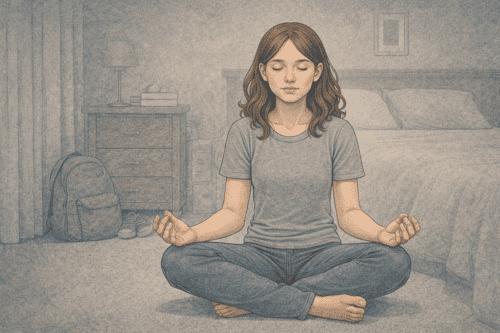
Key Takeaways
- Mindfulness practices can reduce anxiety symptoms in teens when practiced consistently.
- Simple 5-minute exercises, such as focused breathing and grounding techniques, can be done anywhere, even at school.
- Mindfulness helps teens develop crucial emotional regulation skills during a period when their brains are still developing.
- While mindfulness is powerful, knowing when to seek professional help remains essential for teens with severe anxiety.
- Mission Prep Healthcare offers comprehensive teen anxiety treatment that incorporates evidence-based therapies like CBT and DBT alongside holistic approaches to help adolescents build lasting coping strategies.
Teen Anxiety: A Growing Mental Health Challenge
Teen anxiety has reached unprecedented levels, with recent studies showing nearly 30% of adolescents will experience an anxiety-related disorder. This isn’t just normal teenage worry—it’s a significant mental health challenge that can interfere with development, academic performance, and social connections during critical formative years.
The digital world that teens navigate compounds these challenges. Between social media comparisons, academic pressures, and global concerns streaming onto their devices 24/7, today’s teens face unique stressors their parents never encountered.
Their developing brains are particularly vulnerable to these influences, making effective coping strategies not just helpful, but necessary.
How Anxiety Affects Teen Development
The adolescent brain undergoes dramatic restructuring, particularly in the prefrontal cortex—the area responsible for rational decision-making and emotional regulation. When anxiety takes hold, it can hijack this developmental process.
Chronic stress hormones like cortisol flood the brain, making it difficult to focus, process emotions, or make sound decisions. For teens, anxiety also manifests physically: racing heart, stomach discomfort, headaches, and sleep disturbances.
These symptoms can create a frustrating cycle where physical discomfort increases anxiety, which then intensifies the physical symptoms. Many teens describe feeling “stuck” in this loop, unable to break free using willpower alone.
The social impact can be equally devastating. Anxiety may cause teens to withdraw from friendships, avoid extracurricular activities, or experience academic decline. Without effective management strategies, these patterns can become entrenched, affecting long-term development and opportunities.
How Mindfulness Works to Reduce Teen Anxiety
The Science Behind Mindfulness and Anxiety Relief
Mindfulness practices activate the parasympathetic nervous system (the “rest and digest” mode), countering the sympathetic (“fight or flight”) response that characterizes anxiety. This shift manifests as lowered heart rate, regulated breathing, decreased muscle tension, and reduced stress hormone production—creating a state incompatible with high anxiety.
Perhaps most significantly, mindfulness helps break the cycle of rumination—the repetitive thought patterns that keep anxiety in motion. By bringing attention to the present moment, teens can interrupt the spiral of “what-ifs” and worst-case scenarios that fuel anxiety.
Research published in the Journal of Restorative Medicine found that teens who participated in an 8-week mindfulness program showed significant reductions in anxiety symptoms compared to control groups.
Why Mindfulness is Especially Effective for Teens
The teenage brain’s neuroplasticity—its ability to form new neural pathways—makes adolescence an ideal time to introduce mindfulness practices.
Skills learned during this period can become hardwired habits that serve teens throughout their lives. Unlike some interventions that only work while in use, mindfulness creates lasting changes in how teens relate to their thoughts and emotions.
Mindfulness also aligns with teenagers’ developmental drive toward autonomy and self-regulation. Rather than relying on external solutions or authority figures, mindfulness empowers teens with internal resources they can access independently.
5-Minute Mindfulness Activities for Busy Teens
1. Focused Breathing Technique
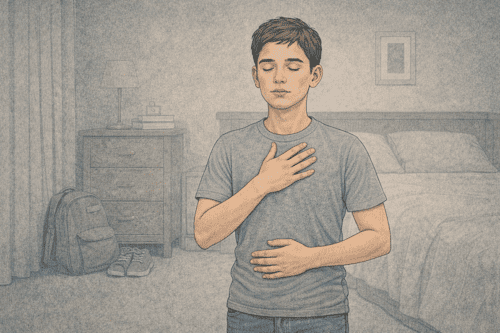
Focused breathing is a simple yet powerful breathing exercise that can be done anywhere—in class, before a presentation, or even during a challenging social situation.
To practice this technique, find a comfortable position and place one hand on your chest and the other on your stomach. Breathe in slowly through your nose for a count of four, feeling your stomach expand while your chest remains relatively still.
Hold for one count, then exhale gradually through slightly pursed lips for a count of six. Repeat this pattern for five minutes, focusing entirely on the sensation of breath moving in and out of your body.
Many teens report that after just 3–4 cycles of this breathing pattern, their thoughts begin to slow and physical symptoms of anxiety start to subside.
2. The 5-4-3-2-1 Grounding Exercise
When anxiety pulls you into spirals of worry about the future or rumination about the past, this sensory awareness exercise firmly anchors you back in the present moment.
Start by acknowledging five things you can see around you, noting their details with curiosity. Next, identify four things you can physically feel (the texture of your clothing, the pressure of your feet on the floor, the temperature of the air). Then, recognize three things you can hear, two things you can smell, and finally, one thing you can taste.
This technique works by engaging multiple sensory pathways, effectively “changing the channel” from anxious thoughts to present-moment awareness.
3. Mindful Music Listening
Music already forms an integral part of most teens’ lives, making this a particularly accessible mindfulness practice. Choose a song, ideally one without lyrics or with minimal words, and listen to it with complete attention for its entire duration.
Notice the different instruments, the patterns of sound and silence, the emotions the music evokes, and any physical sensations that arise as you listen. When your mind wanders (which it inevitably will), gently redirect your attention back to the music without self-criticism.
10–15 Minute Mindfulness Practices for Deeper Calm
1. Body Scan Meditation
The body scan practice helps teens reconnect with their physical selves, often counteracting the disconnection that anxiety can create. Find a comfortable position, lying down or sitting with your back supported.
Close your eyes or soften your gaze, then bring your attention to your feet. Notice any sensations present—warmth, coolness, tingling, pressure, or perhaps no sensation at all. There’s no need to change anything; simply observe with curiosity.
Gradually move your attention upward through your body—ankles, calves, knees, thighs—spending about 30 seconds with each area before moving on. Continue this process through your torso, arms, neck, and finally your head. Many teens discover that anxiety manifests in specific body regions, and this awareness alone can begin to release that physical tension.
2. Mindful Journaling for Anxiety Release

Mindfulness journaling practice combines the benefits of mindfulness with the therapeutic effects of expressive writing.
Set a timer for 10 minutes and write continuously about whatever thoughts, feelings, and sensations are present without trying to organize, edit, or censor yourself.
The key mindfulness element comes in observing these experiences without judgment—noticing anxious thoughts without labeling them as “bad” or something to be eliminated.
Teens are encouraged to use phrases like “I notice I’m having the thought that…” or “I’m observing the sensation of…” This slight shift in language creates a crucial bit of distance between you and your anxiety.
3. Guided Imagery for Stress Reduction
Guided imagery harnesses the mind’s powerful ability to influence the body’s physiological state. Find a quiet space where you won’t be disturbed and sit or lie down comfortably.
Close your eyes and bring to mind a place, real or imagined, where you feel completely safe, peaceful, and content. Engage all your senses in creating this mental sanctuary: What do you see around you? What sounds do you hear? What scents are in the air? What textures can you feel?
Explore this space for 10–15 minutes, returning to sensory details whenever your mind wanders.
When to Seek Additional Support
Parents and teens should watch for certain red flags that indicate anxiety has moved beyond what self-help strategies alone can address. If anxiety consistently interferes with daily functioning—causing school avoidance, withdrawal from previously enjoyed activities, or significant sleep disturbances—professional evaluation is warranted.
Similarly, if panic attacks occur frequently or seemingly without triggers, this suggests the need for additional intervention. Physical symptoms that persist despite mindfulness practices, such as chronic headaches, digestive issues, or unexplained pain, may indicate that anxiety has created physiological patterns requiring professional treatment.
Perhaps most importantly, any expressions of hopelessness, comments about life not being worth living, or indications of self-harm should trigger immediate professional consultation. Remember, seeking professional help isn’t a sign that mindfulness has “failed” or that anyone has done something wrong.
Just as you would consult a physician for persistent physical symptoms, mental health concerns sometimes require specialized care. Many effective treatments for teen anxiety exist, and mindfulness can complement these approaches beautifully.
How Mission Prep Healthcare Supports Teen Anxiety Recovery
Mindfulness activities offer you powerful tools for managing anxiety; however, when anxiety significantly impacts your daily life, relationships, or academic performance, professional support can make all the difference.
At Mission Prep Healthcare, we understand that effective anxiety treatment requires more than self-help strategies alone. Our residential treatment program provides a structured, supportive environment where teens receive individualized care from a multidisciplinary team of mental health professionals.

If you are struggling with anxiety that feels unmanageable, reach out to Mission Prep for professional help.
We use the biopsychosocial model to understand each client’s unique experience with anxiety, incorporating Cognitive Behavioral Therapy (CBT), Dialectical Behavior Therapy (DBT), and somatic experiencing into personalized treatment plans.
Beyond clinical interventions, we help teens explore sustainable practices, including movement, self-regulation techniques, and peer support, that complement mindfulness and build resilience for the future. Our approach focuses on creating lasting habits, not temporary fixes.
Contact us today to learn how our comprehensive teen anxiety treatment can help you and your family find lasting relief.
Frequently Asked Questions (FAQs)
How long does it take for mindfulness to start working for teen anxiety?
Some techniques provide immediate relief within minutes, but deeper neurological benefits typically emerge after 4–8 weeks of consistent daily practice. Many teens notice improvements in their relationship with anxious thoughts within the first two weeks.
Can mindfulness replace therapy or medication for teen anxiety?
Mindfulness works best as part of a comprehensive approach rather than a standalone solution. For mild to moderate anxiety, consistent practice may provide sufficient relief, but teens with severe symptoms often benefit from combining mindfulness with professional treatment.
What are the most discreet mindfulness exercises teens can use at school?
Anchor breathing, finger counting meditations, and subtly tensing and releasing muscle groups under a desk are all effective techniques that can be practiced without drawing attention from classmates or teachers.
How do I know if my teen needs professional help beyond mindfulness practices?
Seek professional evaluation if anxiety consistently interferes with daily functioning, causes school avoidance, leads to frequent panic attacks, or is accompanied by expressions of hopelessness or self-harm.
How does Mission Prep Healthcare incorporate mindfulness into teen anxiety treatment?
Mission Prep Healthcare uses a holistic approach that combines evidence-based therapies like CBT and DBT with somatic experiencing and movement-based practices. Our personalized treatment plans help teens develop sustainable tools for nervous system regulation and long-term anxiety management.