


Key Takeaways
- ADHD and learning disabilities are distinct conditions that affect teens differently, though they often get confused because both impact school performance and can look similar on the surface.
- ADHD primarily affects attention, impulse control, and activity levels across all areas of life, while learning disabilities impact specific academic skills like reading, writing, or math.
- Many teens have both ADHD and a learning disability at the same time, which is why comprehensive evaluation by professionals is essential for identifying the right support strategies.
- Proper diagnosis matters because effective treatment looks different for each condition, and misidentifying one for the other can delay the help your teen actually needs.
- Mission Prep Healthcare offers specialized therapeutic support for teens with ADHD and learning challenges, using family-centered approaches that build executive function skills, emotional regulation, and academic confidence without medication as the primary solution.
Understanding ADHD and Learning Disabilities: Not the Same Thing
When your teen struggles in school, it’s natural to wonder what’s causing the difficulty. Parents often hear terms like ADHD and learning disability used interchangeably, but these conditions are fundamentally different. Understanding the distinction helps you advocate for the right support and avoid frustration from strategies that don’t match your teen’s actual needs.
Both conditions can make school feel overwhelming, but they create challenges in different ways. ADHD affects how your teen manages attention and controls impulses throughout their entire day. Learning disabilities, on the other hand, create specific roadblocks in processing certain types of information, usually academic skills like reading or math.
The confusion makes sense because both can lead to incomplete homework, poor test scores, and mounting frustration. But getting the diagnosis right opens doors to targeted help that actually works for your teen’s unique brain.
What is ADHD?
ADHD, or Attention-Deficit/Hyperactivity Disorder, is a neurodevelopmental condition that affects how the brain regulates attention, manages impulses, and controls activity levels. Teens with ADHD have brains that process information differently, making it harder to stay focused on tasks that don’t immediately grab their interest.
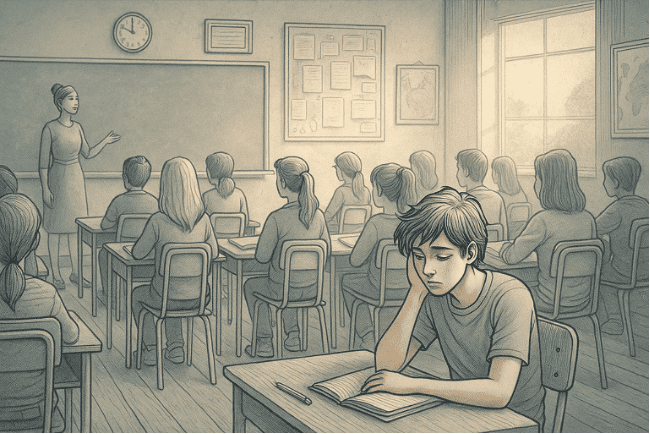
Teens with ADHD often struggle to maintain focus during classroom lectures, even when they want to pay attention, as their brains process information differently than their peers.
Core Symptoms of ADHD in Teens
The inattentive side of ADHD shows up as difficulty maintaining focus during lectures or lengthy tasks, frequent careless mistakes despite knowing the material, trouble organizing schoolwork or personal belongings, and a tendency to lose track of important items. Your teen might start assignments but struggle to finish them, or seem like they’re not listening even when you’re speaking directly to them.
Hyperactivity in teens often looks different from that of younger children. Instead of constant physical movement, you might notice restlessness, fidgeting, difficulty sitting through classes or family dinners, or a sense that your teen is internally “revved up” even when sitting still. They might feel compelled to constantly move their legs, tap their fingers, or shift position.
Impulsivity manifests as interrupting conversations, making decisions without thinking through consequences, difficulty waiting their turn, or blurting out answers before questions are finished. This can create social challenges and lead to risky choices that your teen regrets later.
How ADHD Affects Daily Life
ADHD touches every part of a teen’s world. Time management becomes a puzzle when their brain struggles to estimate how long tasks will take. Social relationships can suffer when impulsive comments hurt feelings or when they lose track of conversations. Sleep patterns often go haywire, and emotional regulation feels like riding a rollercoaster.
The executive function challenges that come with ADHD make planning, prioritizing, and following through feel exhausting. Your teen might have brilliant ideas but struggle to execute them, leading to a growing gap between their potential and their performance.
What Are Learning Disabilities?
Learning disabilities are neurological conditions that affect how the brain processes, stores, or communicates information. These aren’t problems with intelligence or effort. Teens with learning disabilities have average or above-average intelligence but face specific challenges in acquiring certain academic skills.
Common Types of Learning Disabilities
Dyslexia affects reading and language processing. Teens with dyslexia might struggle to decode words, read fluently, or spell accurately despite strong verbal skills. They often reverse letters or numbers, have trouble sounding out unfamiliar words, or avoid reading aloud because it feels overwhelming.
Dyscalculia impacts mathematical thinking and number sense. Teens with dyscalculia genuinely struggle to understand mathematical concepts, remember math facts, or grasp the logic behind problem-solving steps. They might have trouble with time management, measuring, or handling money.
Dysgraphia creates challenges with writing. This goes beyond messy handwriting to include difficulty organizing thoughts on paper, struggling with spelling and grammar, or experiencing physical discomfort during writing tasks. Teens with dysgraphia often have rich ideas they can express verbally but can’t translate to written form.
How Learning Disabilities Show Up in School
Learning disabilities create a puzzling pattern where your teen excels in some areas but struggles intensely in others. They might contribute insightfully to class discussions but bomb written tests, or grasp complex scientific concepts but stumble over reading assignments.
The effort required to work around their learning disability often leaves teens exhausted. They might need three times as long to complete homework compared to peers, not because they’re slow or unfocused, but because their brain has to work harder to process the information.

Teens with learning disabilities often show uneven academic profiles, excelling in some subjects while struggling significantly in specific skill areas that their brain processes differently.
Key Differences Between ADHD and Learning Disabilities
The Focus Factor
ADHD creates difficulty sustaining attention across all types of tasks and situations. Your teen might struggle to focus on homework, conversations, chores, or activities equally. Learning disabilities don’t affect overall attention span. A teen with dyslexia can focus intensely on a video game or art project but struggles specifically when reading is involved.
Skill-Specific vs. Broad Impact
Learning disabilities target specific academic skills while leaving others untouched. A teen with dyscalculia might write beautiful essays but freeze during math class. ADHD impacts multiple areas of life simultaneously, affecting academic performance, social relationships, time management, and emotional regulation all at once.
Different Brain Processing
ADHD involves challenges with executive function, which acts like the brain’s management system. Learning disabilities involve challenges with how the brain receives, processes, or expresses specific types of information. The neurological pathways work differently, which is why treatment approaches need to match the actual condition.
When ADHD and Learning Disabilities Occur Together
Many teens have both ADHD and one or more learning disabilities. This co-occurrence isn’t coincidental. The same neurological differences that create one condition can contribute to developing the other.
When both conditions exist together, symptoms can mask or amplify each other. A teen with both ADHD and dyslexia might avoid reading not just because decoding is hard, but because sitting still long enough to practice feels impossible. Their reading struggles might worsen because ADHD makes it harder to employ the extra strategies needed to work around dyslexia.
This overlap makes comprehensive evaluation crucial. Surface-level assessments might catch the more obvious condition while missing the second one, leading to interventions that only partially address your teen’s needs. Effective support requires understanding the full picture of how your teen’s brain works.
Why Mission Prep is Your Partner for ADHD and Learning Support

Mission Prep facilities provide comfortable, structured environments where teens with ADHD and learning differences can build executive function skills and emotional regulation strategies.
When ADHD or learning disabilities are affecting your teen’s confidence, academic progress, and emotional well-being, specialized support can transform their experience. Mission Prep Healthcare understands that these challenges impact the whole family and that every teen’s brain works uniquely.
Our comprehensive programs for adolescents aged 12 to 17 address the complex challenges of ADHD and learning differences through residential, outpatient, and telehealth services. We focus on building executive function skills, emotional regulation, and learning strategies that help teens thrive without relying on medication as the primary solution.
What sets our approach apart is how we work with your teen’s natural strengths while developing practical skills for their specific challenges. For teens with ADHD, we teach proven techniques for managing attention, organizing tasks, and regulating emotions. For those with learning disabilities, we help develop compensatory strategies and build confidence in their abilities.
We involve families throughout the process because managing ADHD or learning disabilities works best when everyone understands how to provide consistent support. Our licensed therapists equip families with tools that continue working long after formal treatment ends.
Our safe, structured environment gives teens space to practice new skills, experience success, and rebuild confidence that may have been damaged by years of struggle. We celebrate their unique strengths while helping them develop the specific skills needed to navigate academic demands and life challenges.
Every aspect of our program prepares teens for long-term success, building academic skills and the emotional resilience and self-understanding that will serve them throughout their lives. When you choose Mission Prep, you’re partnering with a team that sees your teen’s potential and knows how to help them reach it.
Frequently Asked Questions (FAQ)
Can my teen have both ADHD and a learning disability?
Yes, many teens have both conditions simultaneously. The co-occurrence is common because similar neurological factors can contribute to both. Comprehensive evaluation helps identify whether one or both conditions are present, which is essential for creating an effective support plan that addresses all of your teen’s needs.
How do I know if my teen’s school struggles are from ADHD or a learning disability?
The pattern of difficulties provides clues. ADHD creates challenges across multiple areas of life and all academic subjects, while learning disabilities typically impact specific skills. However, professional evaluation is the only reliable way to distinguish between them, especially since many teens have both conditions.
Will my teen outgrow these conditions?
Neither ADHD nor learning disabilities simply disappear with age, but teens can develop highly effective strategies for managing them. With proper support, many adults with these conditions lead successful, fulfilling lives. Early intervention and skill development during the teen years create a foundation for lifelong success.
What kind of therapy helps with ADHD and learning disabilities?
Cognitive behavioral therapy helps teens develop organizational skills, emotional regulation, and positive self-talk. Executive function coaching builds planning and time management abilities. For learning disabilities, specialized tutoring with trained professionals and occupational therapy can be beneficial. Mission Prep offers comprehensive therapeutic approaches for each teen’s specific needs.
How does Mission Prep support teens with ADHD and learning challenges?
Mission Prep provides residential, outpatient, and telehealth programs specifically designed for adolescents dealing with ADHD, learning disabilities, anxiety, and related challenges. Our family-focused approach includes therapy, executive function skill building, and emotional resilience development through personalized care plans that don’t rely primarily on medication.