
Key Takeaways
- Teen anxiety is rising rapidly due to social media pressure, academic stress, and emotional overload.
- Art therapy gives teens a safe, nonverbal way to process feelings they can’t always explain.
- Creative expression engages the brain’s calming pathways, reducing stress and improving focus.
- Regular art therapy builds resilience, emotional awareness, and self-confidence that last beyond treatment.
- Mission Prep Healthcare helps teens heal and grow through compassionate, evidence-based programs that include art therapy for balanced emotional recovery.
Teen Anxiety: A Growing Mental Health Crisis
Anxiety among adolescents has reached unprecedented levels, with nearly one in three teens experiencing an anxiety disorder before adulthood. The teenage years bring a complex mix of biological, social, and emotional changes that can overwhelm even the most resilient young minds.
In today’s world, factors such as social media pressures, academic expectations, global uncertainty, and identity exploration amplify these challenges. Since the pandemic, rates of anxiety have continued to climb, leaving many teens feeling constantly “on edge” or unable to relax.
What makes teen anxiety especially concerning is how often it goes unnoticed or misunderstood. Many adolescents lack the emotional language to express what they feel, or worry they’ll be judged if they admit to struggling. As a result, anxiety may surface in ways that are easy to misinterpret as irritability, school refusal, physical complaints, or social withdrawal that appear to be “typical” teenage behavior.
When left untreated, these symptoms can evolve into long-term difficulties, affecting academic progress, self-esteem, and relationships well into adulthood.
Traditional talk therapy, while effective for many, doesn’t always work with anxious teens. Some find it difficult to open up in direct conversation or feel intimidated by the process. This is where creative and expressive approaches, such as art therapy, can bridge the gap, helping teens externalize their emotions, build insight, and regain a sense of control in a safe, supportive way.
How Art Therapy Breaks Through Where Words Fail
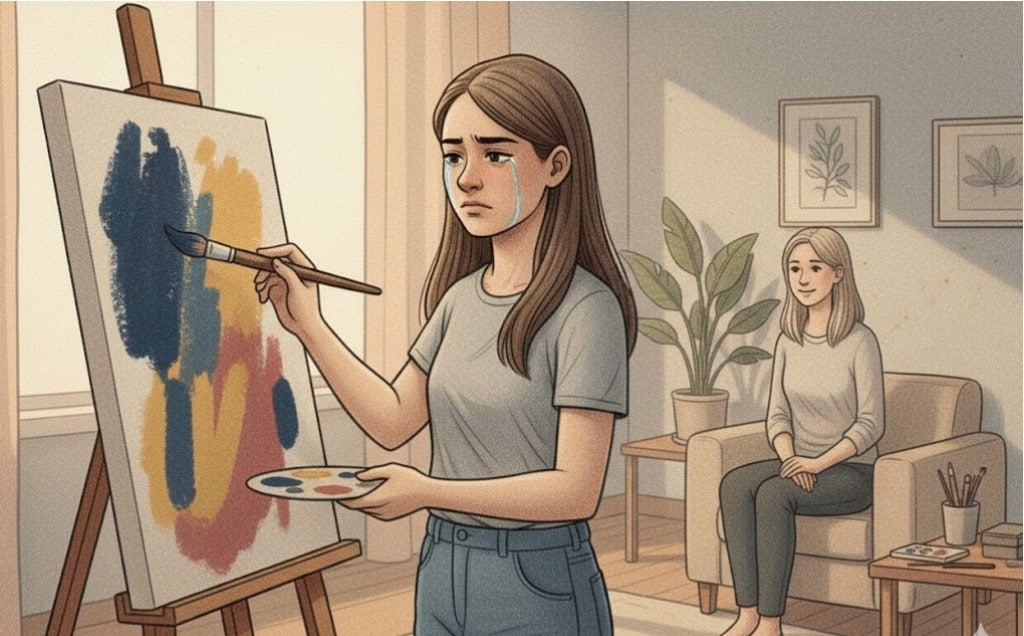
For many anxious teens, talking about emotions can feel impossible. Art therapy has another way to communicate that bypasses words and taps directly into feeling. Through painting, drawing, sculpture, or collage, teens can project their worries outward, transforming what feels overwhelming into something visible and manageable.
A trained art therapist guides this process with purpose, helping teens uncover and process emotions that might otherwise stay buried. The artwork becomes a bridge between a teen’s inner world and the outside world, a safe way to express what’s hard to say.
Why Art Therapy Feels Different
Art therapy blends psychology with creative expression, engaging both mind and body. It activates sensory pathways, such as sight, touch, and sometimes sound, that verbal therapy alone can’t reach. For anxious teens, this multi-sensory process helps release physical tension and regulate emotions more holistically.
Licensed art therapists are specially trained to interpret visual symbols and guide creative expression therapeutically. Sessions often mix structured prompts with open-ended creativity, helping teens feel safe while still free to learn.
The Brain Science Behind Art and Calm
Neuroscience shows why creating art eases anxiety. Art therapy activates the brain’s reward system, releasing dopamine and reducing fear, helping teens feel calmer and more focused. Creative expression engages both emotion and logic, turning anxiety into mindful concentration. Studies show that art-making lowers amygdala activity, the brain’s fear center, while boosting self-reflection and emotional control.
Why Teens Connect with Creative Approaches
Art naturally aligns with adolescence, a time of identity, emotion, and exploration. Teens gain a sense of agency as they choose colors, shapes, and materials, experiencing control in a world that often feels unpredictable.
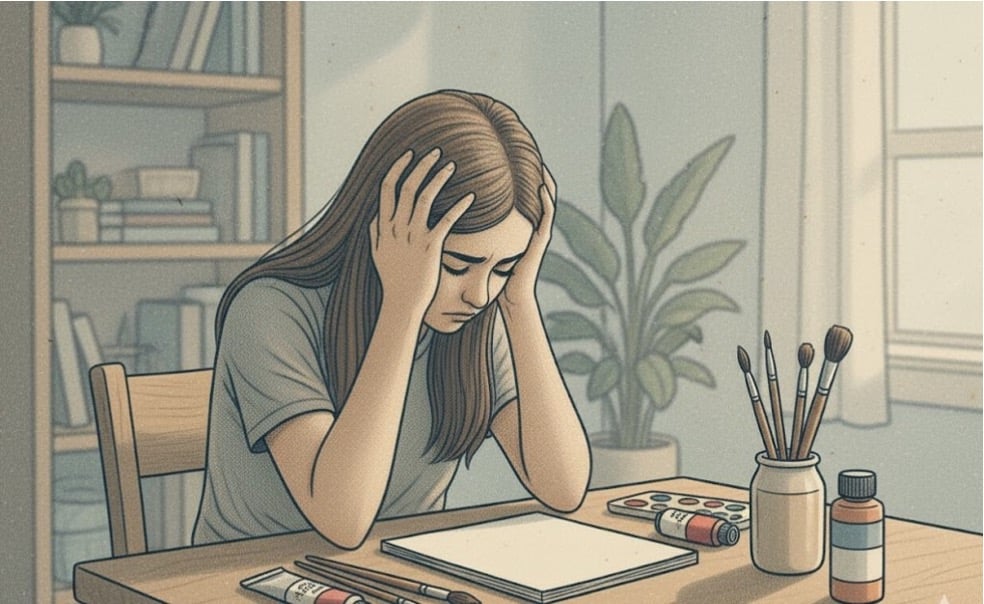
Some teens feel trapped in silent anxiety, unsure how to express what’s happening inside.
Art therapy also has a nonverbal outlet for those who struggle to describe what they feel. And in an age dominated by screens, the hands-on, tactile nature of art provides grounding relief, engaging the senses, slowing racing thoughts, and anchoring teens in the present moment.
5 Powerful Ways Art Therapy Helps Anxious Teens
Art therapy offers teens more than just creative expression; it engages the mind, body, and emotions to bring lasting relief from anxiety. Combining self-expression, emotional processing, and mindfulness helps anxious adolescents gain balance, confidence, and calm.
1. Safe Expression Without Judgment
Art therapy gives teens a safe, nonverbal way to share what feels too hard to say. In this judgment-free space, emotions emerge naturally through colour, texture, and imagery. For teens who fear being judged, this process encourages self-acceptance and emotional honesty, often for the first time.
2. Builds Emotional Awareness and Regulation
Through art, teens learn to recognise and manage their emotions. Turning anxiety into a visual form makes it easier to understand and discuss. The creative process itself, planning, adjusting, and completing a piece, teaches patience, problem-solving, and healthy coping, mirroring emotional regulation in everyday life.
3. Reduces Stress in the Body
Art-making activates the body’s relaxation response, lowering stress hormones like cortisol. The calm focus of drawing, painting, or sculpting slows racing thoughts and restores physical balance. Over time, this repeated sense of calm helps retrain the nervous system to respond to stress more gently.
4. Teaches Lasting Coping Skills
Art therapy equips teens with practical tools they can use outside sessions, such as drawing to ground themselves, creating emotion colour wheels, or using sketching as mindful breathing. These skills feel natural and stigma-free, helping teens manage anxiety in school, social, and home environments.
5. Builds Confidence and Self-Esteem
Every completed artwork is tangible proof of progress. For anxious teens, that sense of accomplishment rebuilds confidence and counteracts self-doubt. In group sessions, sharing artwork and receiving support from peers also strengthens belonging and self-worth.
Real Evidence: What Research Says About Art Therapy
Recent years have brought a surge of scientific evidence supporting art therapy for adolescent anxiety. Research now goes beyond anecdotal stories, showing measurable improvements in anxiety symptoms, school engagement, and emotional regulation. These findings highlight why creative expression relates so strongly with the teenage brain.
Scientific Studies on Teen Anxiety and Art Therapy
Recent research underscores that art therapy is a safe, non-pharmacological, and highly effective method for easing anxiety in children and adolescents. Studies highlight its role in promoting calm and emotional balance without the need for medication. Experts suggest that these findings have important implications for how mental health programs are designed, encouraging clinicians to include creative, low-risk therapies that meet each teen’s unique emotional needs.
Long-Term Benefits for Mental Health
Art therapy’s benefits go beyond short-term symptom relief. Teens who engage in regular creative therapy develop stronger emotional intelligence and learn to process feelings more effectively, skills that support mental health through major life transitions like college and adulthood.
Perhaps most importantly, art therapy helps redefine anxiety. Teens begin to see it not as a flaw or failure but as a message from their mind and body, something to understand, not fear. This reframing fosters lasting self-awareness, resilience, and emotional growth.
Art Therapy Activities That Work Best for Teen Anxiety
Effective art therapy uses creative methods to help teens identify, express, and manage anxiety. A professional therapist tailors techniques to each individual, but certain evidence-based activities consistently support emotional regulation and self-awareness.
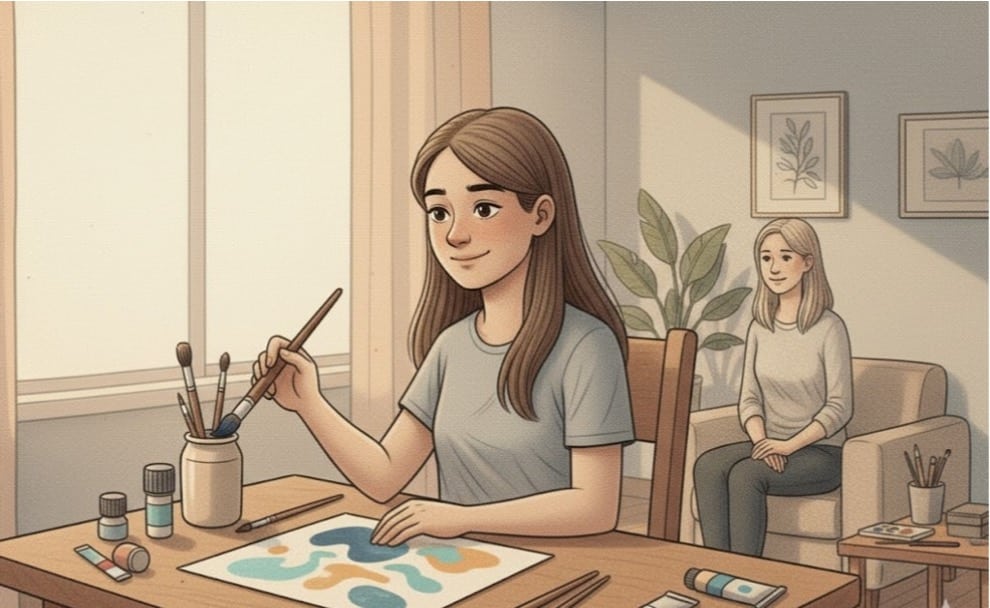
Art becomes the language for what words can’t say.
Drawing and Painting Exercises
Anxiety maps help teens visualise triggers using colours and symbols, turning abstract worries into something they can understand and discuss. Guided visualisation with painting allows teens to express the body sensations tied to anxiety, helping them spot early warning signs. Sequential drawing lets adolescents illustrate stressful events from start to resolution, reinforcing confidence and positive coping skills.
Sculpture and 3D Art Projects
Clay work grounds anxious teens through tactile engagement, easing tension and providing a physical outlet for stress. Worry containers, decorated boxes, or jars help teens symbolically store anxious thoughts, creating healthy mental distance. Safe space dioramas allow teens to build comforting environments, reinforcing feelings of calm that they can mentally revisit during anxious moments.
Collage-Making for Emotional Processing
Identity collages encourage self-exploration beyond anxiety, helping teens recognise their strengths and diverse identities. Future visualisation collages inspire hope and motivation by depicting positive goals and possibilities, countering anxiety’s focus on fear.
Digital Art Options for Tech-Savvy Teens
Photography projects promote mindfulness by highlighting details that bring calm or joy. Digital storytelling and animation help teens reframe anxious experiences through metaphor and narrative. Music-integrated visuals combine sound and imagery to help teens distinguish and express complex emotional states.
Is Art Therapy Right for Every Anxious Teen?
Art therapy can be transformative for many adolescents, but it isn’t always the best starting point for everyone. Each teen’s comfort level, learning style, and anxiety presentation affect how well they’ll respond to creative methods.
Signs Art Therapy Might Be Ideal
- Difficulty verbalizing feelings
- History of creative interest
- Physical signs of anxiety (e.g., restlessness, tension)
- Resistance to traditional talk therapy
- Preference for hands-on or visual learning
Signs Another Approach Might Be Better
- Strong resistance to creative activities
- Severe anxiety needing immediate stabilization
- Preference for highly structured or concrete methods
- Co-occurring conditions requiring specialized care
- Limited access to a licensed art therapist
When to Consider Other Approaches
If a teen remains disengaged despite encouragement, therapies like CBT, DBT, or ACT may be more effective. These evidence-based approaches help teens identify thought patterns, build coping skills, and manage anxiety without relying on creative expression.
Combining Art Therapy with Other Treatments
For many teens, art therapy works best as part of an integrated plan. It can complement individual or family therapy, group sessions, and, when appropriate, medical care. This multimodal approach helps address both the emotional and cognitive dimensions of anxiety, promoting lasting recovery.
Mission Prep: Guiding Teens Toward Healing and Growth
At Mission Prep Healthcare, every teen’s journey is met with compassion, structure, and evidence-based care. Designed exclusively for adolescents aged 12–17, Mission Prep’s residential and outpatient programs help teens facing anxiety, trauma, mood disorders, and technology dependence find stability and confidence in a supportive, home-like environment.
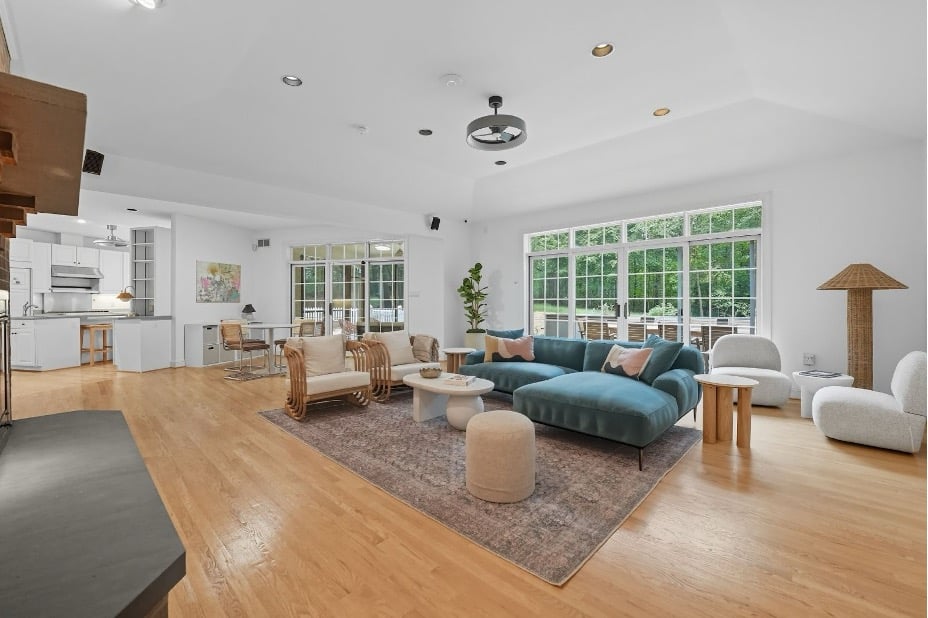
At Mission Prep, art therapy gives teens a safe space to turn anxiety into self-expression and growth.
Art therapy is one of the many integrative approaches used within Mission Prep’s programs to help teens express emotions, process experiences, and reduce anxiety in non-verbal, creative ways. Combined with therapies like CBT, DBT, EMDR, and family therapy, art therapy provides an outlet for emotional growth while strengthening self-awareness and communication skills.
Each treatment plan also includes academic continuity and family engagement to ensure long-term success, nurturing not only recovery but also resilience and renewed purpose.
Frequently Asked Questions (FAQs)
Does my teen need artistic talent?
Not at all. Art therapy focuses on expression, not artistic ability. The process itself, choosing colors, shaping clay, or sketching feelings, is what promotes healing. Many anxious teens who initially fear judgment discover freedom in creating without pressure to “perform” or produce perfect art.
How is art therapy different from an art class?
Art classes focus on skill-building and technique, while art therapy focuses on emotional healing and self-understanding. Art therapists guide creative activities toward personal growth, anxiety management, and emotional regulation without judgment or performance evaluation.
What materials are used in art therapy?
Teens work with materials like paint, markers, clay, collage, and digital tools depending on comfort and therapeutic goals. The choice of medium often reflects emotional needs, for example, clay for grounding, paint for emotional release, or collage for self-exploration.
Can parents be involved in art therapy?
Yes. Family sessions or parent check-ins help bridge communication between home and therapy. Therapists may invite parents to discuss themes emerging in their teen’s artwork or learn supportive ways to respond to anxiety without judgment or pressure.
What if my teen refuses to participate?
Resistance is common at first, especially among anxious or perfectionistic teens. Art therapists are skilled at introducing creative work gently, through simple, low-pressure activities that help teens feel safe and in control. Over time, many discover that art gives them a voice when words are hard to find. At Mission Prep, therapists meet each teen where they are, supporting gradual trust-building so creativity can become a pathway to healing and self-expression.