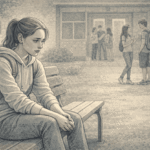

Many people try to stay up to date with current events. This can involve everything from reading a newspaper to subscribing to online news sources to scrolling through social media. Today’s teens spend more time on their phones than ever before, and because of that, they are consistently exposed to world events. Whether they are looking on Reddit, Facebook, Instagram, or other social media platforms, they are likely to come across information about stressful global events.
Unfortunately, once you become aware of these global events, it can lead to a type of anxiety known as adverse event anxiety. The relationship between news anxiety and mental health is complex, and finding the right coping strategies will vary from person to person. This blog post will focus on eight ways of coping with global events anxiety.
1. Limit Media Exposure
Research has widely shown that exposure to negative media can be detrimental to mental health. A major reason for this is that people tend to remember and focus on negative news more than positive or neutral news events. Specific research has reported a direct relationship between media exposure and stress-related symptoms. This is particularly apparent when looking at war and global conflict stress. Other adverse events linked to anxiety include economic uncertainty, climate change, and the COVID-19 pandemic.1–4
Decreasing the amount of time you spend reading negative news stories can therefore potentially help protect your mental health. For teenagers and young people, limiting social media use is particularly important as it has been shown to cause various emotional and mental health difficulties. Some easy ways to limit your use include setting aside specific times for social media, putting your phone away during meals, and engaging in activities that don’t involve social media or screens.1,2
2. Strengthen Your Support System
Making sure that you have the right support system is crucial when coping with global events anxiety. If you are feeling overwhelmed by world news, it is important to talk to people you trust. Reaching out to your parents, friends, or teachers can help you process these difficult feelings and get some perspective. By sharing your fears and asking for help, you will be better equipped to combat adverse event anxiety.1,3
Increasing the amount of time you spend with your loved ones has long been shown to promote better mental health outcomes. If you are being affected by global events or other causes of stress in your life, leaning on your closest emotional support system can be a big help. Sometimes, teens dealing with high levels of anxiety or depression might want to isolate themselves from their support system. Fighting this urge to withdraw from others is one part of preventing chronic anxiety from news exposure.
3. Improve Media Literacy
Media literacy involves learning how to access, analyze, assess, create, and share media, as well as understanding how to critically think about the information being presented to you. One major goal of media literacy is improving health outcomes for those exposed to negative news and who are at a greater risk of experiencing global crisis anxiety.3,5
Recently, studies have focused on new media literacy, which corresponds to online social media. There are four components of new media literacy for promoting mental health during global uncertainty:5
- You need to know how to access the news and understand the literal meaning.
- You move on to critically thinking about the news, which may involve questioning, criticizing, and challenging the credibility of sources.
- You work on producing your own content based on your personal views.
- You participate in other news media environments.
These steps can help you make sense of what you’re consuming, spot unreliable or misleading information, and limit the emotional toll of constant negative news.
4. Stop Doomscrolling
Doomscrolling is a term that was coined during the COVID-19 pandemic. It refers to compulsively looking for negative news, even when it induces anxiety. The problem with doomscrolling is that many people have a hard time breaking the habit, despite knowing that the activity is causing intense distress. This is especially true in times of global uncertainty.2–4
At its core, doomscrolling is a maladaptive coping mechanism, where you try to decrease your anxiety by remaining constantly informed. Doomscrolling is one of the many climate anxiety coping strategies that have been identified in recent research. This has led to the emergence of the term climate change doomscrolling, which is just as ineffective as general doomscrolling.2–4
Strategies for combating doomscrolling include managing time spent online, limiting exposure to negative news, and balancing negative content with positive information.2–4

5. Build Cognitive Flexibility
There is a clear link between our stress response and uncertainty. When people are exposed to large amounts of negative news, they often feel uncertain about the future. Learning to tolerate a certain level of uncertainty is important for decreasing political unrest anxiety. However, many people feel compelled to eliminate uncertainty altogether. When uncertainty persists, this often leads to rigid thinking patterns, which are linked to poorer mental health outcomes.1
To build cognitive flexibility, teens can take part in various therapeutic interventions. Cognitive behavioral therapy (CBT) is a form of therapy that challenges negative thinking patterns. Recently, it has been adapted to specifically target intolerance of uncertainty (IU). CBT-IU teaches adolescents practical ways to cope with anxiety about global events. For example, it has been successfully used to help teens cope with pandemic-related stress, economic instability, and geopolitical crises.1
6. Engage in Mindfulness-Based Stress Reduction
Mindfulness-based stress reduction (MBSR) programs and mindfulness-based cognitive therapy have been shown to mitigate the negative effects of exposure to distressing news. This is an important area of study for a better understanding of how to manage stress from world news.6
Mindfulness training involves being aware of the present moment without judgment. In general, mindfulness is related to a more positive attitude and overall improvements in subjective well-being. Some of the techniques focused on in mindfulness training include breathwork, body scanning, and conscious awareness of thoughts.6 Regular practice can help create distance between you and distressing news, allowing you to stay informed without becoming overwhelmed.
7. Improve Emotion Regulation Skills
Another form of therapy that has been used to reduce intolerance of uncertainty is dialectical behavior therapy (DBT). While DBT also has a mindfulness component, another important therapeutic module is emotion regulation. Emotion regulation involves being able to identify your emotions and manage strong emotions effectively.1,7
In DBT, there are specific skills used for emotion regulation. One of these skills is PLEASE, which is an acronym for treating PhysicaL illness, balancing Eating, avoiding mood-Altering substances, balancing Sleep, and getting Exercise. The goal of this skill is to reduce your vulnerability to negative events and emotions. Ensuring that you are eating and sleeping well, exercising, and taking care of your overall physical health can help protect you from world event stress.
In addition to PLEASE, many of the other skills learned in DBT can also serve as positive strategies for dealing with political and global stress.1,7
8. Practice Radical Acceptance
The ability to accept negative situations as they are is an important skill for promoting better mental health. In DBT, this skill is known as radical acceptance. The goal of radical acceptance is to understand that bad things will happen in your life, but that there are some things you cannot change. Radical acceptance does not mean that you agree with what is happening in the world around you. You can be angry and upset with current world events and still accept them.1,7
Another form of therapy that focuses on acceptance is acceptance and commitment therapy (ACT). This form of therapy is helpful when people want to avoid distressing situations. ACT teaches you to accept the current situation and that you don’t have to avoid distressing events. You can feel negative emotions and still cope in a healthy way.1
Knowing how to cope with stress resulting from world events may require seeking help from a mental health professional. There are many structured therapy programs available to support teens during stressful times. Mission Prep can help you find the optimal treatment program.
Mission Prep: Supporting Teen Mental Health During Global Uncertainty

Whether your child is managing an anxiety disorder, depression, or other stress-related conditions, you will find a Mission Prep treatment option tailored to your child’s needs. Our programs span multiple levels of care, including inpatient psychiatric services, residential mental health treatment, and outpatient therapy.
Our clinical team understands that global events can feel overwhelming for teenagers, particularly those already navigating anxiety or depression. We help teens develop the skills they need to process difficult news without becoming consumed by it.
If you are ready to seek professional help for your teen, contact Mission Prep today. A member of our team is here to listen to your current circumstances and offer recommendations for effective mental health care.
References
- Kesner, L., Juríčková, V., Grygarová, D., & Horáček, J. (2025). Impact of media-induced uncertainty on mental health: Narrative-based perspective. JMIR Mental Health, 12, e68640. https://doi.org/10.2196/68640
- Dixit, K., & Ashutosh, D. K. (2025). Collective stress during crisis-based doomscrolling. TPM–Testing, Psychometrics, Methodology in Applied Psychology, 32(S7), 2751–2763. https://doi.org/10.5281/zenodo.18172414
- Ahmad, Z., Khan, H. R., & Zainab. (2025). Doomscrolling and existential anxiety among emerging adults in Pakistan: Moderating role of cognitive reappraisal. Journal of Nursing and Allied Health, 3(4), 211–216. https://doi.org/10.37939/jnah.v3i04.198
- Dominguez-Rodriguez, A., Apprich, F., Friehs, M. A., van der Graaf, S., & Steinrücke, J. (2025). Climate change news and doomscrolling: An examination of influencing factors and psychological effects. Acta Psychologica, 255, 104925. https://doi.org/10.1016/j.actpsy.2025.104925
- Hung, S. C., Yang, S. C., & Luo, Y. F. (2021). New media literacy, health status, anxiety, and preventative behaviors related to COVID-19: A cross-sectional study in Taiwan. International Journal of Environmental Research and Public Health, 18(21), 11247. https://doi.org/10.3390/ijerph182111247
- Yang, Y., Su, F., Liu, H., & Li, X. (2023). The effect of mindfulness intervention on internet negative news perception and processing: An implicit and explicit approach. Frontiers in Psychology, 14, 1071078. https://doi.org/10.3389/fpsyg.2023.1071078
- O’Hayer, C. V. (2021). Building a life worth living during a pandemic and beyond: Adaptations of comprehensive DBT to COVID-19. Cognitive and Behavioral Practice, 28(4), 588–596. https://doi.org/10.1016/j.cbpra.2020.12.005