


Key Takeaways
- Father-son enmeshment involves blurred emotional boundaries where a parent becomes overly dependent on a child for emotional fulfillment and validation.
- Common signs include difficulty making independent decisions, guilt when pursuing personal interests, and a sense of responsibility for a parent’s emotional state.
- This dynamic often leads to identity confusion, anxiety, relationship difficulties, and challenges in forming healthy peer relationships during the teen years.
- Treatment approaches like CBT, DBT, and family therapy help teens establish healthy emotional boundaries while preserving meaningful parent-child connections.
- At Mission Prep Healthcare, we offer evidence-based, family-centered treatment programs specifically designed to help teens aged 12–17 navigate complex family dynamics.
What Is Father-Son Enmeshment?
Father-son enmeshment is a relational dynamic where emotional boundaries between a parent and child become blurred or nonexistent. In this pattern, a father often relies on his son for emotional support, validation, or companionship in ways that are developmentally inappropriate. The son may feel responsible for his father’s happiness, leading to a loss of individual identity and autonomy.
This dynamic differs from a close, healthy bond because it prioritizes the parent’s emotional needs over the child’s development. Instead of encouraging independence, the father may unconsciously stifle the teen’s growth to maintain their connection. Recognizing these signs early is critical for helping adolescents establish healthy boundaries and self-worth.

Signs to Identify Father-Son Enmeshment
Recognizing enmeshment can be difficult because it frequently disguises itself as deep family loyalty. However, specific patterns often emerge when closeness crosses into unhealthy territory.
Difficulty with Boundaries and Independence
A teen in an enmeshed relationship may struggle to make even minor decisions without his father’s input. He might experience significant anxiety when spending time away from home or pursuing hobbies his father does not share. Personal friendships often suffer as the teen prioritizes maintaining his father’s approval above all else.
Excessive Guilt and Emotional Responsibility
Sons in these dynamics frequently feel responsible for their father’s emotional well-being. If the father is stressed or upset, the son may believe it is his job to fix the situation. This reverses the typical parent-child role, placing adult emotional burdens on a developing adolescent.
Identity Confusion
Teens need space to discover who they are apart from their parents. In enmeshed relationships, independent exploration feels like a betrayal of the father. The son may adopt his father’s career aspirations or political views without question, leading to confusion about his own values later in life.
Examples of Father-Son Enmeshment
Understanding this dynamic becomes clearer through practical scenarios. These examples illustrate how enmeshment manifests in daily life:
- A father shares detailed marital problems with his teenage son, expecting the teen to offer advice or take his side. The son feels special for being a confidant but becomes overwhelmed by adult issues he cannot solve.
- A father discourages his son from seeing friends, framing it as a preference for “family time.” The son feels guilty for wanting a social life and gradually withdraws from peers to avoid disappointing his dad.
- A father lives vicariously through his son’s athletic or academic achievements. The son loses his own motivation, performing solely to manage his father’s self-esteem rather than for his own fulfillment.
How Enmeshment Affects Teen Development
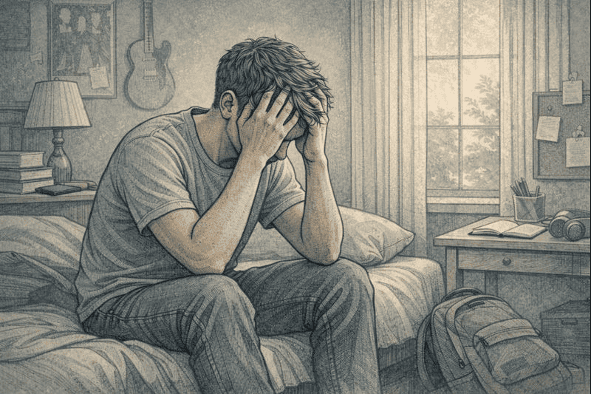
Adolescence is a time for individuation, the process of developing a separate self from parents. Enmeshment disrupts this natural progression by keeping the teen emotionally fused with the father. Consequences often include chronic anxiety, depression, and low self-esteem.
Teens in these dynamics often struggle with assertiveness because setting boundaries feels dangerous. They may become unable to distinguish their own emotions from their father’s reactions. Without intervention, these patterns can persist into adulthood, complicating future romantic relationships and career choices.
Treatment Approaches for Father-Son Enmeshment
Addressing enmeshment requires therapeutic support to help both the teen and the family build healthier dynamics. Several evidence-based approaches are effective for adolescents navigating these challenges.
Family therapy is essential as it treats the relationship system rather than just the individual. Through guided sessions, fathers and sons learn to recognize unhealthy patterns and practice new ways of relating that honor independence. Individual therapy complements this by giving the teen a safe space to explore his own identity.
Cognitive Behavioral Therapy (CBT) helps teens identify distorted thoughts, such as the belief that they are responsible for their parent’s happiness. Dialectical Behavior Therapy (DBT) provides skills for emotional regulation and interpersonal effectiveness, empowering teens to set boundaries. For families needing structured support while maintaining daily routines, outpatient programs can be highly effective.
How Mission Prep Supports Teens Navigating Family Challenges

At Mission Prep Healthcare, we understand that family dynamics are central to adolescent mental health. We design our programs specifically for teens ages 12–17, ensuring that every aspect of care is developmentally appropriate.
We provide a continuum of care, including residential, outpatient, and virtual options, to match the unique needs of each family. Our clinical team utilizes evidence-based modalities like CBT, DBT, EMDR, and TMS to support individual healing. Simultaneously, we prioritize family involvement through weekly therapy sessions and structured transition planning.
Our licensed, home-like environments in California and Virginia offer a safe space for teens to practice new relational skills. We also integrate academic coordination so your teen can continue school progress while focusing on recovery. If your family is struggling with enmeshment, we are here to help you build a healthier, more balanced future.
Frequently Asked Questions (FAQs)
What causes father-son enmeshment?
Enmeshment often develops when a father relies on his son to meet emotional needs that should be fulfilled by other adults. Contributing factors can include divorce, the loss of a spouse, or the father’s own history of family trauma.
Can enmeshment be fixed without professional help?
Families can improve by setting boundaries, but deep-seated enmeshment patterns are difficult to break alone. Professional therapy provides the objective guidance needed to establish new, healthy habits without damaging the relationship.
How is enmeshment different from a close relationship?
Healthy closeness allows for individual autonomy, meaning the son can disagree or have separate interests without guilt. Enmeshment involves emotional fusion where the son’s independence is viewed as a threat to the bond.
At what age should enmeshment be addressed?
It is best to address these dynamics as early as possible, particularly during adolescence (ages 12–17). This developmental stage is critical for identity formation, making it an ideal time to establish healthier boundaries.
What makes Mission Prep Healthcare effective for this issue?
At Mission Prep Healthcare, we specialize in adolescent care with a strong family therapy component. Our programs treat the anxiety and identity issues caused by enmeshment while actively involving parents to create sustainable change at home.








