

Key Takeaways
- Acceptance and Commitment Therapy (ACT) teaches teens to make room for difficult emotions rather than avoid them, helping reduce depression symptoms through mindfulness and committed action.
- ACT focuses on six core processes, including acceptance, cognitive defusion, present moment awareness, self as context, values clarification, and committed action tailored for adolescent development.
- ACT worksheets provide practical exercises for teens to identify values, practice defusion techniques, and build psychological flexibility through structured activities and guided reflection.
- ACT effectively reduces depression in adolescents by teaching skills that promote emotional resilience and help teens align their actions with personal values and meaningful goals.
- Mission Prep Healthcare integrates evidence-based therapies like ACT into teen-specific treatment programs, combining therapeutic approaches with family involvement and academic support for comprehensive adolescent mental health care.
Why Acceptance and Commitment Therapy Works for Teen Depression
Depression affects approximately one in five adolescents, creating significant challenges in school, relationships, and daily functioning. Traditional approaches often focus on eliminating negative thoughts, but Acceptance and Commitment Therapy takes a different path by teaching teens to change their relationship with difficult emotions rather than fighting against them.
Acceptance and Commitment Therapy (ACT) combines mindfulness strategies with behavior change techniques, making it particularly effective for adolescents who benefit from practical, action-oriented interventions. This therapeutic approach helps teens develop psychological flexibility: the ability to stay present with uncomfortable feelings while taking steps toward what matters most in their lives.
What is Acceptance and Commitment Therapy?
Acceptance and Commitment Therapy is an evidence-based psychological intervention that helps people develop psychological flexibility through mindfulness, acceptance, and values-based action. Developed in the 1980s, ACT differs from traditional cognitive therapies by not attempting to reduce or eliminate negative thoughts and feelings. Instead, it teaches individuals to accept these experiences as natural parts of being human while committing to actions aligned with personal values.
This approach is especially valuable for teens with depression. It acknowledges the reality of their painful emotions without suggesting something is fundamentally wrong with them. ACT provides practical tools that adolescents can use immediately, helping them move forward even when depression makes everything feel overwhelming. The therapy emphasizes workability—whether thoughts and behaviors help teens create the life they want, rather than if they are “true” or “false.”
How ACT Helps Teens with Depression
Adolescent depression often involves rumination, avoidance, and withdrawal from activities that once brought joy. ACT addresses these patterns by teaching teens that trying to control or eliminate painful emotions often makes depression worse. Through acceptance strategies, adolescents learn to make room for difficult feelings without being controlled by them.
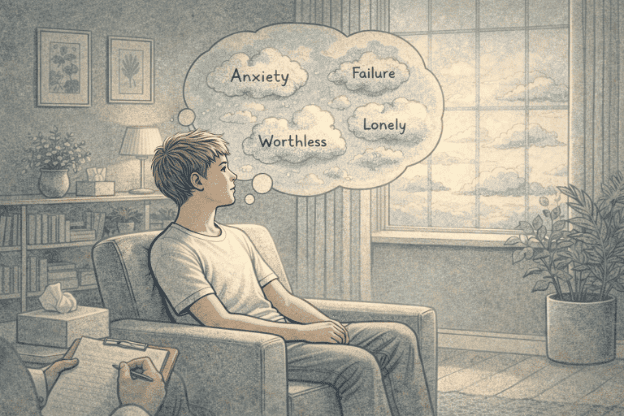
The therapy helps teens recognize when they’re caught in unhelpful thinking patterns, like “I’m worthless” or “Nothing will ever get better”, and creates distance from these thoughts through defusion techniques. Rather than accepting these thoughts as the absolute truth, teens learn to observe them as mental events that don’t necessarily require action or belief. This shift creates space for teens to choose behaviors based on their values rather than their mood.
ACT also helps depressed adolescents reconnect with what truly matters by identifying personal values across life domains like relationships, education, creativity, and personal growth. Depression often disconnects teens from their sense of purpose, and values work provides a compass for meaningful action even during difficult emotional periods.
Core Components of ACT for Adolescents
Acceptance and Willingness
Acceptance means actively making room for uncomfortable thoughts and feelings rather than struggling against them. For depressed teens, this means learning to experience sadness, hopelessness, or anxiety without immediately trying to push these emotions away through avoidance or distraction. Therapists help adolescents understand that emotional avoidance often intensifies suffering and limits their ability to engage in meaningful activities.
Cognitive Defusion
Cognitive defusion techniques help teens step back from their thoughts and see them as separate from themselves. Depression often brings thoughts like “I’m a failure” or “Nobody likes me,” which teens may accept as facts. Defusion strategies, such as singing negative thoughts to silly tunes, saying them in funny voices, or visualizing them as passing clouds, reduce the power these thoughts hold over behavior and mood.
Present Moment Awareness
Depression frequently pulls teens into rumination about the past or worry about the future. Present moment awareness through mindfulness exercises teaches adolescents to anchor attention in the here and now. This skill helps teens notice when their mind drifts into depressive thinking and gently redirects focus to immediate experience, reducing the intensity of rumination cycles.
Self as Context
This component helps teens recognize that they are more than their thoughts, feelings, and experiences. Depression can make adolescents feel completely defined by their emotional pain. Self as context teaches that while feelings and thoughts come and go, there’s a consistent observer—the self—that remains unchanged. This perspective provides stability during emotional storms.
Values Clarification
Values represent chosen life directions that matter most to each individual. In ACT, therapists guide teens through exercises to identify what they truly care about in areas like family, friendships, learning, creativity, health, and community. Unlike goals that can be achieved, values provide ongoing direction that helps depressed teens find motivation even when they don’t feel like doing anything.
Committed Action
The final component involves taking concrete steps aligned with identified values, even when depression makes action difficult. Committed action doesn’t require feeling happy or motivated; it simply requires willingness to move toward what matters. Teens set small, achievable behavioral goals that gradually rebuild engagement with life and create opportunities for positive experiences that naturally lift mood over time.
Effectiveness of ACT for Teen Depression
ACT is highly effective for adolescent depression due to its practical, developmentally appropriate approach. The focus on action connects with teens who feel frustrated by theoretical approaches. ACT offers practical steps instead of abstract concepts.
The psychological flexibility that ACT builds helps teens respond more adaptively to stressors and setbacks. Rather than getting stuck in depressive cycles when difficulties arise, adolescents develop resilience by maintaining a connection to their values and continuing meaningful actions despite emotional discomfort. This skill set extends beyond depression treatment, providing tools teens can use throughout life for various challenges.
ACT’s emphasis on acceptance rather than control appeals to adolescents who feel invalidated when told to “just think positive” or “snap out of it.” The therapy validates their pain while simultaneously empowering them with concrete strategies for moving forward. This balance between acceptance and change creates a therapeutic environment where teens feel understood yet hopeful about improvement.
ACT Worksheets and Exercises for Teens

Worksheets provide structured ways for teens to practice ACT skills between therapy sessions. These tools make abstract concepts concrete and give adolescents tangible methods for applying ACT principles to their depression.
Values Identification Worksheets
Values worksheets help teens identify what truly matters across different life areas. These exercises might ask adolescents to imagine their ideal life five years from now, describe qualities they admire in others, or reflect on moments when they felt most alive and engaged. Through guided questions, teens distinguish between values (ongoing directions) and goals (achievable endpoints), clarifying what they want their life to stand for despite depression.
Defusion Exercise Sheets
Defusion worksheets teach teens specific techniques for creating distance from unhelpful thoughts. Exercises include writing negative thoughts on paper and physically carrying them around to demonstrate how much energy goes into holding onto these thoughts. Other worksheets guide teens through labeling thoughts (“I’m having the thought that…”), thanking their mind for unhelpful input, or rating how much a thought interferes with valued action before and after defusion practice.
Mindfulness Practice Guides
Mindfulness worksheets provide structured exercises for present moment awareness. These might include guided body scans where teens systematically notice physical sensations, breathing exercises with prompts to notice when attention wanders, or sensory awareness activities that help adolescents tune into their immediate environment. Practice logs help teens track their mindfulness exercises and notice patterns in their ability to stay present.
Committed Action Planning Forms
Action planning worksheets help teens break down values-based goals into small, manageable steps. These forms typically include sections for identifying a value, brainstorming actions that align with that value, anticipating obstacles (including difficult emotions), and creating specific plans for when and how to complete each action. Progress tracking sections help teens see their forward movement even when depression makes everything feel stagnant.
Acceptance and Willingness Exercises
These worksheets guide teens through exercises for making room for difficult emotions. Activities might include metaphors like holding difficult feelings gently in open hands rather than clenching fists around them, or visualizing emotions as waves that rise and fall naturally. Reflection questions help teens notice what happens when they try to fight feelings versus allowing them to be present without judgment.
How Mission Prep Healthcare Uses ACT for Teen Depression Treatment

Mission Prep Healthcare integrates Acceptance and Commitment Therapy into a comprehensive treatment model designed specifically for teens between the ages of 12 and 17 who are dealing with depression. Our approach uses age-appropriate strategies that support independence while still offering the structure teens need to make meaningful progress.
We pair ACT with proven therapies like CBT, DBT, and EMDR to align treatment with each teen’s personality, learning style, and emotional needs. This flexible structure helps ensure therapy feels relevant and practical rather than generalized or impersonal.
Frequently Asked Questions (FAQs)
How long does ACT therapy take to help teen depression?
ACT therapy typically shows benefits within 8-16 sessions, though treatment length varies based on depression severity and individual progress. Some teens notice improvements in psychological flexibility within the first few weeks as they begin practicing acceptance and defusion techniques.
Lasting change develops gradually as adolescents consistently apply ACT skills to daily challenges and strengthen their values-based action patterns.
Can teens practice ACT techniques without a therapist?
Teens can use ACT worksheets and exercises independently for mild symptoms, but professional guidance ensures proper understanding and application of ACT principles.
Therapists help adolescents handle difficulties that arise during practice, adapt techniques for individual situations, and maintain motivation during challenging periods. Self-directed practice works best as a supplement to professional treatment rather than a replacement for comprehensive care.
What makes ACT different from regular talk therapy for depression?
ACT emphasizes acceptance of difficult emotions and values-based action rather than symptom reduction alone. Traditional talk therapy often focuses on analyzing problems and changing thought content, while ACT teaches teens to change their relationship with thoughts and feelings.
The approach is more experiential and action-oriented, providing concrete skills teens can practice immediately rather than relying solely on insight and verbal processing.
Does ACT work for severe teen depression?
ACT can effectively address severe depression as part of a comprehensive treatment plan that may include residential care, family therapy, and coordination with psychiatrists. For adolescents with intense symptoms, ACT provides tools for managing overwhelming emotions while working toward recovery.
However, severe depression often requires more intensive support than outpatient therapy alone can provide, making integrated treatment programs particularly valuable.
How does Mission Prep Healthcare customize ACT for individual teens?
Mission Prep Healthcare tailors ACT interventions by assessing each teen’s specific depression symptoms, personal values, developmental level, and learning preferences. Our therapists adapt metaphors, exercises, and worksheets to connect with individual adolescents, ensuring concepts connect with their lived experiences.
We combine ACT with other evidence-based approaches and involve families in treatment, creating personalized care plans that address each teen’s unique situation and strengths.