

Key Takeaways
- Breathing and grounding techniques interrupt anxiety within minutes by slowing the body’s fight-or-flight response, with box breathing (inhale, hold, exhale, hold for 4 counts each) and the 5-4-3-2-1 sensory exercise being the two most accessible methods for teens.
- Challenging anxious thoughts through cognitive reframing reduces anxiety by identifying distortions and testing them with three questions: what evidence supports this thought, what contradicts it, and what would I tell a friend in this situation, a core Cognitive Behavioral Therapy (CBT) skill.
- Regular physical activity of 20 to 30 minutes a day, including walking, yoga, or team sports, lowers cortisol and raises endorphins, reducing baseline anxiety within a few weeks when done consistently.
- A strong support system combined with structured routines and 8 to 10 hours of sleep reduces uncertainty and isolation, two of the biggest drivers of teen anxiety, by giving the brain predictability and one trusted person to talk to.
- Mission Prep Healthcare treats anxiety in teens aged 12 to 17 through residential, outpatient, and virtual programs that combine Cognitive Behavioral Therapy (CBT) and Dialectical Behavior Therapy (DBT) with family involvement and integrated academic support.
What are Coping Strategies for Teens with Anxiety?
The five most effective coping strategies for teens with anxiety are controlled breathing and grounding exercises, challenging anxious thoughts through cognitive reframing, regular physical activity, a dependable support system, and structured routines paired with healthy sleep habits.
Rooted in evidence-based approaches such as CBT and DBT, these strategies can be applied at school, at home, or in social settings, giving teens the ability to interrupt anxiety the moment it arises rather than waiting for it to escalate.
Anxiety remains one of the most common mental health challenges facing adolescents today, fueled by academic pressure, social comparison, and constant digital exposure. For families seeking structured clinical support, providers like Mission Prep Healthcare combine these everyday strategies with evidence-based treatment inside programs designed exclusively for teens aged 12 to 17.
5 Coping Strategies That Help Teens Take Control of Anxiety
1. Breathing & Grounding Techniques
One of the fastest ways to interrupt an anxiety spiral is through controlled breathing. Anxiety activates the body’s fight-or-flight response, increasing heart rate and causing shallow, rapid breaths. Intentional breathing exercises help reverse that physical reaction.
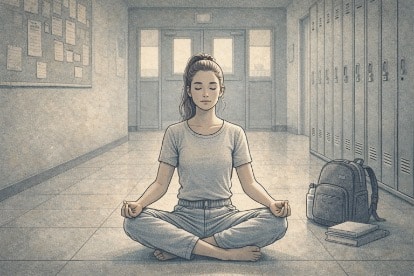
A simple technique is box breathing: inhale for four counts, hold for four counts, exhale for four counts, and hold again for four counts. Teens can practice this anywhere, from a classroom seat to the moments before a big test. Repeating the cycle three to five times can noticeably reduce tension within minutes.
Grounding exercises work alongside breathing to bring attention back to the present moment. The 5-4-3-2-1 method is especially effective for teens: name five things you can see, four things you can touch, three things you can hear, two things you can smell, and one thing you can taste. This sensory-focused approach pulls the mind away from future-based worries and anchors it in what is happening right now. Practicing grounding regularly, even on calm days, makes it easier to access during high-anxiety moments.
2. Challenging Anxious Thoughts
Anxiety often distorts how teens interpret situations. A single awkward interaction might spiral into “everyone hates me,” or one bad grade becomes “I’m going to fail everything.” These thinking patterns, called cognitive distortions, are a core focus of CBT.
Teens can start challenging these thoughts by asking three questions: What evidence supports this thought? What evidence contradicts it? What would I tell a friend in this same situation? Writing the answers down in a journal makes the process more concrete and visible. Over time, this habit trains the brain to pause before accepting anxious thoughts as facts.
Another helpful approach is reframing. Instead of thinking “I’m going to mess up my presentation,” a teen might reframe it as “I’ve prepared, and even if I stumble, it won’t define my grade or my worth.” Reframing doesn’t dismiss the anxiety. It acknowledges the feeling while introducing a more balanced perspective that reduces its grip.
3. Physical Activity & Movement
Exercise is one of the most effective natural anxiety reducers. Physical activity lowers cortisol (the body’s primary stress hormone) and increases endorphins, which improve mood. For teens, even 20 to 30 minutes of moderate movement can create a noticeable shift in how they feel.
The activity doesn’t need to be intense or structured. Walking, dancing, swimming, yoga, or shooting hoops all count. What matters most is consistency. Teens who build regular movement into their week tend to experience lower baseline anxiety levels over time.
Yoga deserves a specific mention because it combines physical movement with breathwork and mindfulness. This combination addresses anxiety on multiple levels, targeting both physical tension and racing thoughts. Many teens find yoga approachable because it doesn’t require competition or high athletic ability, and it can be practiced at home with minimal equipment.

4. Building a Support System
Anxiety often makes teens want to pull away. They might avoid social situations, stop sharing how they feel, or convince themselves that no one understands what they’re going through. Breaking that isolation is a powerful coping strategy in its own right.
A support system doesn’t have to be large. One trusted friend, family member, school counselor, or therapist can make a significant difference. The goal is to have someone the teen feels safe talking to without judgment. Verbalizing anxious thoughts often reduces their intensity because saying them out loud strips them of some of their power.
Family involvement plays a major role here. Parents and caregivers who understand what anxiety looks like in their teen can respond with empathy rather than frustration. Open communication at home creates a foundation where teens feel comfortable asking for help before anxiety becomes unmanageable. Even brief daily check-ins, like asking “how was your day, really?” can open the door to meaningful conversations.
5. Structured Routines and Sleep Habits
Unpredictability fuels anxiety. Teens who lack a consistent daily structure often experience higher stress because their brains are constantly adjusting to uncertainty. Building a predictable routine, including set times for waking up, meals, homework, and winding down, gives the brain a framework that reduces the need for hypervigilance.
Sleep is a critical piece of this puzzle. Adolescents need eight to ten hours of sleep per night, but anxiety frequently disrupts sleep quality. Racing thoughts at bedtime, difficulty falling asleep, and restless nights are common among anxious teens. A consistent bedtime routine signals the brain that it’s time to shift into rest mode.
Practical steps include putting phones away at least 30 minutes before bed, keeping the bedroom cool and dark, and avoiding caffeine after mid-afternoon. Teens who pair a calming pre-sleep activity (like reading or light stretching) with a fixed bedtime often see improvements in both sleep quality and daytime anxiety levels within a few weeks.
Top 5 Coping Strategies for Teen Anxiety at a Glance
| Strategy | What It Does | How to Apply It |
| Breathing & Grounding Techniques | Interrupts the body’s fight-or-flight response and anchors focus in the present | Try box breathing (4-4-4-4 counts) or the 5-4-3-2-1 sensory exercise during anxious moments |
| Challenging Anxious Thoughts | Breaks the cognitive distortions that fuel anxiety spirals | Ask: what evidence supports this thought, what contradicts it, what would I tell a friend? |
| Physical Activity & Movement | Lowers cortisol, increases endorphins, and reduces baseline anxiety | Aim for 20 to 30 minutes of walking, yoga, dancing, or sports most days of the week |
| Building a Support System | Reduces isolation and lessens the power of anxious thoughts when spoken aloud | Identify one trusted person (parent, friend, counselor, therapist) for regular check-ins |
| Structured Routines & Sleep Habits | Removes uncertainty and lets the brain settle into predictability | Keep a consistent bedtime, log 8 to 10 hours of sleep, and put phones away 30 minutes before bed |
How Mission Prep Healthcare Supports Teens with Anxiety

Teen anxiety responds to consistent, everyday strategies that work on both the body and the mind. Breathing exercises, cognitive reframing, physical activity, a strong support system, and steady routines each address a different layer of anxiety, and together they give adolescents real tools to regain control.
At Mission Prep Healthcare, we provide residential, outpatient, and virtual programs built exclusively for teens aged 12 to 17. Our evidence-based therapies, family involvement, and integrated academic support give teens the structure they need. If you want to learn how to help your teen build lasting anxiety management skills, our team is ready.
Frequently Asked Questions (FAQs)
How do I know if my teen’s anxiety needs professional help?
If anxiety causes your teen to avoid school, lose sleep regularly, withdraw from friends, or experience panic attacks, professional support is a strong next step. Persistent symptoms lasting several weeks warrant a conversation with a mental health provider.
Can anxiety in teens improve without therapy?
Mild anxiety may get better with consistent coping strategies and a strong support system at home. However, moderate to severe anxiety typically benefits from structured therapeutic intervention to keep symptoms from worsening.
What therapy types work best for teen anxiety?
Cognitive Behavioral Therapy (CBT) and Dialectical Behavior Therapy (DBT) are among the most effective approaches for adolescent anxiety. Both teach practical skills for managing anxious thoughts and emotional responses in daily life.
Are coping strategies enough to manage teen anxiety long-term?
Coping strategies are helpful tools for managing everyday anxiety. For teens with more persistent or intense symptoms, combining these strategies with professional therapy creates a more comprehensive path toward lasting improvement.
What makes Mission Prep Healthcare different for treating teen anxiety?
At Mission Prep Healthcare, we treat only teens aged 12 to 17 and offer residential, outpatient, and virtual programs. Our approach combines evidence-based therapies with academic support and family involvement for comprehensive adolescent care.