


Key Takeaways
- Anxiety in students often shows up as avoidance, irritability, or difficulty concentrating, and early teacher support can make a real difference.
- Simple classroom adjustments, like predictable routines and flexible seating, help reduce daily triggers for anxious students.
- Teaching breathing exercises and grounding techniques gives students practical tools they can use on their own.
- Open, nonjudgmental communication between teachers and students builds trust and makes it easier for anxious teens to ask for help.
- For teens who need more structured support, Mission Prep Healthcare offers specialized adolescent mental health programs that pair evidence-based therapies with academic and family support.
Helping Anxious Students Start with the Classroom
Teachers can help students with anxiety by building predictable routines, creating low-pressure learning environments, teaching simple calming techniques, communicating openly, and connecting students to professional support when needed. These five strategies do not require clinical training; they just require consistency and awareness.
Anxiety affects how students focus, participate, and engage with schoolwork. When teachers recognize the signs early and respond with the right adjustments, anxious students are far less likely to fall through the cracks.
5 Ways Teachers Can Help Students with Anxiety
1. Build Predictable Routines
Uncertainty feeds anxiety. Students who struggle with anxiety often feel most distressed when they do not know what to expect, whether that means a surprise quiz, a change in seating, or an unannounced schedule shift.
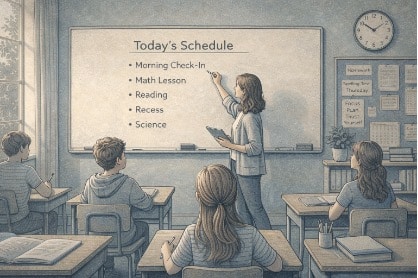
Teachers can reduce this stress by keeping classroom routines as consistent as possible. Posting the daily agenda at the start of class, giving advance notice before transitions, and explaining changes ahead of time all help anxious students feel more prepared. Predictability does not mean rigidity; it means giving students a reliable structure they can count on so their mental energy goes toward learning rather than worry.
2. Create a Low-Pressure Environment
Anxiety tends to spike in high-stakes moments. Cold-calling students, timed tests, and mandatory class presentations can all trigger significant stress for anxious learners, sometimes to the point of shutting down entirely.
Small adjustments can make a big difference. Offering students the option to answer in writing rather than out loud, allowing extra time for assignments when needed, or giving a heads-up before asking someone to speak can significantly lower the pressure. The goal is not to eliminate challenge, but to remove unnecessary barriers that prevent anxious students from showing what they actually know.
3. Teach Simple Calming Techniques
Teachers do not need clinical training to share basic anxiety management tools. A few minutes spent teaching a grounding technique or a simple breathing exercise can give students a practical way to manage their stress in the moment.
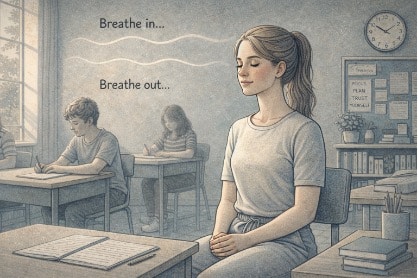
The 4-7-8 breathing method (inhale for 4 counts, hold for 7, exhale for 8) and box breathing are both easy to learn and can be done quietly at a desk. Grounding exercises, such as the 5-4-3-2-1 technique, in which students name five things they can see, four things they can touch, and so on, can help pull a student out of an anxious spiral. Normalizing these tools by using them with the whole class reduces stigma and makes it easier for anxious students to use them without feeling singled out.
4. Communicate Openly & Without Judgment
Many anxious students stay silent because they fear being seen as weak, dramatic, or difficult. A teacher who checks in without making it a big deal can change that.
Brief, private check-ins matter more than long conversations. A quiet “I noticed you seemed stressed today, is there anything you need?” communicates care without putting a student on the spot. Teachers should also make it clear that students will not be penalized for disclosing anxiety, and that asking for support is a reasonable thing to do. When students feel safe telling a trusted adult how they are feeling, they are far less likely to let anxiety quietly build until it becomes unmanageable.
5. Connect Students to the Right Support
Teachers are not therapists, and they should not have to be. Part of supporting anxious students well means knowing when to refer them to a school counselor, a mental health professional, or a specialized program.
If a student’s anxiety is affecting their grades, attendance, or relationships over an extended period, that is a signal that the support they need goes beyond what a classroom can provide. Teachers can play a key role in that handoff by documenting what they observe, having an honest conversation with parents, and advocating for the student to get a proper evaluation. Early intervention leads to better outcomes, and a teacher’s referral can be the first step toward real help.
How Mission Prep Supports Teens with Anxiety

At Mission Prep Healthcare, we specialize in mental health care for teens aged 12 to 17, including adolescents dealing with anxiety that has started to affect their school performance, relationships, and daily life. Our programs are designed specifically for this age group, which means everything from the therapy methods to the academic support is built around what teens actually need.
We offer residential, outpatient, and virtual levels of care, so families can find the right fit for their teen’s recovery. Our therapists use evidence-based approaches like CBT and DBT to help teens understand and manage anxiety, and we keep families involved at every step through regular communication and structured family therapy. For teens who need more intensive support than a classroom can provide, Mission Prep provides a structured, supportive environment where healing and learning can occur simultaneously.
Frequently Asked Questions (FAQs)
What are common signs of anxiety in school-age children?
Anxious students may frequently ask to go to the nurse, avoid class participation, seem irritable or easily overwhelmed, or struggle to complete work during class. Physical complaints like stomachaches or headaches before school can also be signs. These patterns are worth noting because they often reflect ongoing distress rather than occasional stress.
Can anxiety affect a student’s grades even if they seem fine?
Yes. Many anxious students appear composed but are working significantly harder than their peers just to get through the day. Over time, the mental load of managing anxiety can affect memory, concentration, and test performance, leading to a quiet but steady decline in academic outcomes.
How should teachers handle a student who is having a visible anxiety episode in class?
Stay calm and avoid drawing extra attention to the student. Quietly offer them a moment to step out, take a few breaths, or use a grounding technique. Avoid asking them to explain themselves in front of peers. After the moment passes, check in privately to understand what they need going forward.
What is the difference between normal school stress and clinical anxiety?
Most students feel nervous before big tests or presentations. Clinical anxiety is more persistent and more disruptive. It appears across different settings, persists after the stressful event ends, and significantly interferes with a student’s daily functioning. If anxiety is consistently affecting a student’s ability to learn or participate, a professional evaluation is the right next step.
How does Mission Prep Healthcare help teens with anxiety?
At Mission Prep, we provide adolescent-only mental health care tailored to the specific needs of teens aged 12 to 17. We offer evidence-based therapies like CBT and DBT to help teens manage anxiety, along with integrated academic support so students do not fall behind while in treatment. Our family-centered model keeps parents actively involved throughout, and we offer multiple levels of care to match each teen’s needs.