Key Takeaways
- Girls with ADHD often show symptoms such as daydreaming, emotional sensitivity, disorganization, and internal restlessness, which can make the condition harder to recognize than the more visible hyperactive behaviors commonly associated with ADHD.
- An ADHD checklist for girls should include inattentive signs, emotional challenges, academic difficulties, social struggles, excessive talking, and emotional impulsivity, as these symptoms frequently appear together.
- Spotting ADHD in girls involves looking for consistent patterns across school, friendships, and daily responsibilities rather than focusing on isolated incidents or occasional challenges.
- Symptoms can change over time, with increasing academic, social, and emotional demands during adolescence often making ADHD more noticeable during the middle and high school years.
- Mission Prep Healthcare builds a personalized ADHD treatment plan around each girl’s needs, blending therapy, skill-building, and family support so she can move forward with real confidence.
Understanding ADHD in Girls
ADHD in girls often looks different from the stereotypes many people expect. Instead of obvious hyperactivity, girls are more likely to experience inattention, emotional overwhelm, internal restlessness, and difficulties with organization, making symptoms easier to overlook. Because these challenges can affect school performance, friendships, and self-esteem, early recognition is important.
Mission Prep Healthcare specializes in helping adolescents identify and manage ADHD through personalized evaluations and evidence-based treatment. By looking beyond disruptive behaviors, the team can recognize the subtle signs that frequently appear in girls and create support plans tailored to their needs.
This guide explains the most common ADHD symptoms in girls, how to recognize them, and when professional support may be beneficial.
ADHD Symptoms Checklist for Girls
Inattentive Signs
Girls with inattentive signs of ADHD often appear quiet in the classroom, but display the following symptoms:
- Frequently daydreaming or appearing “in your own world.”
- Making careless mistakes despite being intelligent.
- Difficulty following multi-step instructions.
- Struggling to maintain focus except on highly engaging activities.
- Repeatedly losing or misplacing items like homework, phones, or personal belongings.
- Appearing not to listen when spoken to directly.
- Having trouble with time management and frequently underestimating how long tasks will take.
These challenges come from an inability to maintain focus, not from being quiet or compliant. If a girl regularly exhibit these behaviors, it may be worth discussing them with a mental health professional.
Emotional Symptoms
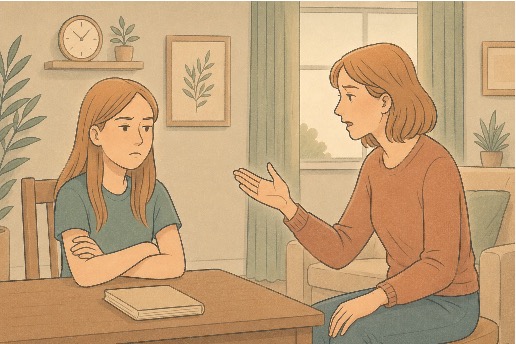
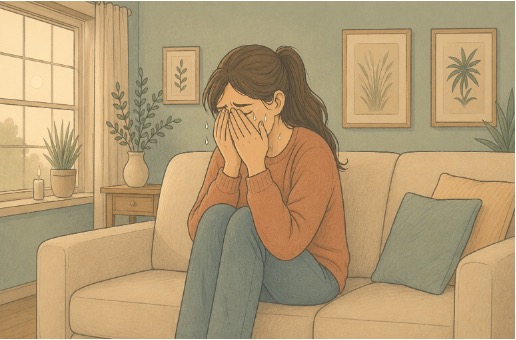
Girls with ADHD might experience intense emotional reactions that seem disproportionate to the situation, have difficulty transitioning between emotional states, or become easily overwhelmed by feelings.
Rejection sensitivity dysphoria (RSD) is also particularly common in girls with ADHD. This manifests as an extreme emotional pain in response to real or perceived rejection, criticism, or failure.
They may go to great lengths to avoid situations where they might be judged or rejected, limiting their willingness to try new experiences or take social risks that are important for development.
Academic Struggles
Academic difficulties often intensify during middle and high school as organizational demands increase. Girls with ADHD might procrastinate on assignments until the last minute, struggle with long-term projects requiring sustained effort, or have difficulty transitioning between subjects. They may forget to turn in completed homework or lose track of deadlines despite genuine efforts to stay organized.
Additionally, girls with ADHD often perform brilliantly on topics that interest them while struggling disproportionately with subjects they find less engaging. This uneven profile can confuse teachers and parents, leading to comments like “She can focus when she wants to” that mischaracterize ADHD as a willpower issue rather than a neurodevelopmental condition.
Social Challenges
Girls with ADHD might struggle to maintain friendships, miss social cues, interrupt conversations, or have difficulty following the natural give-and-take of peer interactions. This is why some girls become social chameleons, mimicking others’ behaviors to fit in while feeling internally disconnected or inauthentic.
Internal Restlessness
Many girls with ADHD experience what we call “hidden hyperactivity,” an internal sense of restlessness that isn’t immediately visible to observers. Girls with ADHD might describe their mind as ‘always racing’ or feeling like they can’t relax even when physically still.
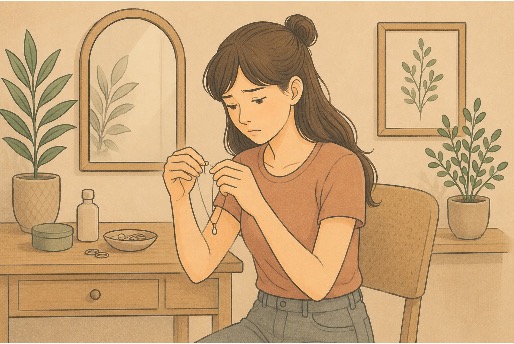
This internal hyperactivity can be exhausting, as they are constantly managing an overactive mind while trying to maintain external composure. They might bite their nails, pick at their skin, or readjust their clothing. These are subtle physical manifestations of the internal motor restlessness characteristic of ADHD.
Talking Too Much
Excessive talking is a common but often overlooked manifestation of hyperactivity in girls with ADHD. Girls with ADHD might talk rapidly, switch topics frequently, or share thoughts as they occur without filtering or considering context.
They may interrupt conversations, finish others’ sentences, or provide excessive detail when telling stories. These behaviors can strain peer relationships despite a genuine desire to connect.
This verbal hyperactivity typically intensifies in exciting or stimulating environments.
Emotional Impulsivity
Emotional hyperactivity often manifests in relationship conflicts, particularly with parents and close friends. Girls with ADHD might say things impulsively when upset that they later regret, struggle to let go of perceived slights, or become overwhelmed by emotional flooding that makes rational problem-solving temporarily impossible.
At Mission Prep Healthcare, we help girls develop emotional regulation strategies that acknowledge this neurobiological challenge while building skills for better self-management.
ADHD Symptoms in Girls: Summary Table
| Symptom Category | What It Looks Like |
| Inattentive Signs | Daydreaming, careless mistakes, losing items, trouble with multi-step tasks |
| Emotional Symptoms | Intense reactions, rejection sensitivity, mood shifts |
| Academic Struggles | Procrastination, missed deadlines, uneven grades across subjects |
| Social Challenges | Missing cues, interrupting, masking to fit in |
| Internal Restlessness | Racing thoughts, hair twirling, nail biting, fidgeting |
| Talking Too Much | Rapid speech, topic jumping, and interrupting others |
| Emotional Impulsivity | Outbursts, regret after conflict, emotional flooding |
How Can You Spot ADHD in Girls?
Spotting ADHD in girls starts with noticing patterns rather than single moments. Watch for ongoing signs like daydreaming during conversations, frequent forgetfulness with schoolwork or belongings, emotional reactions that feel bigger than the situation, and trouble starting or finishing tasks she actually wants to do. These behaviors usually show up across more than one setting, such as home, school, and with friends.
There are also quieter signs that are easy to miss. A girl might hide her struggles by working twice as hard to keep up, avoiding social situations when she feels overwhelmed, or channeling restless energy into behaviors such as nail biting, hair twirling, or constant doodling. Tracking these signs over a few weeks gives a clearer picture than a single tough day or rough week.
While these patterns can point toward ADHD, only a licensed clinician can make a diagnosis. If you notice several of these signs affecting daily life, schoolwork, or self-esteem, reach out to a mental health professional for a proper evaluation and personalized support.
How Does Mission Prep Support Girls with ADHD?
ADHD in girls is easy to miss when the signs are quiet, internal, and tangled up with everyday teen behavior. Watching for patterns across home, school, and friendships can provide a clearer picture of what’s really going on, and recognizing the signs early may help prevent years of self-blame and frustration.
At Mission Prep Healthcare, we evaluate adolescent girls and look beyond disruptive behavior to catch inattention, emotional dysregulation, and masking. Our team builds a treatment plan around specific needs, blending therapy, skill-building, and family support so teen girls can move forward with real confidence. Start the recovery process with Mission Prep Healthcare today.
Frequently Asked Questions (FAQs)
Can girls have ADHD without hyperactivity?
Yes, absolutely. Many girls with ADHD present with predominantly inattentive symptoms and minimal hyperactivity. This presentation, formerly called ADD, is now classified as ADHD, Predominantly Inattentive Presentation.
Girls with this type of ADHD struggle with focus, organization, time management, and completing tasks, but don’t show the obvious hyperactive behaviors that often prompt evaluation in boys.
When do girls usually get diagnosed with ADHD?
ADHD can be diagnosed as early as preschool age, though it’s often more difficult to distinguish from typical developmental variations in very young children. Most girls receive their diagnosis during elementary school years or later, with many not being identified until adolescence or even adulthood.
This delayed diagnosis often occurs because their symptoms become more apparent as academic and social demands increase, overwhelming their previously effective compensatory strategies.
How does puberty affect ADHD in girls?
Puberty often intensifies ADHD symptoms in girls due to hormonal fluctuations that interact with neurotransmitter systems already affected by ADHD. Many girls report that their ability to focus, regulate emotions, and manage impulses varies throughout their menstrual cycle, typically worsening during the premenstrual phase when estrogen levels drop.
This hormonal influence can make symptoms seem inconsistent, further complicating diagnosis and treatment.
How does Mission Prep Healthcare’s approach to ADHD assessment differ for adolescent girls?
At Mission Prep Healthcare, we use specialized, evidence-based assessment tools specifically designed to capture the unique presentation of ADHD in girls. Unlike traditional evaluations that focus on disruptive behaviors more common in boys, our approach examines inattentive symptoms, emotional dysregulation, masking behaviors, and executive function challenges that characterize ADHD in girls.
We also provide a safe, supportive environment where girls can openly discuss their experiences without fear of judgment.