

May is Mental Health Awareness Month, which means you are probably seeing more conversations about mental health than usual. Posts, videos, reminders to check in with yourself and others. It can be helpful, but it can also feel confusing if your experience does not match what people are talking about.
Because what if you do not look like you are struggling?
On paper, your life might seem completely okay.
You show up to school. You turn things in. You keep up with activities. You laugh at the right moments. You respond to texts. You do what is expected of you, and most people would probably describe you as responsible, capable, maybe even successful.
But that version of you is not the full story.
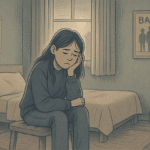
There is another layer that most people do not see. It is the constant mental fatigue that never really goes away. It is the quiet sense that nothing feels as good as it should. It is the pressure you carry to keep going, even when you feel like you are running on empty.
During a month that is all about awareness, it is important to talk about the kinds of struggles that are easy to miss, including the ones that hide behind good grades, full schedules, and a smile that looks convincing.
If you have ever felt like you are functioning on the outside but struggling on the inside, there is a name people often use for that experience. It is called high functioning depression.
It does not always look like what people expect depression to look like, and that can make it harder to recognize and even harder to talk about.
What High Functioning Depression Really Means
High functioning depression is not a formal diagnosis, but it is a very real experience for many teens.
It describes what it feels like to carry symptoms of depression while still managing to meet expectations. You are still doing the things you need to do, but they take more effort than they should. You are still present, but you may not feel fully connected.
For teens, this can be especially confusing. You are already balancing school, social life, family expectations, and your future. It can be hard to tell the difference between being busy and being burned out, between stress and something deeper.
Because you are still showing up, people around you may assume you are fine. You might even convince yourself of that sometimes.

What It Can Look Like in Real Life
High functioning depression is not always obvious. It often shows up in subtle, internal ways that are easy to overlook.
You might be doing well in school or staying on top of responsibilities, but it does not feel rewarding. Achievements feel flat or temporary, like they do not really land.
You might feel tired all the time, even when you are getting enough sleep. Not just physically tired, but mentally and emotionally drained.
You may keep pushing yourself forward no matter how you feel. There can be a strong sense that slowing down is not an option.
Sometimes it feels like you are disconnected from your own life. Not necessarily deeply sad all the time, but numb, distant, or like you are on autopilot.
You might be extremely hard on yourself. Even when you are doing well, it can feel like it is not enough.
Opening up can feel difficult. You might tell yourself that other people have it worse, or that no one would take you seriously because you seem fine.
You are still showing up to everything, but it is taking more and more effort to do even basic things.
Why It Is So Easy to Miss
One of the biggest challenges with high functioning depression is that it does not match the stereotype people often have about depression.
Not everyone with depression withdraws completely or stops functioning. Many teens continue to meet expectations while quietly struggling.
In some ways, being able to function can actually make things harder. It can delay support because others do not see what is happening, and you may feel like you do not have a strong enough reason to ask for help.
Mental Health Awareness Month is not only about recognizing the most visible struggles. It is also about understanding the quieter ones.
If This Feels Familiar
You do not have to wait for things to get worse before taking your mental health seriously.
Start by being honest with yourself. Even simply acknowledging that you do not feel okay can be an important shift.
Try opening up to someone you trust. That might be a parent, a counselor, a therapist, or another safe adult in your life. If talking feels overwhelming, you can start small. A message, a note, or a simple sentence can be enough to begin.
Give yourself permission to ease some of the pressure you are carrying. You do not have to operate at full capacity all the time. Small adjustments in your expectations can make a real difference.
Pay attention to your energy, not just your schedule. Notice what leaves you feeling drained and what gives you even a small sense of relief or comfort. Try to make space for the things that help, even if they seem minor.
Challenge the idea that you should be fine just because you are functioning. You are allowed to take your feelings seriously, even if they are not extreme.
Professional support can also be helpful. Therapy is not only for moments of crisis. It can be a space to understand what you are feeling, learn ways to cope, and feel less alone in the process.
For Parents and Caregivers
Teens who are struggling do not always show it in obvious ways.
You might notice changes like increased irritability, ongoing fatigue, loss of interest in things they used to enjoy, or a pattern of being very hard on themselves.
What helps most is creating an environment where they feel safe being honest. Try to focus on how they are feeling, not just how they are performing. Avoid minimizing their experience, even if things look fine on the surface.
Mental Health Awareness Month can be a helpful time to start these conversations, but they matter all year long.
You Do Not Have to Earn Support
A common thought with high functioning depression is that you are not struggling enough to deserve help.
That is not true.
You do not need to reach a breaking point for your feelings to matter. If something feels heavy, draining, or different than it used to, that is worth paying attention to.
Closing Thoughts: Awareness Is Only the Beginning
Mental Health Awareness Month is about more than just recognizing the word depression. It is about understanding the many ways it can show up, including the versions that are easy to hide.
If you have been carrying this quietly, you are not the only one. Many teens feel this way, even if it does not show on the outside.
Awareness is a starting point, but what really matters is what comes next. Reaching out. Being honest. Letting someone see more than just the version of you that looks okay.
There is nothing weak about needing support. There is nothing dramatic about wanting to feel better.
You are allowed to want more than just being okay on the surface.
You are allowed to feel connected, energized, and genuinely yourself.
And most importantly, you do not have to figure out how to get there on your own.