Sleep Problems and ADHD Symptoms: How Poor Sleep Worsens ADHD Symptoms in Teens

A balanced night’s sleep can make the difference between feeling rested and energized, and like we have to battle through the day. But what many people don’t realize is that ADHD can affect sleep, causing adults and teens alike to either rest too much or too little.
Because of how important sleep is for teens and the negative impact poor sleep has on ADHD, we’re going to talk about how sleep affects ADHD, including:
- Understanding what ADHD looks like during adolescence
- Why sleep matters for the teenage brain and what research says about ADHD and sleep difficulties
- Common sleep problems in teens with ADHD and how poor sleep can worsen symptoms
- How parents can support healthy sleep and the strategies to improve sleep
- Where to find professional support for poor sleep and ADHD
- Answers to commonly asked questions about sleep problems and ADHD symptoms
Understanding ADHD in Teens
Symptoms of ADHD in teens tend to affect executive functioning more, the area of the brain responsible for planning, time management, impulse control, and emotion regulation.1 So, your teen may be having difficulty staying focused and organized, trouble completing schoolwork, exhibiting emotional outbursts, or feeling constantly overwhelmed.2
These symptoms can make it more difficult for your teen when combined with increased academic pressures, social relationships becoming more complex, and growing independence.
Further, during this time, the brain is still developing, so when ADHD symptoms and poor sleep overlap, these challenges can worsen.
Why Sleep Matters So Much for the Teenage Brain
During puberty, there’s a natural shift in teens’ internal clocks (known as “circadian rhythm”), delaying the time they feel sleepy by about two hours. So where they might have fallen asleep around 9 pm before puberty, they might now be falling asleep closer to 11 pm and also waking up two hours later.4
For some adolescents, especially those with ADHD, this shift becomes more extreme, leading to a delayed sleep phase that ADHD teens commonly experience. This means that nights of poor sleep can rapidly translate into tougher days, worsening focus, emotional reactivity, and behavioral challenges. Research has also shown a connection between lack of sleep and more depression, anxiety, suicidal thoughts, and aggression.5
Sleep is essential for how the teenage brain functions each day. When sleep is consistent, the nervous system is better equipped to handle stress and make thoughtful decisions rather than impulsive ones. But when your teen has disrupted sleep, difficulties with emotion and attention regulation, and sleep loss become more apparent.
Patterns of Poor Sleep in Teens With ADHD
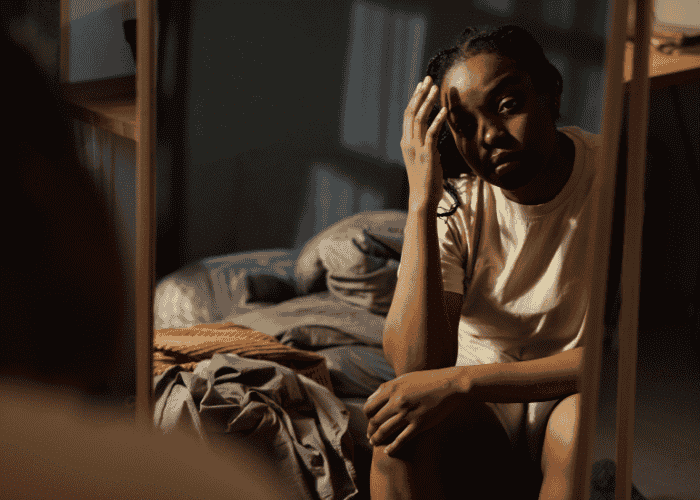
If you’re raising a teen with ADHD, you may already know how tense evenings can become. Too often, bedtime doesn’t bring rest; it brings pacing, second winds of energy, or racing thoughts they can’t shut off. Some teens appear physically restless, tossing and turning or waking repeatedly through the night. Others become more anxious once the house quiets down, when distractions fade, and their thoughts get louder.
Irregular schedules can sneak in, too. Late-night screen use, weekend sleep-ins, or hyperfocusing on games or conversations can delay bedtime and fuel sleep deprivation and ADHD in teens. By morning, your child may seem completely depleted, hitting snooze again and again, moving slowly, or resisting school altogether.
These patterns aren’t about a lack of effort. ADHD-related restlessness, intense focus on stimulating activities, and emotional overload can make it genuinely difficult for your teen’s brain to shift into sleep mode.
How Poor Sleep Can Worsen ADHD Symptoms
Increased Inattention and Brain Fog
Not getting enough sleep can make it difficult for anyone to focus and think clearly.7 And this is especially true for teens with ADHD. This is partly due to the connection between executive dysfunction and sleep deprivation, which interferes with planning, organization, and working memory. You might notice your teen zoning out more than usual, forgetting assignments, and having more difficulty staying seated in class.
Heightened Emotional Reactivity
Sleep loss puts us at a higher risk of being more anxious and lowers our resistance to stress.8 For teens with ADHD, you might see more meltdowns, sharper mood swings, and extra frustration over small issues. This pattern of sleep problems and emotional dysregulation in ADHD is normal, but it can contribute to more anxiety, irritability, and continued sleep loss.
Impulsivity and Risk-Taking
Poor sleep and increased impulsivity are quite common when teens are overtired.9 This is because the brain’s “braking system” doesn’t work as well, causing them to be less able to manage their behaviors. The effect may still happen even if they typically manage this part of ADHD fairly well. You might find your teen is blurting things out, snapping more at others, or making more risky choices than they normally would.
Academic and Social Strain
Over time, fatigue can ripple into school and relationships. Missed assignments, slipping grades, or conflicts with teachers may appear alongside arguments with friends or withdrawal from activities they once enjoyed. Some teens begin to feel defeated, worn down, or emotionally exhausted; signs families sometimes describe as “ADHD burnout and chronic fatigue.”
From the outside, all of this can look like your teen’s ADHD is getting worse or that they’ve stopped trying. In reality, disrupted sleep is often a hidden driver behind these changes.
How Parents Can Support Healthier Sleep Habits
When your nights are feeling chaotic and mornings are starting in tears or exhaustion, it’s normal to wonder what, if anything, you can do at home to help. Improving sleep for ADHD teens often starts with creating predictability, lowering stimulation in the evenings, and supporting the nervous system as it transitions toward rest. Here’s what you can do to help support your teens’ sleep habits:
Create Predictable Evening Routines
Try building routines for better sleep ADHD brains can rely on. This might include dimming lights at the same time each night, switching to calmer activities after dinner, or following the same sequence before bed (shower, pajamas, reading, lights out). These patterns cue the brain that it is time to slow down, even when your teen still feels wired.
Limit Screens and Late-Night Stimulation
Phones, gaming systems, and streaming shows can make it especially hard for teens with ADHD to disengage, especially when they experience hyperfocus. Set gentle boundaries around screens and device use, like charging phones outside the bedroom or setting a screen-free wind-down window before bed. These are common sleep hygiene strategies for ADHD. Further, framing these limits as supports rather than punishments can help reduce power struggles.
Help the Body and Mind Settle
Practice simple, calming tools together so you can ease your teen from busy days to relaxing nights. Try having them practice slow breathing, stretching, or listening to music intended to lower tension and racing thoughts. These tools are especially helpful when anxiety shows up at bedtime.
Know When to Seek Extra Support
If your teen’s sleep problems persist despite consistent efforts at home, or if fatigue is clearly driving emotional or academic struggles, it may be time to reach out for professional guidance. Therapists can help assess whether anxiety, mood changes, or other factors are interfering with rest. They can also suggest targeted approaches, including behavioral sleep interventions or cognitive behavioral therapy for insomnia (CBT-I) and ADHD-informed strategies when appropriate.
Above all, remember that sleep challenges are not a sign of failure – yours or your teen’s. They are signals from a stressed system asking for support. Taking steps to protect rest can be one of the most meaningful ways to strengthen daily functioning and restore a sense of balance for your whole family.
Mission Prep: Helping Teens Rest, Regulate, and Thrive
When your teen experiences the exhausting loop of late nights, rough mornings, and escalating symptoms, it can feel overwhelming to know where to turn. At Mission Prep, we understand the importance of managing ADHD symptoms through sleep. Our programs are built specifically for teens, with the goal of addressing both immediate concerns and the underlying patterns that keep them stuck.
We offer multiple levels of care, including residential, outpatient, and intensive outpatient programs, so your teen will receive the right balance and structure for their situation. With us, your teen will get personalized, compassionate treatment with evidence-based approaches like cognitive behavioral therapy, mindfulness-based approaches, and somatic therapy; all focused on managing ADHD symptoms through sleep.
Above all, Mission Prep provides a safe, supportive environment where teens can reset, rebuild confidence, and develop sustainable skills for daily life. If your child is dealing with ADHD and sleep difficulties, contact our team today to help you explore next steps and find a path forward together.
FAQs About ADHD and Sleep Difficulties in Teens
If your teen is experiencing ADHD and sleep difficulties, you might still have some questions after the information on this page. This is why we’ve provided the following answers to FAQs on the topic – to provide as much clarity and understanding as possible.
Do Teenagers With ADHD Have Trouble Sleeping?
Yes, many teens with ADHD have trouble sleeping. Studies show that up to 70% of kids and teens with ADHD are diagnosed with a sleep disorder.10 Racing thoughts, difficulty winding down, anxiety at night, and irregular routines can all contribute to ongoing sleep disruption.What Is the Best Sleep Aid for ADHD?
There is no “one” best sleep aid for ADHD. What works for one teen might not work for another. But many experts focus first on improving nighttime routines, making them more consistent and reducing nighttime stress. You can do this by setting limits on stimulating activities, like video games, and finding replacement ones that are more relaxing, like listening to music, reading, or drawing before bed.
Why Are My Teen’s ADHD Symptoms Getting Worse?
Your teen’s ADHD symptoms may be getting worse because of poor sleep, increased stress, or major life changes. When routines change or stress worsens, your teen can experience more outbursts, forgetfulness, procrastination, or social struggles. That does not necessarily mean your teen’s treatment has stopped working. Instead, it may be a sign that exhaustion, anxiety, or disrupted routines are driving the change. Looking at sleep patterns is often one of the first and most helpful places to start.
How Does Mission Prep Support Teens with ADHD?
We support teens with ADHD by providing structure and support through evidence-based approaches like CBT, family therapy, and emotional regulation training. We also help teens build simple plans and coping strategies to help manage distractions, emotional overwhelm, and improve sleep habits. We aim to actively involve families throughout the treatment process, helping teens and families build healthier routines and sustainable coping skills for everyday life.
References
- Center on the Developing Child at Harvard University. (2026, January 5). A Guide to Executive Function: What is it, and how is it developed? https://developingchild.harvard.edu/resource-guides/guide-executive-function/
- Pietrangelo, A. (2025, March 17). What are the symptoms of ADHD in teenagers? Healthline. https://www.healthline.com/health/adhd/adhd-symptoms-in-teens#symptoms
- Galván, A. (2019). The need for sleep in the adolescent brain. Trends in Cognitive Sciences, 24(1), 79–89. https://doi.org/10.1016/j.tics.2019.11.002
- National Sleep Foundation. (2024, May 10). What To Know about Teens and Sleep. https://www.thensf.org/what-to-know-about-teens-and-sleep/
- Dahl, R. E., & Harvey, A. G. (2007). Sleep in Children and Adolescents with Behavioral and Emotional Disorders. Sleep Medicine Clinics, 2(3), 501–511. https://doi.org/10.1016/j.jsmc.2007.05.002
- ScienceDaily. (2017, September 17). Is ADHD really a sleep problem? https://www.sciencedaily.com/releases/2017/09/170904093443.htm
- Zimmerman, M. E., Benasi, G., Hale, C., Yeung, L., Cochran, J., Brickman, A. M., & St-Onge, M. (2024). The effects of insufficient sleep and adequate sleep on cognitive function in healthy adults. Sleep Health, 10(2), 229–236. https://doi.org/10.1016/j.sleh.2023.11.011
- Winerman, L. (2023, December 21). Sleep deprivation makes us less happy, more anxious. American Psychological Association. https://www.apa.org/news/press/releases/2023/12/sleep-deprivation-anxious
- Anderson, C., & Platten, C. R. (2010). Sleep deprivation lowers inhibition and enhances impulsivity to negative stimuli. Behavioural Brain Research, 217(2), 463–466. https://doi.org/10.1016/j.bbr.2010.09.020
- Nguyen-Thi-Phuong, M., Nguyen-Thi-Thanh, M., Goldberg, R. J., Nguyen, H. L., Dao-Thi-Minh, A., & Duong-Quy, S. (2025). Obstructive Sleep Apnea and Sleep Disorders in Children with Attention Deficit Hyperactivity Disorder. Pulmonary Therapy, 11(3), 423–441. https://doi.org/10.1007/s41030-025-00299-x