Anxiety-Related Pins and Needles in Teens: Physical Sensations of Stress and How to Cope

Everyone experiences a tingling, pins-and-needles sensation from time to time. In many cases, the feeling can be easily explained. For instance, you likely sat for a prolonged period in a position that put pressure on a nerve, causing your hand or foot to “fall asleep.”
However, some teens notice that a pins-and-needles feeling seems to accompany times of intense stress or anxiety. This can lead them to ask questions like:
- “Can anxiety cause tingling sensations?”
- “Is the pins-and-needles sensation harmful?”
- “Is there anything I can do to prevent this from happening?”
If you’re concerned about the tingling anxiety teens can experience, a mental health professional can help you understand the source and how to cope. This page can guide you through everything you need to know about the link between anxiety and a pins-and-needles sensation, as it explores:
- How anxiety can cause pins-and-needles
- If the tingling anxiety teens experience can be harmful
- Coping skills for anxious teens
- Therapy options for adolescent anxiety management
- Where to find professional support
Anxiety and the Pins-and-Needles Sensation
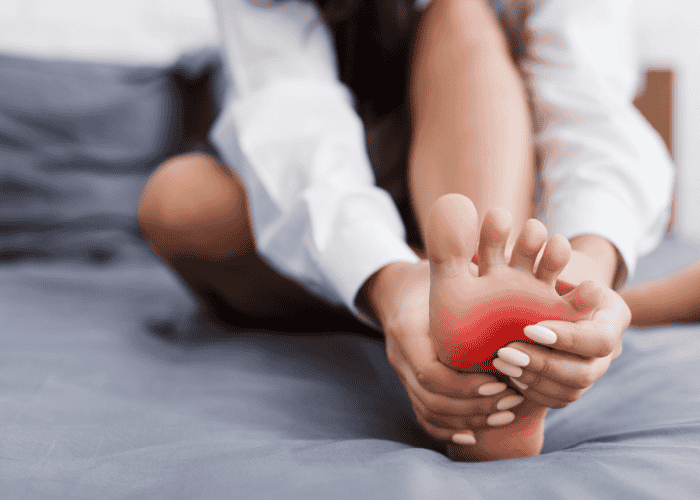
First, stress may trigger the body’s fight-or-flight response. When this happens, stress hormones are released to spur changes in the body that would be helpful for survival in a life-or-death scenario.
For instance, bodily functions that are not needed to fight off the threat are slowed or stopped. Further, the heart rate increases, muscles become tense, the pupils dilate, and the body redirects blood flow to major muscle groups and away from minor muscles. As a result, less blood reaches the extremities, such as the hands and feet – often leading to tingling or numbness.1
The second way that stress and anxiety may lead to a pins-and-needles sensation involves changes in breathing. During times of extreme anxiety, such as a panic attack, the rapid breathing that is triggered as part of the stress response can lead to hyperventilation.
Hyperventilation is defined as breathing so rapidly or so deeply that too much carbon dioxide leaves the body. This results in an imbalance in the blood and, sometimes, a tingling sensation.1 In other words, pins and needles, tingling, and chills are common hyperventilation symptoms adolescents may experience during panic attacks.
Can Anxiety-Related Pins-and-Needles Sensations Harm Me?
Understandably, unexpected physical sensations stress teens further. So you may be wondering whether anxiety-related tingling sensations cause physical harm to the body. Typically, this pins-and-needles experience is temporary and harmless. Called “transient paresthesia,” this feeling subsides along with the panic attack. In some cases, though, anxiety-related pins and needles could contribute to real complications.
Common panic attack signs young people may experience can be so distressing that the symptoms themselves become a source of intense anxiety. For example, hyperventilation during a panic attack might cause a teen to genuinely fear that they are going to die by suffocation. Heart palpitations, meanwhile, can be so surprising that a young person believes they may be experiencing cardiac arrest. Such symptoms can contribute to a somatic symptom disorder.
Ultimately, somatic anxiety disorder teens may begin to experience worries about their anxiety: they fear panic symptoms so intensely that their condition worsens. And, the more anxious youth become, the more likely they are to have panic attacks.
A second way that anxiety-related paresthesia may contribute to health problems involves the effects of stress on the body. Over time, stress can lead to neuroinflammation and cell damage. This can contribute to a condition called “neuropathy,” which often causes tingling.
However, tingling sensations can be caused by many medical conditions besides anxiety. Therefore, it is recommended to see a physician to rule out any medical causes of new tingling sensations.
Yet it may be reassuring to know that tingling related to anxiety or panic is usually temporary and does not often lead to damage to the body. Furthermore, with mental health treatment teens can experience fewer symptoms of panic and anxiety.
Coping Skills for Anxious Teens
Anxiety affects 4.4% percent of the world’s population and is the most common mental health disorder.2 This has prompted mental health experts to conduct extensive research to develop effective treatments for anxiety.
Coping skills for anxious teens can be divided into two broad categories: grounding techniques and daily lifestyle changes. Beyond these self-help strategies, professional
Grounding Techniques for Youth
Grounding techniques are strategies a person can use in the midst of panic or intense anxiety. During a panic attack, for example, a person may experience thoughts like, I can’t catch my breath, I’m suffocating, or I’m going to die. Grounding techniques interrupt this flow of unhelpful, negative thoughts and bring the teen’s awareness back to the present moment.
There are many effective grounding techniques youth can try. Below are some techniques that are easy to learn and use in times of distress.
Cold Face Stimulus Method:
Apply something cold to the face for thirty seconds. This can be an ice pack, a cold water bottle, cool running water, a cold shower, or a refrigerated face mask. Scientists have shown that this technique activates the body’s natural parasympathetic nervous system, which turns off the body’s stress response and returns a person to a state of balance.3
The 5-4-3-2-1 Technique:
This grounding strategy can interrupt anxious thoughts and anchor the mind in the present moment. You can use it anywhere, and it takes only a minute.
To practice these method, list…4
Five things you see: Look around you and state aloud five items that you see. Try to really examine each item as you list it.- Four things you feel: Bring your awareness to four things you can feel. For instance, you might list the hard ground beneath your feet, the padded cushion of your seat, or the soft sweater you are wearing.
- Three sounds you hear: Tune in to sounds around you. Identify three and really concentrate on their sound. Perhaps you hear cars humming down the road, a co-worker talking on the phone, or the sound of your dog breathing in the corner of the room.
- Two smells: Notice any scents around you. For instance, you might smell coffee, lotion on your hands, or the lingering detergent scent on your clothing. If you are unable to smell anything, think of two smells and imagine them as clearly as possible.
- One taste: Notice whether you can taste anything. There may be a lingering taste from toothpaste or your lunch. You could also take a sip of a drink. Again, imagine a favorite taste if you are unable to taste anything in the moment.
Brief Intense Exercise:
Engage in sudden, intense exercise like jumping jacks, push-ups, running up and down the stairs, or sprinting down the street. This activity can help disrupt anxious thoughts and burn off excess stress chemicals, allowing the body to return to a calmer state. These grounding exercises can be helpful during a panic attack or times of intense stress. Another way to manage stress, panic, and anxiety involves making lifestyle changes to enhance mental and physical well-being.
Behavioral and Lifestyle Changes to Improve Anxiety Symptoms
In today’s fast-paced lifestyle, it can be easy for teens to veer toward habits that don’t serve them well. However, youth can just as easily learn behaviors that can contribute to improved health and mental well-being. By taking steps to optimize mental and physical health, teens can become more resilient to stress and anxiety.
The following are some actions you could take to prevent and reduce the worry and physical symptoms teens may face:
Prioritize Healthy Sleep:
Sleep hygiene is well-studied and is shown to promote mental wellness. For improved sleep hygiene, you could try:
- Turning off devices an hour before bedtime.
- Avoiding using smartphones and other devices before bed. Instead, you could leave it charging or on “silent” mode in another room overnight.
- Maintaining a consistent bedtime and wake time.
- Dimming the lights, cooling your room, and avoiding stimulation such as animated conversations an hour before bedtime.
- Exercising every day, but not late at night.
- Avoiding eating or drinking near bedtime.
Exercise Regularly:
Extensive research has demonstrated that exercise improves mental and physical health.5 Exercise releases hormones that contribute to well-being and lowers the activity of the body’s sympathetic nervous system, which is responsible for the body’s stress response. It also often improves a person’s confidence in their ability to handle threatening situations, which can further reduce anxiety.5
Avoid Overscheduling Yourself:
If you are prone to stress and anxiety, try to eliminate unnecessary activities. Remind yourself that by reducing your to-do list, you are prioritizing your mental health. Further, removing stressful activities from your calendar may also make it easier to get adequate sleep and exercise, reducing stress in the process.
Prioritize a Healthy Diet:
There are many reasons to eat well. Aside from weight management, what you put into your body affects how you feel. If you pay close attention, you may notice that when you eat junk food, you are more likely to feel irritable, restless, or lethargic. Plus, when you eat fruits, vegetables, lean meats, and healthy carbs, you may feel lighter and more energized. It’s also important to drink plenty of water each day to help you feel your best.
Anxiety Management Therapy Options
Learning coping mechanisms and making healthy lifestyle choices can be very helpful for managing anxiety. However, when anxiety is ongoing, professional treatment is the best option for long-term results. With professional mental health treatment teens can learn to identify and challenge unhelpful thoughts and behaviors that contribute to their anxiety.
Several treatment options have been studied extensively and have been scientifically proven to treat anxiety. These include:
- Cognitive behavioral therapy (CBT): CBT is consistently named as the first-line, gold standard treatment for anxiety.6 With this structured approach, a teen may need just 12-18 one-hour appointments. CBT may be used alone or alongside anxiety medication, and anxiety improvements are typically long-lasting.7
- Acceptance and Commitment Therapy (ACT): ACT is called a “third-wave” behavioral and cognitive therapy. In ACT, teens learn to accept difficult thoughts and emotions without trying to change them. They can also learn to practice mindfulness, or being in the here and now. Additionally, in acceptance and commitment therapy, teens can begin to understand that thoughts are just thoughts and are not absolute truths. This can help take some of the power away from distressing or painful inner narratives.

Mission Prep: Professional Support for Anxiety and Panic
Anxiety, stress, and panic attacks can severely impact teens’ quality of life, affecting self-esteem, academic performance, and social development. Further, these challenging mental health disorders can contribute to a host of long-term consequences, including increased risk of depression. The good news is that effective, professional therapy can limit the consequences of anxiety and panic. Through therapy, teens can learn helpful skills to improve their mental and physical health, both in the present and into the future.
At Mission Prep, we specialize in teen mental health care. With inpatient, intensive, and outpatient programs, we are prepared to work with teens at all levels of distress. Our team of therapists provides a safe, nonjudgmental space for teens to work through anxiety and panic through evidence-based approaches like cognitive behavioral therapy and acceptance and commitment therapy.
Many teens value building a connection with peers who understand what they’re going through. That’s why, in addition to providing one-on-one therapy services, we also offer group therapy for teens in our programs. Whichever format you choose for your path to overcoming anxiety, Mission Prep is here to support you every step of the way.
Reach out today if you want to learn more about what we have to offer and how we can help.
References
- Sharif-Alhoseini, M., Rahimi-Movaghar, V., & Vaccaro, A. R. (2012). Underlying causes of paresthesia. In Paresthesia (pp. 71–90). InTech.
- World Health Organization: WHO. (2025, September 8). Anxiety disorders.https://www.who.int/news-room/fact-sheets/detail/anxiety-disorders#:~:text=Key%20facts,receive%20any%20treatment%20(2).
- Richer, R., Zenkner, J., Küderle, A., Rohleder, N., & Eskofier, B. M. (2022). Vagus activation by Cold Face Test reduces acute psychosocial stress responses. Scientific Reports, 12(1), 19270. https://doi.org/10.1038/s41598-022-23222-9
- Imran, A. (2020). Combat against stress, anxiety and panic attacks: 5-4-3-2-1 coping technique. Journal of Traumatic Stress Disorders & Treatment, 9(4).
- Anderson, E., & Shivakumar, G. (2013). Effects of exercise and physical activity on anxiety. Frontiers in Psychiatry, 4, 27. https://doi.org/10.3389/fpsyt.2013.00027
- World Health Organization: WHO. (2025, September 8). Anxiety disorders. https://www.who.int/news-room/fact-sheets/detail/anxiety-disorders#:~:text=Key%20facts,receive%20any%20treatment%20(2).
- Pegg, S., Hill, K., Argiros, A., Olatunji, B. O., & Kujawa, A. (2022). Cognitive Behavioral therapy for Anxiety Disorders in Youth: Efficacy, moderators, and New Advances in Predicting Outcomes. Current Psychiatry Reports, 24(12), 853–859. https://doi.org/10.1007/s11920-022-01384-7