10 Signs of C-PTSD You Might Be Missing: Recognizing Trauma Patterns in Adolescence

Complex trauma doesn’t always look the way people expect. Rather than coming from a single frightening event, complex trauma develops through ongoing or repeated experiences of threat, neglect, or emotional harm.
Because this can happen at critical stages of development, trauma can shape how a child thinks, feels, and relates to others. These trauma responses become part of everyday life, rather than something that only appears around obvious trauma reminders.
For parents and carers, these responses might be confusing, especially when a child seems withdrawn, angry, or disconnected without a clear reason. Understanding the common signs of complex PTSD can help you make sense of these behaviors and respond with greater compassion.
While this page covers the possible signs of C-PTSD in teens, if you suspect that your child is demonstrating the signs of trauma, it’s important to seek professional advice and support. The different modalities that may benefit a teen are discussed after the following signs.

The 10 Signs of C-PTSD You Might Be Missing
Below are ten signs of complex PTSD in teens. Not every teen will experience all of them, and no single sign is a diagnosis. What matters most is noticing patterns over time and the level of distress they cause.
Sign 1. Emotional Reactions That Seem Out of Proportion
Teens with complex trauma often find it difficult to manage strong emotions. This is called “emotional dysregulation”. As a result of dysregulation, feelings may escalate quickly, leading to anger, panic, sadness, or overwhelm.Some of the key signs of emotional dysregulation from complex PTSD in teens include:1
Big emotional outbursts to small stressors- Problems with calming down once they are upset
- Intense mood swings
- Feeling emotionally numb or disconnected
- Depression
These reactions aren’t about a lack of effort or maturity. Chronic trauma and prolonged stress on the nervous system mean teens may be in constant “survival mode,” making it difficult to self-regulate, pause, or calm down.
Sign 2. Chronic Shame and Deep Self-Blame
Chronic shame and trauma often go hand-in-hand due to the experiences the teen has endured. Many traumatized children end up internalizing what has happened to them, leaving them with a deep feeling of shame or wrongly blaming themselves for their trauma.2 They may see themselves as “bad,” “broken,” or unworthy of love.
Some of these symptoms of complex trauma in teens may look like:3
Harsh internal self-criticism- Openly speaking about themselves in a negative or self-blaming way
- Feeling “different” from others
Rather than seeing trauma as something that happened to them, teens may see it as something that defines who they are as a person.
Sign 3. Dissociation or “Zoning Out”
Some of the complex PTSD symptoms that are often missed relate to dissociation. This is where the connections between thoughts, feelings, behaviors, and sensations are disrupted. In fact, dissociation can be an automatic coping mechanism for trauma, allowing a person to mentally escape a situation that they cannot physically leave, like in cases of abuse.1 However, it can continue to occur in daily life even when the threat has passed. This is how dissociation and C-PTSD are linked.Some examples of dissociation you may notice in your teen include:
Daydreaming or “zoning out”- Flat emotional responses
- Difficulty remembering events or conversations
Dissociation isn’t an intentional process; it’s the brain’s way of coping when emotions or experiences feel like too much to handle.
Sign 4. Hypervigilance in Everyday Situations
Hypervigilance and trauma are closely linked for many teens with C-PTSD. This is because children who experienced complex trauma learned that the world wasn’t a safe place for them. Therefore, their brain needed to be constantly scanning for signs of danger as a protective mechanism. Yet, this state of hypervigilance doesn’t instantly “switch off” once the threat is out of view. It can continue into everyday life.In teens, this may look like:3
Being easily startled- Having trouble relaxing
- Overreacting to people’s facial expressions or tone of voice
Hypervigilance is a survival response learned in unsafe environments for protection, rather than a conscious choice.
Sign 5. Identity Confusion or an Unstable Sense of Self
Complex trauma can interrupt the normal development of identity in teenagers. Instead of forming a stable sense of self, they may have grown up focused solely on survival, safety, and protecting themselves emotionally, which influences how they see themselves and others.2Some of the signs of identity disturbance adolescents may show include:4
Rapid shifts in interests, values, or friendship groups- Feeling unsure of who they are or where they truly belong
- Feeling “empty”
- Identifying with a negative stereotype (such as a “rebel” or “failure”)
A stable sense of self usually develops through safety, reflection, and connection with others. Unfortunately, complex trauma can disrupt these processes, resulting in identity confusion and teens feeling “lost.”
Sign 6. Strong Fight, Flight, Freeze, or Fawn Responses
A teen’s everyday reactions may be heavily dictated by the nervous system dysregulation C-PTSD causes. This can result in the “fight, flight, freeze, or fawn” responses (the “4 F’s”) that many teens experience from minor stressors, such as school pressure or arguments with friends.5For example, trauma response patterns teens may exhibit include:
Lashing out or becoming more defiant (fight)- Avoiding school, challenges, or relationships (flight)
- Withdrawing, seeming unmotivated, or appearing like a deer caught in the headlights (freeze)
- Becoming a people-pleaser or overly compliant (fawn)
These reactions originally developed to keep the child safe, but may now become triggered by any stressful event, no matter how big or small.
Sign 7. Difficulties With Trust
Complex trauma often happens in close relationships, such as those with parents and caregivers. This can naturally make trusting others feel extremely unsafe.2 Unfortunately, this may mean that although teenagers crave closeness, they might also fear it at the same time.This may show up in teens as:
A push-and-pull dynamic in relationships, such as “clinging” to someone and then pushing them away before they can get hurt- Strong fear of rejection or abandonment
- Difficulty accepting reassurance or comfort from others
These patterns stem from early childhood attachment experiences rather than an intention to manipulate someone.
Sign 8. Concentration and Learning Difficulties
One of the more subtle signs of complex PTSD in teens is that trauma can affect their attention, memory, and executive functioning.2Possible signs of C-PTSD-related difficulties may include:
Trouble focusing- Forgetfulness
- Difficulty following instructions
In other words, what may be mistaken for “problematic behavior” in school is often the result of a teen’s brain being focused on survival due to complex trauma.
Sign 9. Hyperarousal Followed by Emotional Exhaustion
Many teens with complex trauma can find themselves stuck in a state of “high alert” – their nervous system prepped for protection and survival, stress hormones rising, and their brain constantly scanning for danger. This state of hyperarousal means they may easily be triggered into having a panic attack when there is no real danger.2 And, if you have ever experienced a panic attack, you will know this can be physically and emotionally exhausting.Signs of hyperarousal and emotional fatigue in adolescents may manifest as:
Feeling exhausted after social events- Becoming overwhelmed and tired at the end of a school day
- Having slept badly due to anxiety, then experiencing brain fog for the rest of the day
The hyperarousal and emotional overwhelm trauma adolescents often experience result from nervous system dysregulation. It’s rarely the case that teens want to feel this way; it’s that they are stuck in automatic “survival mode.”
Sign 10. Physical Complaints Without a Clear Medical Cause
One of the final hidden signs of C-PTSD is experiencing physical symptoms without a clear cause. This is because teens with complex trauma frequently experience ongoing physical sensations linked to stress and nervous system dysregulation. Even if their mind isn’t consciously thinking about the trauma, the body is still carrying the long-lasting effects of it.Some of the physical complaints teens with C-PTSD may have include:2,3
Headaches- Stomachaches
- Hypersensitivity to sounds, smells, touch, or light
- Insomnia
- Dizziness or nausea
These symptoms are real and can be very distressing, especially when medical tests come back normal without offering an explanation for why your teen is feeling this way.
Why Some Signs of C-PTSD Are Easy to Miss
Adolescence is a crucial period of development, involving hormonal changes, identity exploration, and growing independence. It’s understandable that with all of these changes occurring, it may be tricky to untangle “normal” teenage development from a complex underlying condition.
Plus, adults and teens themselves may not connect present challenges to a past trauma, especially if they were unaware of traumatic events taking place. For instance, if a teen was fostered or adopted, their parents may not know how the first few years of their life played out before the teen was placed in their care. Or, many people think trauma is a single identifiable event, whereas complex trauma arises from repeated situations, such as chronic neglect, abuse, bullying, or viewing prolonged domestic violence.6,7
Finally, some trauma responses may look like a teen is coping well, such as when an adolescent is a straight-A student. Yet if a person looks at what’s driving that behavior, perfectionism or people pleasing may lie under the surface, fuelled by feelings of shame or guilt resulting from chronic trauma.
Fortunately, recovery from C-PTSD is possible with the right support. Therapy and practical coping strategies for C-PTSD can make a real difference to how a teen feels, which are explored in the next section.
Teen Trauma Recovery Support
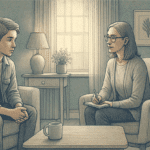
The main treatment for complex PTSD is talking therapy, with two particularly effective therapeutic approaches being trauma-focused cognitive behavioral therapy (TF-CBT) and eye movement desensitization and reprocessing therapy (EMDR).8 These trauma-informed approaches offer the safety and consistency needed for the nervous system to begin to settle and to help teens process traumatic events from their past.
Parental support also plays a critical role in helping their teen heal from trauma by offering predictability, patience, and being consistently emotionally available for support. For instance, a parent may be a calming presence to their child when they are feeling overwhelmed or hypervigilant. Or, they might act like a sounding board and mirror, helping teens to express themselves (respectfully and within boundaries) while reflecting back what they are noticing in an honest, non-judgmental manner.
Healthy coping techniques can also help regulate a teen’s nervous system in the present moment. For instance, grounding techniques can help a teen relax into the present, while mindfulness practices may improve emotional regulation and self-awareness.9
There is no “quick fix” when it comes to recovering from complex PTSD – healing is a process. Yet, with the right support, such as talking therapy, teens can begin to heal and move forward more calmly in life, forming healthy attachments and connections with people.
Healing Complex Trauma With Mission Prep Healthcare
The signs of complex trauma may be subtle; however, the impact of living with C-PTSD can feel overwhelming for many adolescents. If you recognize trauma patterns in your teen, remember that healing is possible with the right support.
Mission Prep specializes in supporting teens who have lived through complex trauma. We offer trauma-informed care and evidence-based therapeutic approaches, such as CBT and EMDR, to help teenagers make sense of their experiences, manage their symptoms, and form healthier relationships.
If you’re ready to take the next step, contact us through our secure web form. We’re here to support you and help your teen take the next step on the road to recovery.
References
- World Health Organization. (2018). International classification of diseases 11th Revision (ICD-11). WHO. https://icd.who.int/browse11/l-m/en
- Peterson, S. (2018, June 11). Effects. The National Child Traumatic Stress Network. https://www.nctsn.org/what-is-child-trauma/trauma-types/complex-trauma/effects
- Davis, S. (2019, September 30). A closer look at the symptoms of Complex Post-Traumatic Stress Disorder. CPTSDfoundation.org. https://cptsdfoundation.org/2019/09/30/a-closer-look-at-the-symptoms-of-complex-post-traumatic-stress-disorder/
- SAMHSA. (2014). Understanding the impact of trauma. Trauma-Informed Care in Behavioral Health Services – NCBI Bookshelf. https://www.ncbi.nlm.nih.gov/books/NBK207191/
- Schuster, S. (2025, August 17). The 4 trauma responses: What does fight, flight, freeze, fawn mean? Health. https://www.health.com/fight-flight-freeze-fawn-8348342
- Mental Health America. (2023, March 2). What is Complex PTSD? https://screening.mhanational.org/content/what-complex-ptsd/
- Morgado, D., Correia-Santos, P., Pinto, R., & Maia, Â. (2026). Bullying Victimization and Complex Trauma: A Systematic Review of CPTSD and DTD Symptoms. Trauma, Violence, & Abuse, 0(0). https://doi.org/10.1177/15248380251401923
- National Health Service (NHS) (2022, August 1). Complex PTSD – Post-traumatic stress disorder. https://www.nhs.uk/mental-health/conditions/post-traumatic-stress-disorder-ptsd/complex/
- Calderone, A., Latella, D., Impellizzeri, F., De Pasquale, P., Famà, F., Quartarone, A., & Calabrò, R. S. (2024). Neurobiological Changes Induced by Mindfulness and Meditation: A Systematic review. Biomedicines, 12(11), 2613. https://doi.org/10.3390/biomedicines12112613