
Trauma Dumping vs Healthy Sharing: The Impacts of Emotional Oversharing in Adolescence

Ever been in a conversation that suddenly takes a dark, heavy turn? Most of us have, and it’s rarely a comfortable place to be. This is often what’s known as “trauma dumping.”
For the person trauma dumping, they might brush off as just a “quirk” or part of their personality. But, in reality, it can be a sign of deeper struggles they haven’t had the tools or space to process.
To help you understand trauma dumping and its effects on teens, this page focuses on:
- What trauma dumping is
- How to recognize the signs of trauma dumping
- What makes a person trauma dump
- How social media impacts teen trauma dumping
- How you can deal with trauma dumping as a listener
- What to do if you trauma dump
- Where to find help for teens who trauma dump
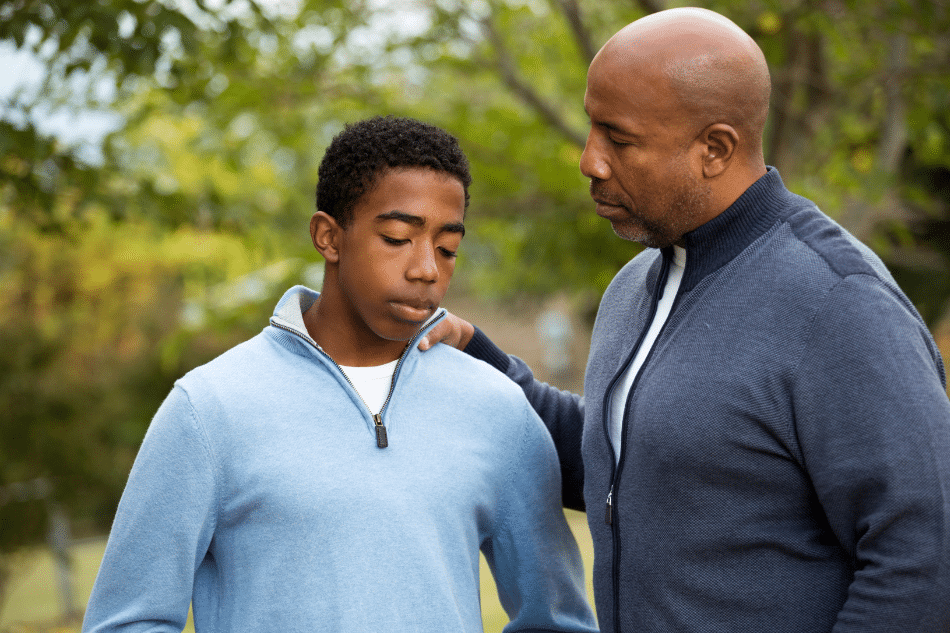
What Does Trauma Dumping Mean?
When trying to understand trauma dumping, it’s important not to confuse trauma dumping with venting. Venting can be a temporary, healthy, emotional release when it’s done with someone who’s ready to hear you and when there’s space for both people to talk.1
For example, telling your friend after school, “I’ve had such a rough day, can I talk about it for a minute?” gives them a chance to say “yes,” prepare themselves, and respond in a way that supports you.
Trauma dumping, on the other hand, skips these steps. It often happens without warning, and instead of feeling lighter together, one person could be walking away carrying the weight of it all.
Recognizing the Signs of Trauma Dumping
One emotional outpouring in a conversation that touches on personal trauma does not automatically mean someone is a trauma dumper. In many cases, it may be a one-off, uncharacteristic reaction to a difficult or overwhelming event.
Trauma dumping is different as it becomes apparent when the subject of trauma appears almost as a default talking point, regardless of the place or audience.
The signs tend to surface in patterns, such as:
- Conversations repeatedly circling back to a specific experience, often with the same details retold
- Everyday discussions often changing direction toward distressing memories or painful events
- Personal, detailed accounts being voiced in public or casual environments, with little regard for whether it’s appropriate or welcomed
- Social media posts continually revealing raw, deeply personal information, inviting an unrestricted audience to engage with it
While the aim of trauma dumping might be to feel heard or understood, repeating the same patterns over and over can leave conversations feeling one-sided and emotionally draining. But what causes trauma dumping? In the next section, we look at the potential answers.
What Causes a Person to Trauma Dump?
Co-Rumination
Co-rumination is when two close people, like friends or family, repeatedly revisit the same problems and emotions in long, detailed conversations. Studies have found that this persistent focus can make issues feel bigger and harder to resolve, increasing anxiety and depression symptoms.2
If one person in this dynamic has experienced trauma, constantly revisiting it can take a toll. When this is combined with the mental health risks of co-rumination, it could become a breeding ground for conversations to turn into trauma dumping. This might happen within the same relationship or spill over into conversations outside of a co-rumination group.
Feeling Overwhelmed Without Release
When emotions from a traumatic or highly stressful experience have nowhere to go, they can build up inside. Eventually, they can spill out all at once, turning a moment of relief into a pattern where others are left carrying that emotional load with you. If these types of behaviors become consistent, it could be classed as trauma dumping.
Not Recognizing When Boundaries Are Crossed
In the middle of telling a story, it can be easy to miss when the other person is shifting uncomfortably or trying their best to change the subject without causing offense. Without noticing such cues, you may keep sharing in a way that turns an honest need to talk into something the other person struggles to handle.
In fact, those who show signs of disorganized attachment may be more likely not to recognize when boundaries are crossed, giving a potential cause for initial trauma dumping.3
Lacking Supportive Spaces
If you don’t have trusted people, therapy, or other safe outlets for processing trauma, you might turn to whoever is available in the moment. When this listener isn’t ready for the intensity of what you’re sharing, the conversation can quickly tip into trauma dumping.
Trauma Dumping on Social Media – What’s The Risk?
without the fear of real-life ridicule. It also could be a way to reach out for social support after experiencing distressing life events or moments.
While trauma dumping on social media may seem harmless and might even be part of the solution at first, it can have negative consequences for both the poster and the viewer.
Impact of Trauma Dumping on Social Media on Viewers
For viewers, exposure to trauma dumping online could trigger vicarious trauma. This is when hearing about someone else’s experience leaves you feeling shaken, distressed, or anxious, almost as if you’d been through it yourself. For those who’ve lived through similar events, it could also lead to retraumatization, where old wounds resurface simply from reading or watching a post.
To make the situation worse, if the original poster has a large online following, this could result in hundreds, if not thousands, of vicarious or retraumatizing situations.
Impact of Trauma Dumping on the Poster
While hitting the publish button might feel like a release, using social media as a form of self-therapy can have serious downsides.
Instead of getting the back-and-forth understanding that comes from a private conversation, you’re left with one-sided comments that may offer temporary relief but little lasting support. This also creates the risk of never seeking professional help for the trauma you’ve experienced.
Another factor to consider is that the comments you receive may not always be positive or supportive.
Overall, social media can be a way to cure boredom or connect with friends, but it is not a healthy tool for dealing with trauma.
How Can I Deal With Trauma Dumping as a Listener?
If you’re on the receiving end of trauma dumping, it can be easy to step away from someone you don’t know very well, but what if the trauma dumper is a close friend or family member? Most of us would want to approach the situation with care and compassion, yet still have no idea how to handle it.
The following are four approaches you can use to keep the conversation respectful while protecting your own emotional space.
1. Create a Break in the Conversation
When a discussion becomes emotionally heavy, introducing a pause can help shift the tone. This might mean stepping away for a moment or gently explaining that you may not be the right person to help right now. This small space can give both sides a moment to breathe.
2. Know Your Own Limits
Before thinking about what the other person needs, it’s important to recognize your own capacity. Pay attention to how you’re feeling in the moment and be honest with yourself about whether you can take in more.
3. Agree on What’s Comfortable to Share
Having a quick discussion about the level of detail you’re both comfortable with can prevent the exchange from becoming overwhelming. It’s okay to ask to skip certain parts while still offering support in other ways.
4. Keep a Time Frame in Mind
Setting an agreed time for heavier topics can help keep the conversation balanced. Once that time is up, you can guide things toward lighter, more mutual ground so both of you leave feeling steadier.
I’m an Emotional Dumper – What Can I Do?
Realizing you’ve been trauma dumping can be uncomfortable, but it’s also a turning point. Acknowledging how it affects your relationships and well-being is the first step toward change.
If you feel the need to talk about something difficult, pause and check in with yourself.
For instance, you could ask yourself, Why am I sharing this right now? What do I hope to gain by reaching out to this person?
When you do open up, give the other person the choice to be part of the conversation. You might say, “I have something heavy on my mind. Are you in a good place to talk about it right now?” You can also let them know it’s okay to tell you if the discussion becomes too much.
Unfortunately, not everyone has a support network, and even with one, putting deep feelings into words can be hard. This is where therapy can help, offering a safe space to talk without overburdening others and guiding you toward healthier ways of sharing.
Therapy and Support Options for Trauma Dumping
Whether you’ve been the one sharing or the one listening, trauma dumping is often a sign that something underneath needs more attention. The right kind of support can help you work through what’s really going on and make it easier to have conversations that feel safe for everyone involved.
The following are evidence-based therapy options for processing trauma:
- Cognitive behavioral therapy (CBT) helps you spot when thoughts are building toward an unfiltered outpouring and gives you practical ways to share them more healthily.
- Dialectical behavior therapy (DBT) can be especially helpful for teens, teaching you how to handle intense emotions before they spill over and become too much to manage.
- Family therapy brings everyone into the conversation so you can set boundaries without losing the compassion and understanding that keeps relationships strong.
- Adolescent trauma support groups are spaces where you can talk with others who genuinely get what you’re going through. There’s also just enough structure to keep things balanced, so no one leaves feeling weighed down.

Mission Prep: Mental Health Support for Teen Trauma Dumping
If intense emotions or patterns like trauma dumping are making it hard for a teen to cope day to day, it’s important to know there is help available. Parents can feel reassured that support exists to help young people feel more in control and confident in managing traumatic experiences.
At Mission Prep, we create a safe space where teens can explore what’s behind their emotional struggles and develop practical strategies to manage them. Our approach encourages healthy coping skills and ways to communicate feelings without reverting to trauma dumping.
For those who may benefit from stepping away from their usual environment, our inpatient programs for emotionally overwhelmed teens provide time and space to focus fully on recovery. Therapists work closely with each young person to address what’s weighing them down and build skills they can carry into everyday life.
No matter how heavy things feel right now, progress is possible, and we’re here to help make it happen. Reach out today if you’re ready to start.
References
- Krems, J. A., Merrie, L. A., Rodriguez, N. N., & Williams, K. E. G. (2024). Venting makes people prefer—and preferentially support—us over those we vent about. Evolution and Human Behavior, 45(5), 106608–106608. https://doi.org/10.1016/j.evolhumbehav.2024.106608
- Rose, A. J., Carlson, W., & Waller, E. M. (2007). Prospective associations of co-rumination with friendship and emotional adjustment: Considering the socioemotional trade-offs of co-rumination. Developmental Psychology, 43(4), 1019–1031. https://doi.org/10.1037/0012-1649.43.4.1019
- Drescher, A. (2023, June 19). Disorganized Attachment Style: Traits and Ways to Cope – Simply Psychology. Simply Psychology. https://www.simplypsychology.org/disorganized-attachment.html
- Khalaf, A. M., Alubied, A. A., Khalaf, A. M., & Rifaey, A. A. (2023). The impact of social media on the mental health of adolescents and young adults: A systematic review. Cureus, 15(8), 1–10. https://doi.org/10.7759/cureus.42990